Introduction
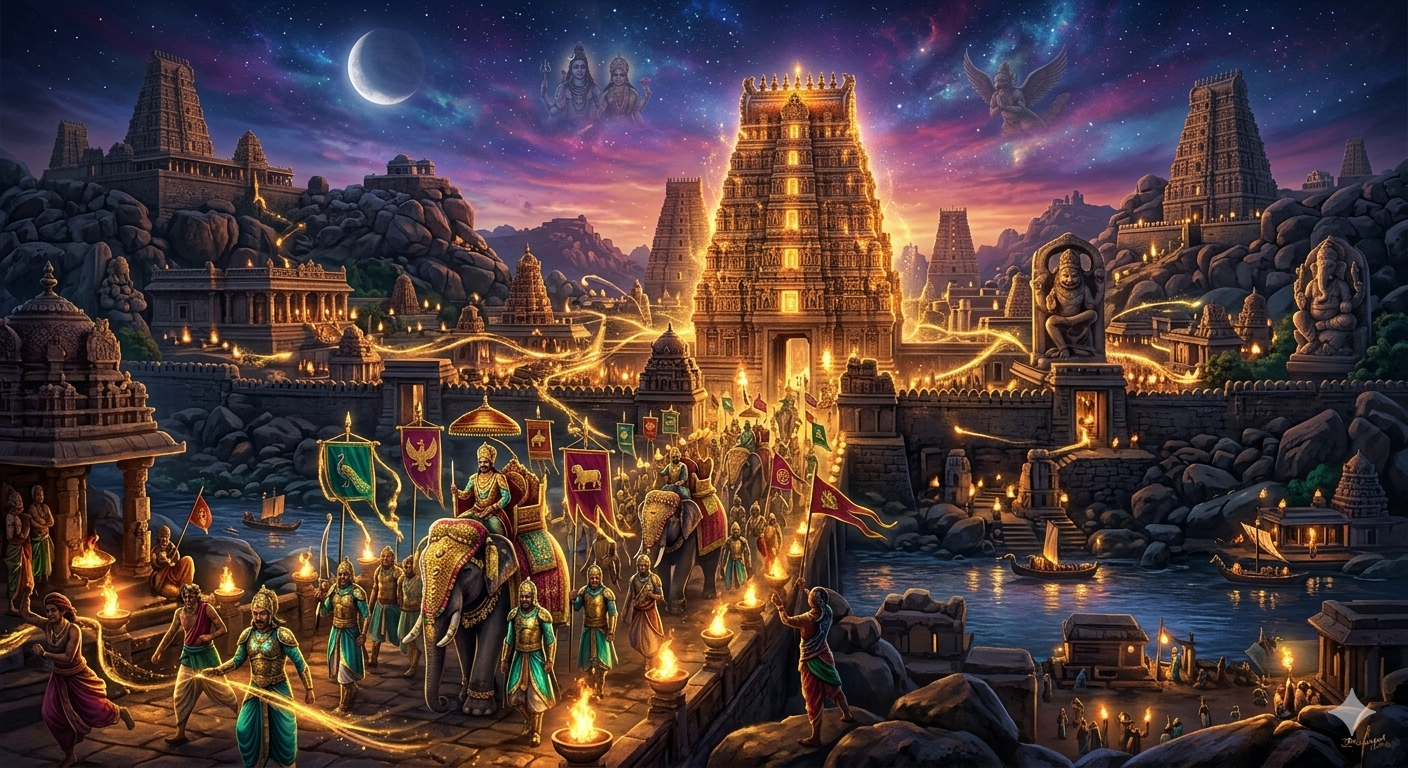
The Battle of Talikota, fought in 1565 CE, stands as a watershed moment in the history of South India. It marked the dramatic confrontation between the powerful Vijayanagara Empire and a coalition of Deccan Sultanates.
This battle not only resulted in the defeat of Vijayanagara but also led to a profound transformation in the political landscape of South India. The fall of one of the greatest empires of medieval India opened the way for new regional powers and altered the balance of power in the Deccan.
Background of the Conflict
Rise of the Vijayanagara Empire
The Vijayanagara Empire emerged as a dominant power in South India, especially under rulers like Krishnadevaraya.
- It controlled vast territories in the Deccan and South India
- It was economically prosperous and militarily strong
- It acted as a bulwark against the expansion of Deccan Sultanates
However, after the death of strong rulers, internal weaknesses began to emerge.
Role of Aliya Rama Raya
The immediate political context of the battle is closely associated with Aliya Rama Raya, the de facto ruler of Vijayanagara.
- He exercised real power while nominal rulers sat on the throne
- Followed a policy of interference in the affairs of Deccan Sultanates
- Played one Sultanate against another
This policy initially strengthened Vijayanagara but eventually united its enemies.
Causes of the Battle of Talikota
Formation of a Deccan Confederacy
One of the primary causes of the battle was the formation of a united front by the Deccan Sultanates.
Key Sultanates Involved
- Ahmadnagar
- Bijapur
- Golconda
- Bidar
These states set aside their mutual rivalries to confront Vijayanagara.
Reason
- Common threat posed by Vijayanagara
- Resentment against Rama Raya’s interference
Rama Raya’s Diplomatic Policy
Rama Raya’s strategy of divide and rule initially worked but later backfired.
- Constant interference in Sultanate politics
- Frequent shifting of alliances
- Humiliation of defeated rulers
This created deep hostility among the Deccan states.
Religious and Political Rivalry
Although primarily political, religious differences also played a role.
- Vijayanagara represented a major Hindu power
- Deccan Sultanates were Muslim-ruled states
This added an ideological dimension to the conflict.
Economic Competition
Control over fertile lands and trade routes intensified rivalry.
- Raichur Doab was a contested region
- Rich resources attracted both sides
Internal Weakness of Vijayanagara
- Overdependence on a single leader (Rama Raya)
- Decline in administrative efficiency
- Weak successors
These factors weakened the empire’s ability to resist a united attack.
Course of the Battle
Location and Forces
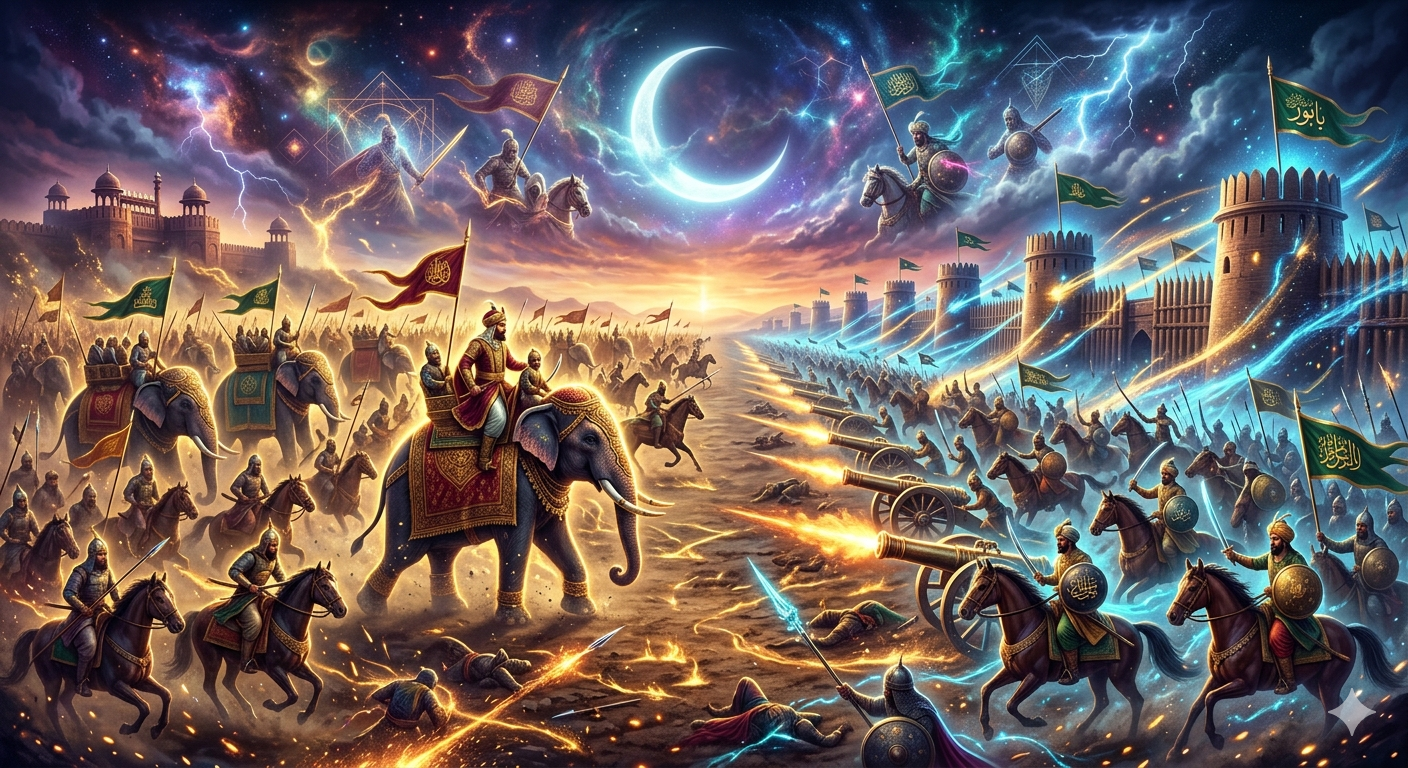
The battle took place near Talikota (also known as Rakshasa-Tangadi).
- Vijayanagara army was large and well-equipped
- Deccan coalition forces were united and strategically coordinated
Key Events
- Initial success of Vijayanagara forces
- Sudden betrayal by some Muslim commanders in Vijayanagara army
- Capture and execution of Aliya Rama Raya
This turned the tide decisively in favor of the Deccan Sultanates.
Defeat of Vijayanagara
- The army collapsed after the death of Rama Raya
- Massive loss of life and resources
- The capital city was left vulnerable
Immediate Consequences of the Battle
Destruction of Vijayanagara Capital
The victorious armies sacked the capital city.
- Widespread destruction of buildings and temples
- Looting of wealth and treasures
- Mass killings and devastation
The once-glorious city was reduced to ruins.
End of Political Supremacy
Although the empire continued in a weakened form, its dominance ended.
- Shift of capital to Penukonda
- Loss of central authority
Long-Term Impact on South Indian Politics
Fragmentation of Power
The fall of Vijayanagara led to the emergence of smaller regional powers.
- Nayaka kingdoms in Madurai, Tanjore, and Gingee
- Decline of centralized authority
This fragmentation reshaped South Indian politics.
Rise of Deccan Sultanates
The victory strengthened the position of the Deccan Sultanates.
- Expansion of territorial control
- Increased political influence
However, unity among them was temporary.
Shift in Political Balance
The balance of power in South India changed significantly.
- No single dominant empire remained
- Regional politics became more competitive
Impact on Economy and Trade
The destruction of Vijayanagara disrupted economic activities.
- Decline in trade networks
- Loss of urban centers
- Agricultural disruption
Cultural Consequences
Despite political decline, cultural traditions continued.
- Migration of artists and scholars to other regions
- Spread of Vijayanagara culture
Emergence of New Powers
The political vacuum eventually allowed new powers to rise.
- Later influence of the Mughal Empire in the Deccan
- Rise of Marathas in subsequent centuries
Evaluation of the Battle’s Significance
Positive Aspects (From a Historical Perspective)
1. Transformation of Regional Politics
The battle marked the end of a dominant empire and opened space for regional diversity.
2. Cultural Diffusion
The decline of Vijayanagara led to the spread of its cultural elements across South India.
Negative Aspects
1. Political Instability
The absence of a strong central authority led to prolonged instability.
2. Economic Decline
Destruction of the capital affected trade and prosperity.
3. Loss of a Powerful Empire
The fall of Vijayanagara weakened resistance against northern invasions.
Critical Analysis
The Battle of Talikota highlights several important lessons:
- Overreliance on diplomacy without military caution can be dangerous
- Internal weaknesses can magnify external threats
- Unity among rivals can defeat even powerful empires
The defeat of Vijayanagara was not sudden but the result of accumulated strategic and political errors.
Conclusion
The Battle of Talikota was a निर्णायक turning point in South Indian history. It ended the supremacy of the Vijayanagara Empire and ushered in an era of political fragmentation and change.
Its impact extended beyond immediate destruction, reshaping the political, economic, and cultural landscape of the region. Thus, the battle remains a crucial event for understanding the dynamics of medieval South Indian politics.