The Earth is home to an incredible diversity of plants, animals, and microorganisms that interact with each other and with their physical environment. This complex network of life forms the basis of ecological balance and environmental sustainability. However, rapid population growth, industrialization, urban expansion, deforestation, and climate change have placed tremendous pressure on natural ecosystems. Many species are facing extinction, and several habitats are being degraded at an alarming rate.
To protect biodiversity and promote sustainable use of natural resources, several conservation strategies have been developed across the world. One of the most comprehensive approaches is the establishment of Biosphere Reserves. Biosphere reserves are specially designated areas that aim to conserve biodiversity, promote sustainable development, and support scientific research and environmental education.
These reserves serve as living laboratories where conservation, economic development, and scientific study coexist. They play a crucial role in protecting ecosystems while ensuring that local communities can continue to benefit from natural resources in a sustainable manner.
Understanding Biosphere Reserves
What Are Biosphere Reserves?
Biosphere reserves are protected areas established to conserve biodiversity and promote sustainable development. They are recognized under international conservation programs and are designed to balance the protection of ecosystems with the sustainable use of natural resources.
A biosphere reserve includes terrestrial, coastal, or marine ecosystems where conservation and human activities are managed together in a balanced way.
The main purpose of biosphere reserves is to:
- Protect biodiversity and ecosystems
- Promote sustainable economic development
- Support research, monitoring, and education
Thus, biosphere reserves represent an integrated approach to environmental conservation.
Concept of Biosphere Reserves
Origin of the Biosphere Reserve Concept
The concept of biosphere reserves was developed under the Man and the Biosphere (MAB) Programme, an international scientific initiative launched by the organization UNESCO in 1971.
The MAB Programme aims to improve the relationship between humans and their natural environment by promoting conservation and sustainable development.
Under this program, biosphere reserves are recognized as areas that demonstrate innovative approaches to balancing ecological conservation with economic and social development.
Objectives of Biosphere Reserves
Biosphere reserves are established to achieve multiple environmental and social objectives.
Conservation of Biodiversity
One of the primary goals of biosphere reserves is to protect biodiversity, including plants, animals, and microorganisms.
These reserves help preserve:
- Endangered species
- Rare ecosystems
- Genetic diversity
Conserving biodiversity ensures the long-term survival of species and maintains ecological balance.
Promotion of Sustainable Development
Biosphere reserves encourage economic activities that are environmentally sustainable.
Examples include:
- Eco-friendly agriculture
- Sustainable forestry
- Ecotourism
- Traditional livelihoods
Such activities allow local communities to benefit from natural resources without degrading the environment.
Support for Scientific Research
Biosphere reserves provide ideal locations for scientific research and environmental monitoring.
Researchers study:
- Ecosystem dynamics
- Climate change impacts
- Wildlife behavior
- Conservation strategies
These studies help improve environmental management practices.
Environmental Education and Awareness
Biosphere reserves also serve as centers for environmental education.
They promote awareness about:
- Conservation of nature
- Sustainable resource management
- Protection of biodiversity
Educational programs help communities understand the importance of protecting ecosystems.
Structure of Biosphere Reserves
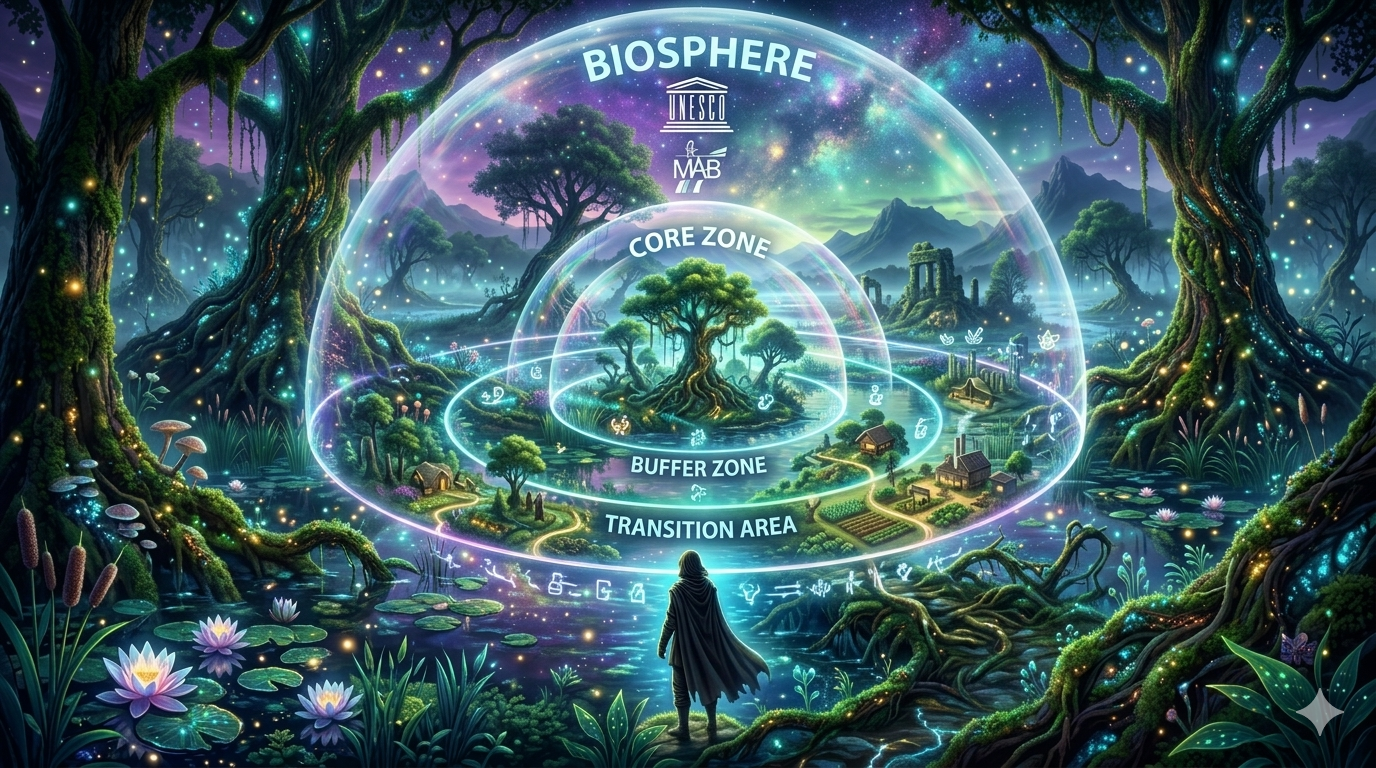
Biosphere reserves are divided into three main zones to ensure proper management and conservation.
Core Zone
The core zone is the most strictly protected area within a biosphere reserve.
Characteristics of the core zone include:
- Complete protection of ecosystems
- No human interference
- Conservation of wildlife and natural habitats
Scientific research may be allowed, but human activities such as agriculture and settlement are prohibited.
Buffer Zone
The buffer zone surrounds the core area and allows limited human activities.
Activities permitted in this zone include:
- Research and monitoring
- Environmental education
- Ecotourism
- Sustainable resource use
The buffer zone acts as a protective layer for the core zone.
Transition Zone
The transition zone is the outermost area of a biosphere reserve.
In this zone, communities live and carry out economic activities.
These activities may include:
- Agriculture
- Forestry
- Fishing
- Tourism
However, such activities must follow sustainable development principles.
Importance of Biosphere Reserves
Biosphere reserves play a crucial role in environmental conservation and sustainable development.
Conservation of Natural Ecosystems
Biosphere reserves protect natural ecosystems such as forests, wetlands, grasslands, and coastal habitats.
This protection ensures that ecological processes continue without disturbance.
Protection of Wildlife
Many endangered and threatened species live within biosphere reserves.
These areas provide safe habitats for animals and protect them from threats such as habitat destruction and poaching.
Preservation of Genetic Diversity
Genetic diversity is essential for species survival and adaptation to environmental changes.
Biosphere reserves protect the genetic resources of plants and animals.
Climate Regulation
Healthy ecosystems within biosphere reserves help regulate climate by:
- Absorbing carbon dioxide
- Maintaining soil moisture
- Regulating rainfall patterns
These functions help reduce the impacts of climate change.
Sustainable Use of Natural Resources
Biosphere reserves demonstrate how natural resources can be used responsibly.
Sustainable practices ensure that resources remain available for future generations.
Role of Biosphere Reserves in Biodiversity Conservation
Biosphere reserves are vital for preserving biodiversity across different ecosystems.
Protection of Endangered Species
Many rare and endangered species find refuge within biosphere reserves.
These protected environments allow populations to recover and thrive.
Maintenance of Ecological Balance
By protecting natural habitats, biosphere reserves help maintain ecological relationships such as:
- Predator-prey interactions
- Pollination networks
- Nutrient cycles
These processes are essential for ecosystem stability.
Restoration of Degraded Ecosystems
In some biosphere reserves, degraded ecosystems are restored through conservation programs.
Restoration efforts may include:
- Reforestation
- Soil conservation
- Habitat rehabilitation
These initiatives help recover damaged ecosystems.
Biosphere Reserves in India
India has established several biosphere reserves to protect its rich biodiversity and unique ecosystems.
These reserves include a wide range of habitats such as forests, mountains, wetlands, and coastal ecosystems.
Some well-known biosphere reserves in India include:
- Nilgiri Biosphere Reserve
- Nanda Devi Biosphere Reserve
- Sundarbans Biosphere Reserve
- Gulf of Mannar Biosphere Reserve
- Pachmarhi Biosphere Reserve
These biosphere reserves protect diverse ecosystems and contribute to conservation efforts in India.
Benefits of Biosphere Reserves
Biosphere reserves provide multiple ecological, economic, and social benefits.
Ecological Benefits
- Conservation of biodiversity
- Protection of natural habitats
- Maintenance of ecological balance
Economic Benefits
- Promotion of ecotourism
- Sustainable agriculture and forestry
- Employment opportunities for local communities
Social Benefits
- Preservation of traditional knowledge
- Community participation in conservation
- Environmental education and awareness
Threats to Biosphere Reserves
Despite their protected status, biosphere reserves face several challenges.
Human Encroachment
Expansion of settlements and agriculture can threaten protected ecosystems.
Illegal Hunting and Poaching
Wildlife within biosphere reserves may be targeted by poachers.
Climate Change
Changing climate conditions may affect species distribution and ecosystem health.
Pollution
Industrial waste, plastic pollution, and chemical runoff can harm ecosystems.
Strategies for Effective Management
Proper management strategies are necessary to ensure the long-term success of biosphere reserves.
Community Participation
Local communities should be actively involved in conservation activities.
Sustainable Development Practices
Economic activities within biosphere reserves must follow environmentally friendly methods.
Strong Legal Protection
Governments must enforce strict laws to prevent illegal activities.
Scientific Monitoring
Regular research and monitoring help identify environmental changes and improve conservation strategies.
Future Role of Biosphere Reserves
As environmental challenges continue to increase, biosphere reserves will become even more important in protecting ecosystems and biodiversity.
They will play a key role in:
- Combating climate change
- Preserving biodiversity
- Promoting sustainable development
- Supporting environmental research
These reserves will continue to serve as models for balancing human development with environmental protection.
Conclusion
Biosphere reserves are vital tools for conserving biodiversity and promoting sustainable development. They provide protected environments where ecosystems can thrive while allowing communities to use natural resources responsibly.
Through their three-zone structure—core, buffer, and transition areas—biosphere reserves effectively balance ecological protection with human activities. They support scientific research, environmental education, and sustainable livelihoods.
Despite facing challenges such as climate change, human encroachment, and pollution, biosphere reserves remain essential for safeguarding the planet’s natural heritage. Strengthening conservation policies, encouraging community participation, and promoting sustainable practices will help ensure their long-term success.
In a world facing increasing environmental pressures, biosphere reserves represent hope for protecting biodiversity, maintaining ecological balance, and building a sustainable future for generations to come.