Introduction
The establishment of the Delhi Sultanate in the early 13th century marked a significant turning point in Indian history. It not only introduced new political structures but also brought about profound social, economic, and cultural transformations.
The foundation of the Sultanate is generally associated with the victories of Muhammad Ghori and the subsequent consolidation by his general Qutb-ud-din Aibak. The process was not sudden but resulted from multiple interrelated causes, followed by wide-ranging consequences.
Causes Behind the Establishment of the Delhi Sultanate
Political Causes
Fragmentation of Indian Polity
One of the most important reasons was the political disunity in India during the 12th century.
- India was divided into numerous small kingdoms
- Lack of a strong central authority
- Frequent conflicts among regional rulers
This disunity made it easier for foreign invaders to establish control.
Weakness of Rajput States
The Rajput kingdoms, though brave, suffered from structural weaknesses:
- Lack of unity among Rajput clans
- Absence of a coordinated defense strategy
- Dependence on traditional warfare methods
These factors weakened their resistance against Turkish invasions.
Defeat in the Battles of Tarain
The Battles of Tarain were decisive.
- First Battle (1191): Prithviraj Chauhan defeated Muhammad Ghori
- Second Battle (1192): Muhammad Ghori defeated Prithviraj Chauhan
This victory opened the way for Turkish expansion in North India.
Military Causes
Superiority of Turkish Military Techniques
The Turkish armies had several advantages:
- Use of cavalry-based warfare
- Superior horse archery techniques
- Better military organization
In contrast, Indian armies relied heavily on elephants and traditional methods.
Efficient Leadership
Muhammad Ghori was a determined and strategic leader:
- Learned from earlier defeats
- Planned systematic invasions
- Appointed capable generals like Qutb-ud-din Aibak
Economic Causes
Attraction of Wealth
India was known for its immense wealth:
- Prosperous cities and temples
- Flourishing trade and agriculture
This attracted invaders seeking economic gains.
Control over Trade Routes
North India was strategically important:
- Control over trade routes connecting Central Asia and India
- Economic advantages for rulers
Social Causes
Rigid Caste System
- Social divisions weakened unity
- Lower classes had limited participation in defense
Lack of National Consciousness
- Loyalty was primarily local or regional
- Absence of a unified identity
Religious and Ideological Factors
Motivation for Expansion
- Spread of Islam was sometimes used as justification
- Religious zeal combined with political ambition
However, political and economic motives were more dominant.
Establishment of the Delhi Sultanate
Role of Qutb-ud-din Aibak
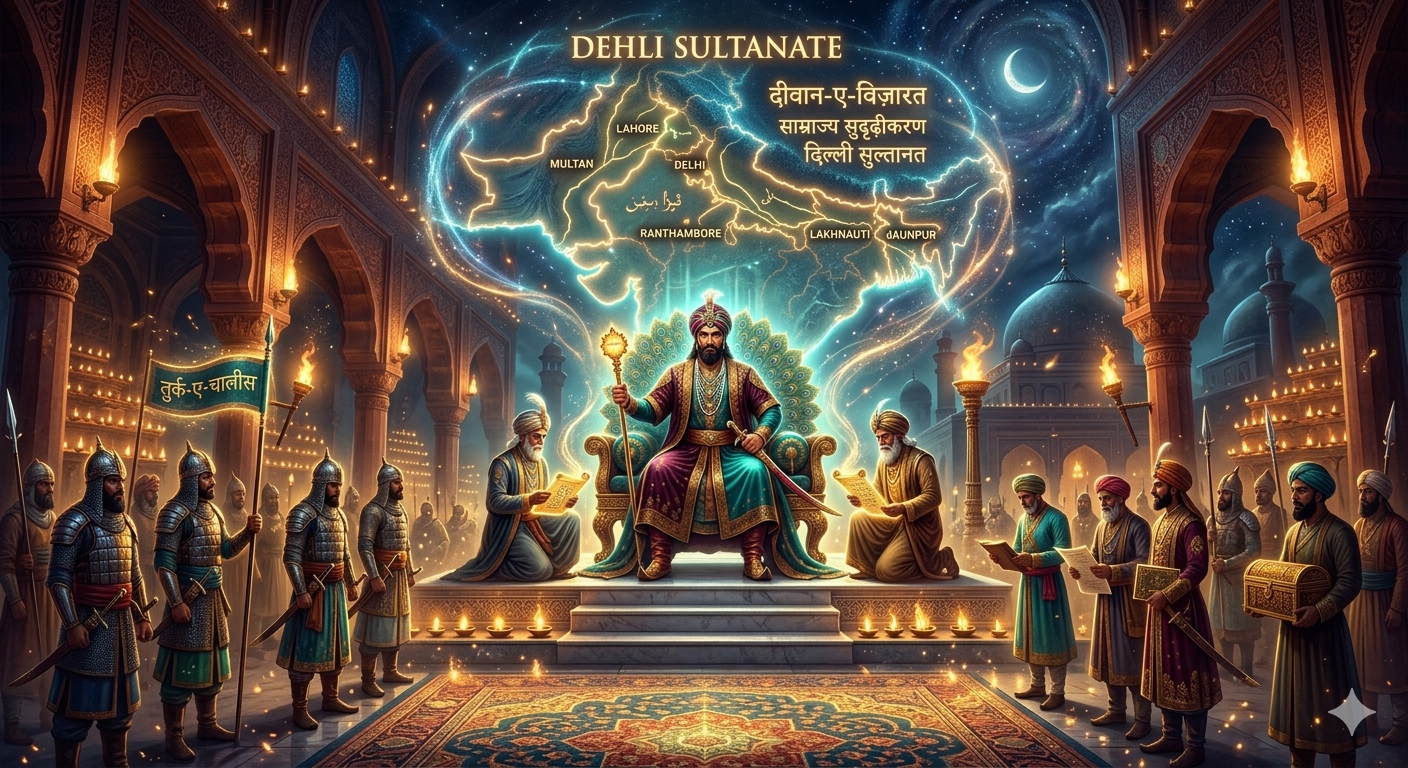
After the death of Muhammad Ghori, his general Qutb-ud-din Aibak established independent rule in 1206.
Key Contributions
- Founded the Slave Dynasty
- Consolidated Turkish control in North India
- Established Delhi as the capital
This marked the formal beginning of the Delhi Sultanate.
Consequences of the Establishment of the Delhi Sultanate
Political Consequences
Establishment of Centralized Rule
- Introduction of a strong central authority
- Replacement of fragmented kingdoms
- Development of a structured प्रशासनिक system
Introduction of New Administrative Systems
- Creation of efficient bureaucracy
- Use of Persian as administrative language
- Development of systems like Iqta
Expansion of Territory
- Gradual expansion across North India
- Establishment of a large empire
Military Consequences
Transformation of Warfare
- Introduction of cavalry-based warfare
- Decline of traditional methods
- Increased use of strategic planning
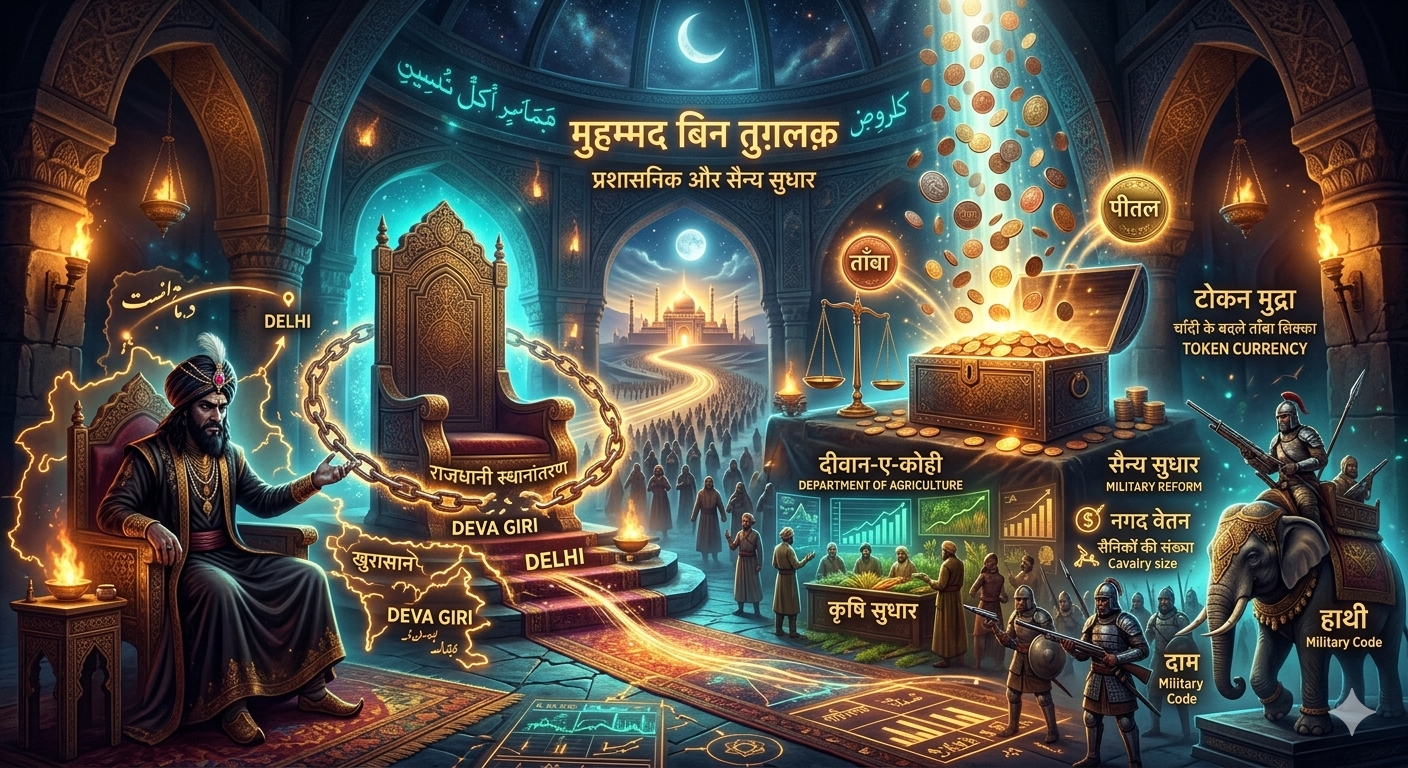
Permanent Standing Army
- Organized military system
- Direct control by the ruler
Economic Consequences
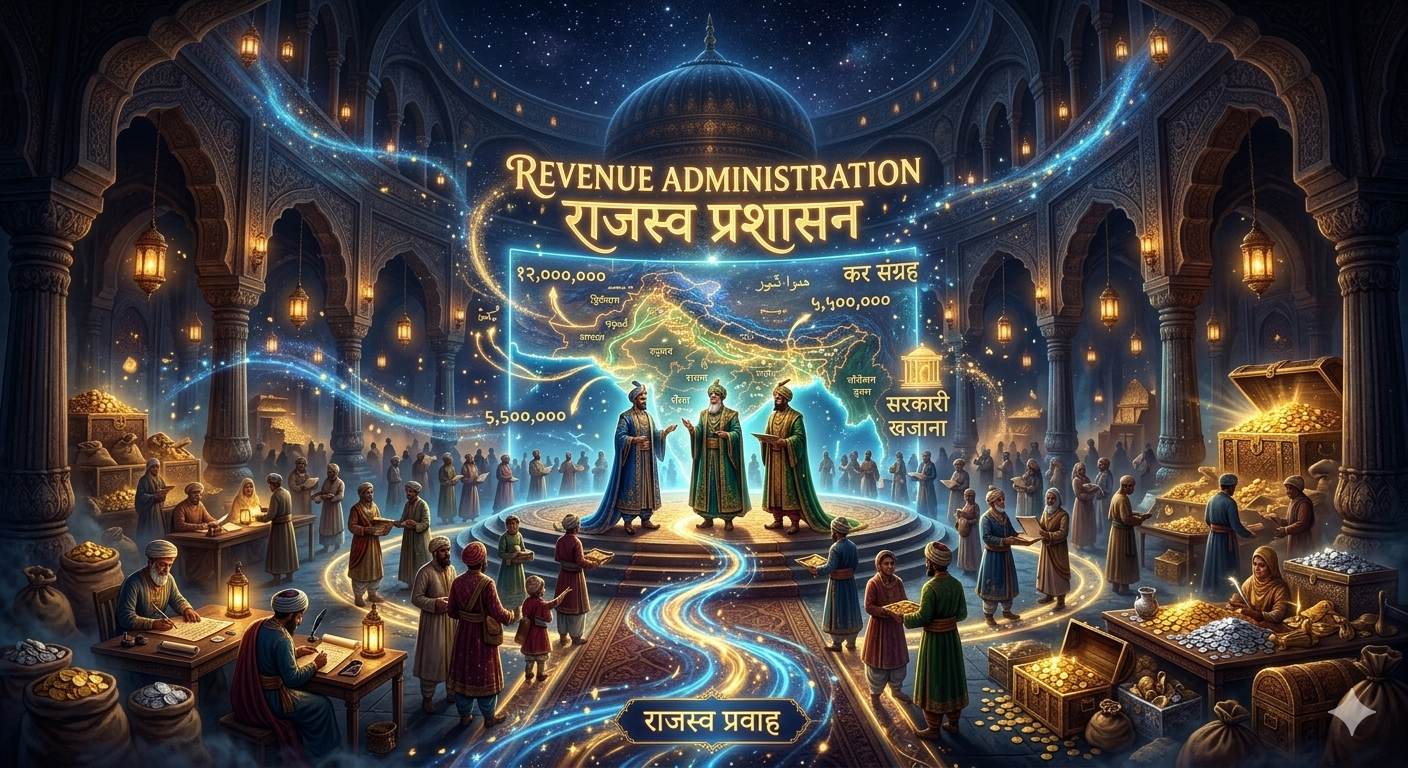
Land Revenue System
- Introduction of systematic revenue collection
- State control over resources
Growth of Trade and Urbanization
- Development of cities like Delhi
- Expansion of internal and external trade
Monetary System
- Introduction of standardized coinage
- Facilitation of economic transactions
Social Consequences
Changes in Social Structure
- Interaction between different communities
- Emergence of new social groups
Urban Society Development
- Growth of towns and cities
- Rise of artisans and traders
Cultural Consequences
Emergence of Indo-Islamic Culture
- Fusion of Indian and Islamic traditions
- Development of a composite culture
Growth of Architecture
- Construction of mosques, forts, and minarets
- Example: Qutub Minar
Language Development
- Growth of Persian and later Urdu
- Influence on literature and administration
Religious Consequences
Spread of Islam
- Establishment of Islamic rule
- Growth of Muslim population
Rise of Bhakti and Sufi Movements
- Response to social and religious changes
- Promotion of unity and spiritual equality
Long-Term Consequences
Foundation for Mughal Empire
The administrative and political systems of the Delhi Sultanate laid the groundwork for the Mughal Empire.
Cultural Integration
- Development of a composite Indian culture
- Long-term impact on art, architecture, and society
Transformation of Indian Polity
- Shift from regional kingdoms to centralized empires
- Introduction of new governance models
Critical Analysis
Positive Impacts
1. Political Unity
The Sultanate helped in unifying large parts of India under one rule.
2. Administrative Efficiency
Introduction of organized systems improved governance.
3. Cultural Synthesis
Fusion of traditions enriched Indian culture.
Negative Impacts
1. Social Tensions
Religious and cultural differences sometimes led to conflicts.
2. Economic Exploitation
Heavy taxation affected peasants.
3. Destruction during Conquests
Wars caused loss of life and property.
Conclusion
The establishment of the Delhi Sultanate was the result of multiple factors such as political disunity, military superiority of invaders, and economic motivations. Its consequences were far-reaching, bringing significant changes in administration, economy, society, and culture.
While it introduced new systems and promoted cultural synthesis, it also led to certain conflicts and challenges. Overall, the Delhi Sultanate played a crucial role in shaping the course of medieval Indian history and laid the foundation for future empires like the Mughal Empire.