Introduction
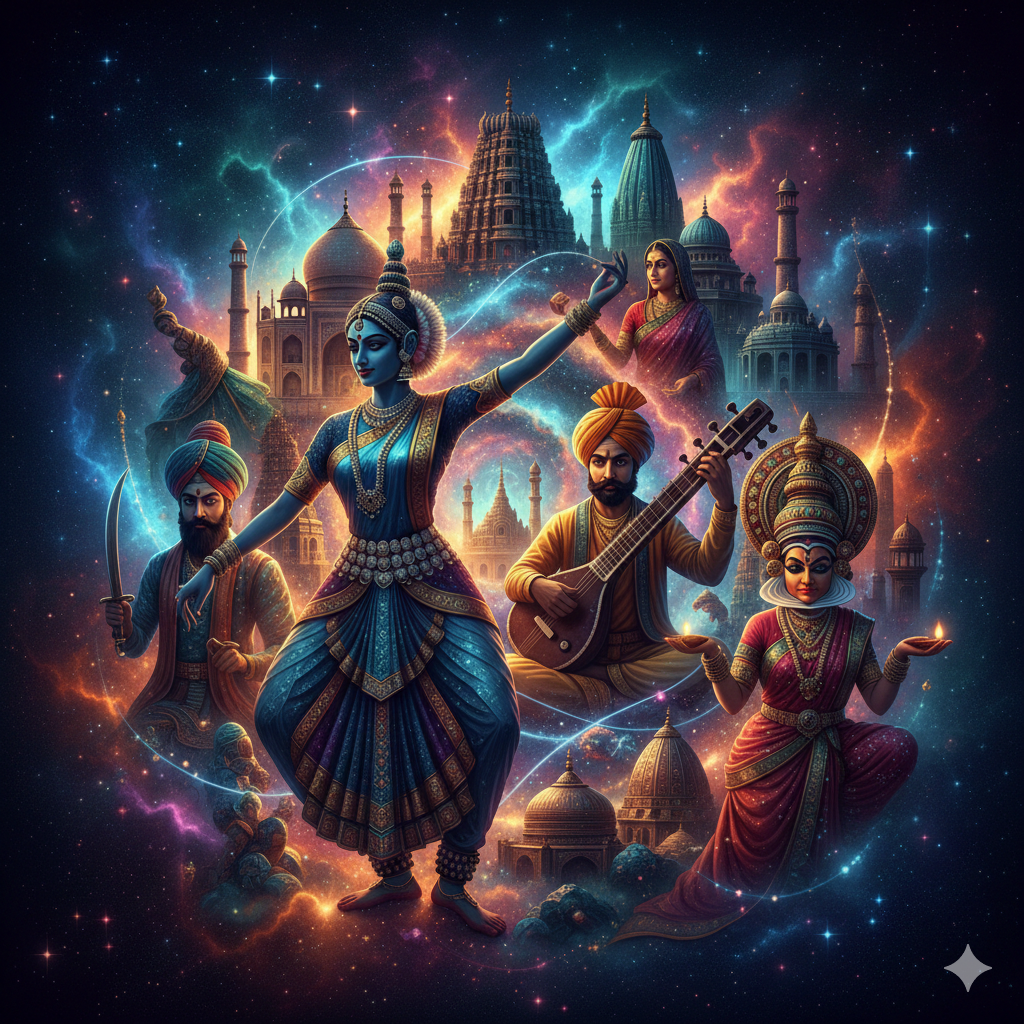
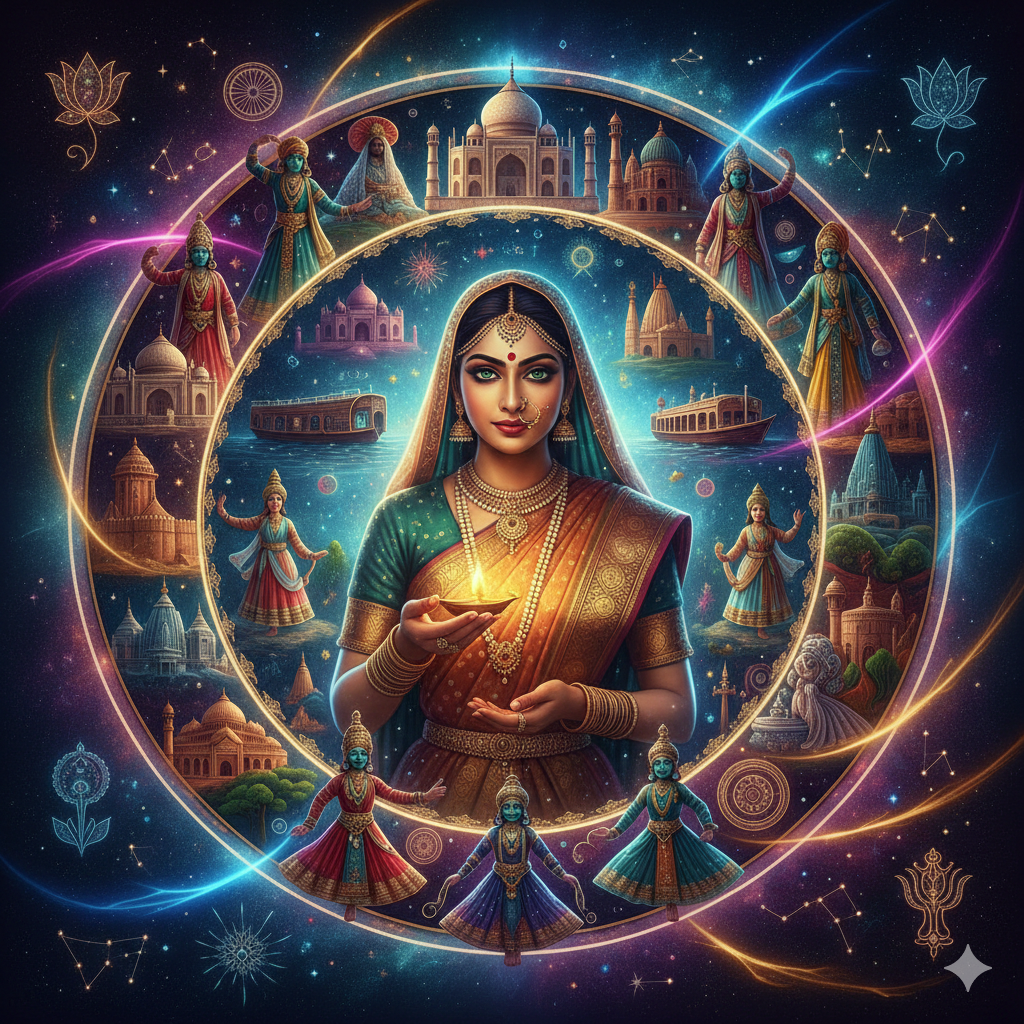
India is globally renowned for its immense cultural diversity. From languages and cuisines to festivals, dress patterns, and social customs, the Indian subcontinent exhibits a complex mosaic of identities. Since Independence, India has been politically organized into states largely based on linguistic considerations. However, cultural realities often transcend administrative boundaries. This raises an important sociological question: Do regions, rather than states, constitute the true cultural units of India?
A close examination reveals that cultural identities in India are shaped less by state borders and more by historical regions, ecological zones, migration patterns, and shared civilizational traditions. While states serve administrative purposes, regions often embody deeper cultural continuity. This essay argues that regions indeed function as more authentic cultural units than states, supported by multiple social, historical, and anthropological examples.
Understanding ‘Region’ and ‘State’ in the Indian Context
State as an Administrative Construct
Indian states are political entities formed primarily after 1956 under the States Reorganisation Act, which reorganized boundaries largely on linguistic lines. Their purpose was administrative efficiency and democratic governance rather than cultural homogeneity.
State boundaries can change through political decisions, but culture evolves organically over centuries. Thus, states are institutional frameworks, whereas culture operates independently of bureaucratic borders.
Region as a Cultural Landscape
A region refers to a broader geographical and cultural area characterized by:
- Shared historical experiences
- Similar ecological conditions
- Common social practices
- Overlapping languages or dialects
- Collective traditions and value systems
Regions often predate modern states and continue to influence people’s identities more deeply than formal state affiliations.
Historical Roots of Regional Cultural Unity
India’s cultural regions emerged through long historical processes involving kingdoms, trade routes, religious movements, and ecological adaptation.
For example:
- Ancient empires like Maurya, Gupta, Chola, and Vijayanagara governed vast cultural zones.
- Bhakti and Sufi movements spread spiritual traditions across present-day state boundaries.
- Trade networks linked coastal and inland regions, shaping food habits and occupational structures.
These historical interactions created regional cultural continuities that remain visible today.
Examples Demonstrating Regions as Cultural Units
1. North India: A Shared Indo-Gangetic Cultural Belt
States like Uttar Pradesh, Bihar, Haryana, Delhi, and parts of Rajasthan form part of the Indo-Gangetic plain. Despite political separation, they share:
- Similar kinship systems
- Patriarchal family structures
- Comparable folk traditions
- Overlapping linguistic roots (Hindi dialects such as Bhojpuri, Awadhi, Braj)
- Common festivals like Holi and Chhath
The everyday social life of eastern UP resembles that of Bihar far more than that of western Maharashtra, showing that regional continuity outweighs state identity.
2. South India: A Dravidian Cultural Sphere
Tamil Nadu, Karnataka, Andhra Pradesh, Telangana, and Kerala together form a South Indian cultural region marked by:
- Dravidian linguistic heritage
- Temple-centered social life
- Rice-based food culture
- Classical dance and music traditions
- Similar marriage rituals
Although each state has its unique expressions, their civilizational framework is remarkably cohesive.
3. The North-East: A Tribal Cultural Region
The northeastern states represent a distinct cultural region with:
- Strong tribal traditions
- Community-based governance
- Matrilineal practices (especially among Khasis and Garos)
- Shared ecological dependence on hills and forests
Despite being divided into multiple states, the region maintains a collective cultural identity shaped by geography and indigenous heritage.
4. Western India: Desert and Coastal Influences
Rajasthan and Gujarat share desert traditions, folk music styles, handicrafts, and pastoral livelihoods. Similarly, coastal Maharashtra, Goa, and Karnataka display overlapping fishing cultures, coconut-based cuisines, and maritime histories.
These similarities cut across state lines and reflect environmental and historical influences rather than administrative divisions.
5. Bengal Cultural Region Across Borders
West Bengal and Bangladesh together represent a unified Bengali cultural region characterized by:
- Bengali language and literature
- Shared culinary traditions
- Similar social customs
- Common artistic heritage
Here, international borders have failed to erase regional cultural unity, highlighting the strength of cultural regions.
Role of Ecology in Shaping Regional Culture
Physical geography strongly influences cultural practices:
- Himalayan regions promote pastoralism and seasonal migration.
- Coastal regions develop maritime occupations.
- River plains support agrarian lifestyles.
- Desert regions foster nomadic traditions.
People living in similar ecological settings evolve similar cultural responses, irrespective of state boundaries.
Language Diversity and Regional Identity
While states were formed on linguistic lines, linguistic reality is far more fluid:
- Dialects flow across borders.
- Many languages are spoken in multiple states.
- Cultural regions often contain multiple languages but maintain shared traditions.
For example, Bhojpuri culture spans UP, Bihar, and Jharkhand, creating a linguistic-cultural region beyond political demarcation.
Economic Patterns Reinforce Regional Unity
Occupations such as tea plantation work in Assam and West Bengal, fishing along eastern and western coasts, and agriculture in the plains bind people regionally. Markets, labor migration, and craft traditions operate regionally, not state-wise.
Religious and Cultural Networks
Pilgrimage circuits, sacred rivers, and religious traditions connect regions:
- The Ganga cultural belt
- The Char Dham circuit
- Southern temple networks
These spiritual geographies unite regions across multiple states.
Migration and Inter-Regional Integration
Internal migration further blurs state identities. Migrants carry regional traditions into urban spaces, creating hybrid cultural zones. Cities like Delhi and Mumbai function as regional melting pots rather than state-centric cultural centers.
Limitations of State-Based Cultural Identity
State identities are:
- Relatively recent
- Politically constructed
- Often internally diverse
For example, Uttar Pradesh alone contains Braj, Awadh, Bhojpur, and Bundelkhand regions — each culturally distinct. This internal diversity weakens the idea of the state as a single cultural unit.
Counterpoint: Growing Importance of State Identity
It must be acknowledged that:
- Regional political movements strengthen state consciousness
- Language-based education systems reinforce state cultures
- Media and governance promote state symbols
However, these influences coexist with deeper regional identities rather than replacing them.
Sociological Implications
Understanding regions as cultural units helps in:
- Designing sensitive development policies
- Preserving indigenous traditions
- Managing inter-regional harmony
- Promoting inclusive governance
Ignoring regional realities risks cultural alienation and policy failure.
Conclusion
India’s cultural diversity cannot be fully understood through the lens of state boundaries alone. While states are essential administrative entities, they do not adequately capture the lived cultural experiences of people. Historical continuity, ecological adaptation, linguistic fluidity, religious networks, and economic patterns all point toward regions as the more authentic cultural units.
Therefore, it is reasonable to conclude that in India, regions function as deeper and more enduring cultural units than states. Recognizing this reality enriches our understanding of Indian society and strengthens the foundation of unity in diversity.