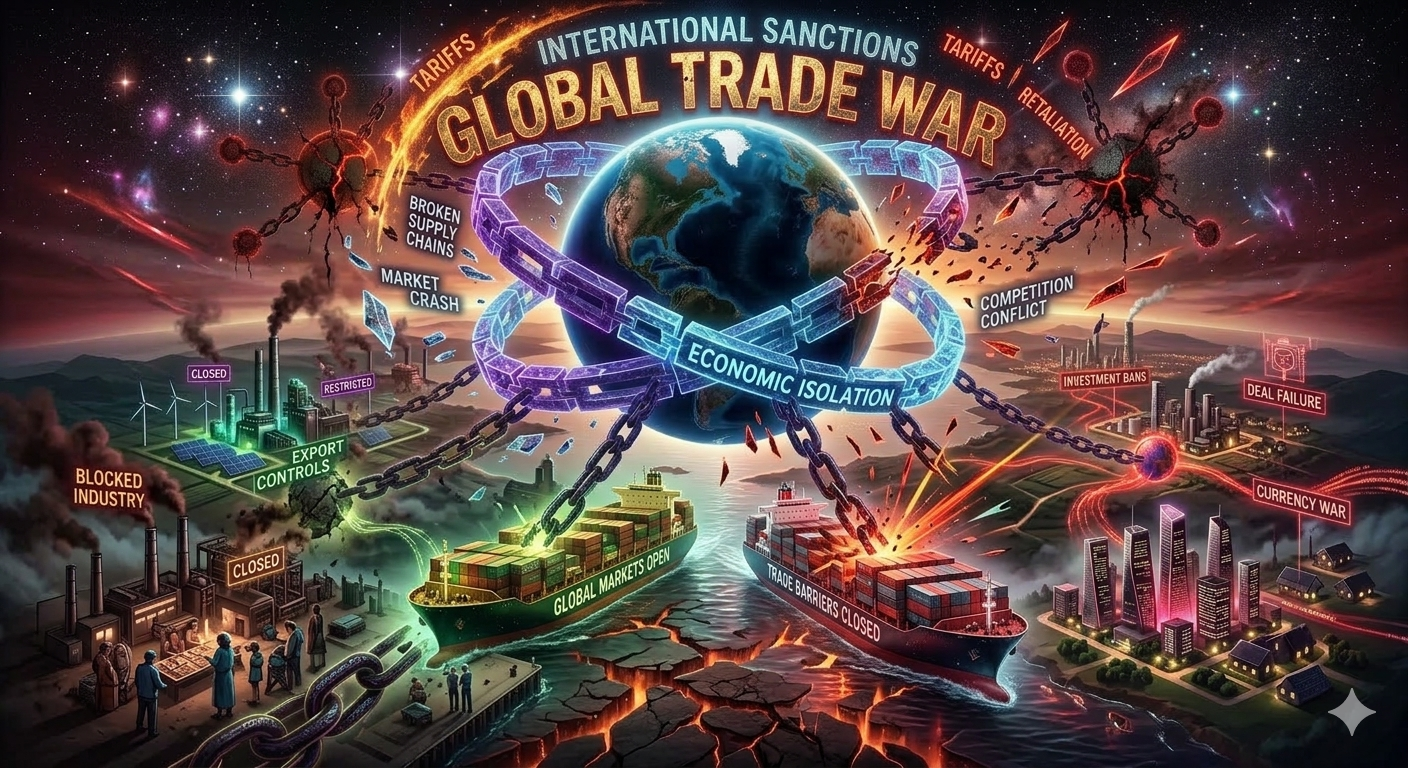
In the modern globalized economy, international trade plays a vital role in shaping economic growth, industrial development, and technological progress. Countries exchange goods, services, and resources to achieve efficiency and mutual economic benefits. However, trade relations between nations are not always cooperative. When countries impose tariffs, quotas, or other trade barriers against each other in retaliation, a trade war emerges. Trade wars are economic conflicts in which major economies attempt to protect domestic industries or gain strategic advantages by restricting imports from rival nations.
Trade wars can have profound consequences not only for the countries directly involved but also for the entire global economic system. These conflicts affect international supply chains, financial markets, global trade flows, and investment patterns. In recent years, tensions between major economies such as the United States and China have demonstrated how trade wars can influence global economic stability.
For developing nations, the effects of trade wars are complex. While some countries may benefit from trade diversion and new export opportunities, others may face declining demand, volatile capital flows, and disrupted supply chains. Therefore, understanding the economic consequences of trade wars is essential for policymakers and economists seeking to maintain stable global markets and sustainable development.
Understanding Trade Wars
Meaning and Concept of Trade Wars
A trade war occurs when two or more countries impose trade restrictions such as tariffs, quotas, or import bans against each other in response to perceived unfair trade practices. These restrictions are often implemented to protect domestic industries from foreign competition or to pressure trading partners into changing their economic policies.
Trade wars typically involve escalating rounds of retaliatory measures, where each country responds to the other’s restrictions with additional barriers. This cycle can gradually intensify economic tensions and disrupt global trade systems.
Causes of Trade Wars
Trade wars often arise due to several economic and political factors:
- Trade Imbalances
Large trade deficits between countries may lead governments to impose tariffs to reduce imports. - Protection of Domestic Industries
Governments sometimes restrict imports to protect local industries from foreign competition. - Strategic Economic Rivalry
Major economies may engage in trade conflicts to maintain technological or economic dominance. - National Security Concerns
Certain industries, such as defense and technology, are considered strategically important. - Disputes over Intellectual Property and Technology Transfer
Countries may impose trade barriers to address concerns about intellectual property protection.
Such conflicts often take place within the framework of international trade rules overseen by organizations like the World Trade Organization.
Mechanisms of Trade Wars
Tariffs and Import Duties
Tariffs are taxes imposed on imported goods. By increasing the cost of foreign products, tariffs encourage consumers to buy domestically produced goods. However, tariffs also raise prices for consumers and businesses that rely on imported inputs.
Quotas and Import Restrictions
Governments may limit the quantity of certain goods that can be imported. These quotas protect domestic industries but reduce market competition and increase prices.
Subsidies to Domestic Industries
Countries may provide financial support to domestic industries to enhance competitiveness against foreign producers.
Currency Manipulation Accusations
Trade conflicts sometimes involve allegations that a country deliberately weakens its currency to boost exports.
Economic Consequences for Major Economies
1. Increased Costs for Consumers and Businesses
Trade wars often lead to higher prices for imported goods due to tariffs. Businesses that depend on imported raw materials or intermediate products experience increased production costs.
These increased costs may ultimately be passed on to consumers in the form of higher prices, reducing purchasing power and consumer welfare.
2. Disruption of Global Supply Chains
Modern manufacturing relies on complex international supply chains. Components of a single product may be produced in several different countries before final assembly.
When tariffs or trade barriers are introduced, these supply chains become disrupted. Companies may need to shift production locations, find alternative suppliers, or redesign their manufacturing processes.
For example, the trade tensions between the United States and China significantly affected global manufacturing networks, particularly in electronics and technology sectors.
3. Reduced Economic Growth
Trade wars often lead to reduced economic growth in the participating countries. When exports decline and investment slows, overall economic activity may weaken.
Uncertainty surrounding trade policies discourages businesses from making long-term investments, further slowing economic expansion.
4. Volatility in Financial Markets
Trade conflicts create uncertainty in global financial markets. Investors react to tariff announcements and policy changes by shifting capital between markets.
Stock markets may experience sudden fluctuations, while currencies and commodity prices may become volatile. Such instability can affect global financial confidence.
5. Decline in International Investment
Foreign direct investment (FDI) often declines during trade conflicts because businesses fear regulatory uncertainty and market instability.
Multinational corporations may delay expansion plans or relocate production facilities to countries unaffected by trade tensions.
Impact of Trade Wars on Global Markets
1. Distortion of Global Trade Patterns
Trade wars alter the natural flow of international trade. Countries may shift their imports and exports to alternative markets to avoid tariffs.
For example, when major economies impose tariffs on each other’s products, exporters seek new markets in other regions. This phenomenon is known as trade diversion.
2. Commodity Price Fluctuations
Trade wars can influence global commodity markets. When tariffs affect agricultural or industrial goods, global demand patterns change, causing price fluctuations.
For instance, tariffs on agricultural imports can reduce demand for crops such as soybeans, affecting farmers and commodity markets worldwide.
3. Weakening of Multilateral Trade Institutions
Trade wars challenge the rules-based global trading system. Institutions like the World Trade Organization aim to promote fair trade practices and resolve disputes through negotiations.
When major economies bypass these mechanisms and impose unilateral tariffs, the credibility and effectiveness of global trade governance may weaken.
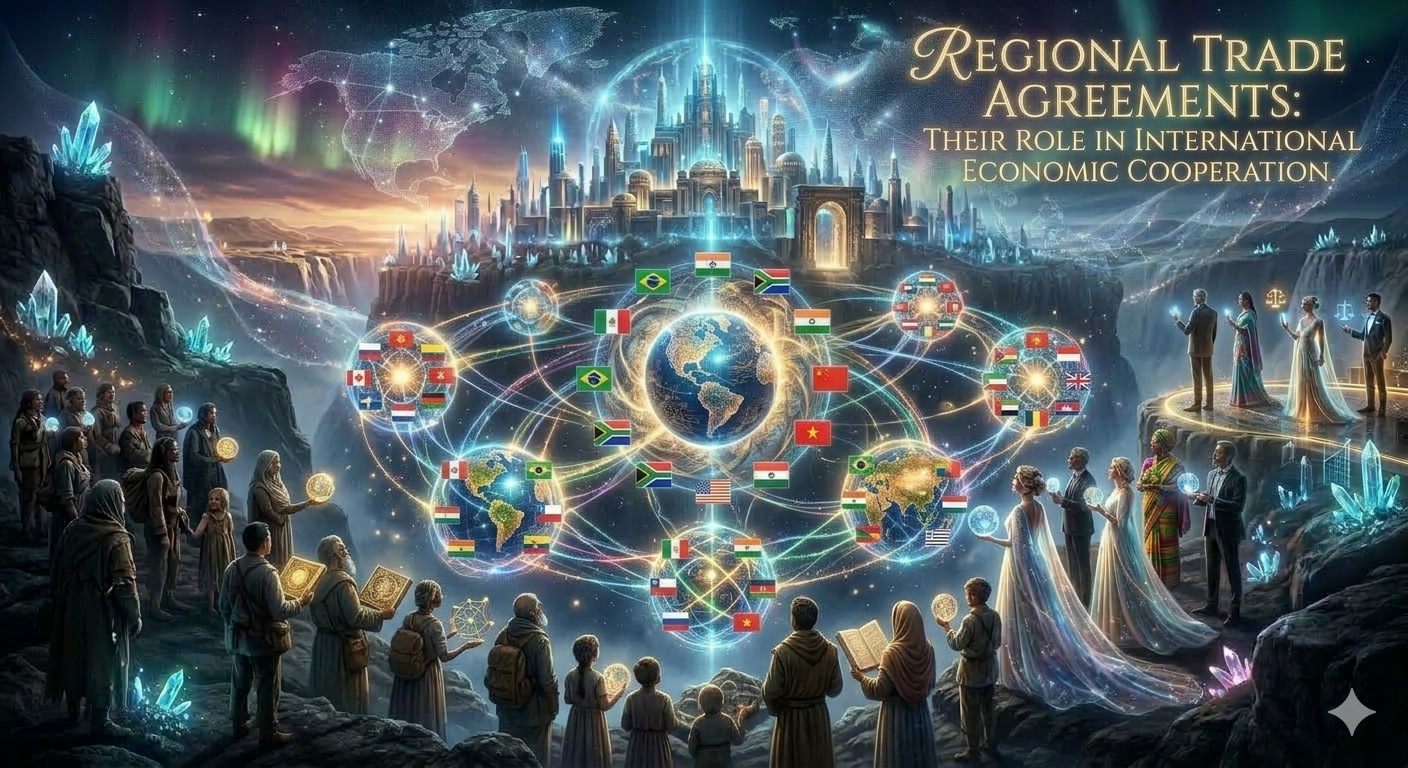
4. Emergence of Regional Trade Alliances
Trade conflicts often encourage countries to strengthen regional trade partnerships as alternatives to traditional markets.
Regional agreements help countries diversify trade relationships and reduce dependence on major economies involved in conflicts.
Economic Impact on Developing Nations
1. Trade Diversion Opportunities
In some cases, developing countries benefit from trade wars between major economies. When tariffs restrict trade between large countries, exporters from developing nations may fill the gap.
For example, when tariffs affected agricultural trade between the United States and China, some agricultural exporters from countries like Brazil gained new market opportunities.
2. Disruption of Export Markets
However, trade wars can also harm developing economies that depend heavily on exports to major markets. Reduced global demand and supply chain disruptions may decrease export revenues.
Industries such as textiles, electronics, and automobile components are particularly vulnerable.
3. Instability in Global Supply Chains
Many developing countries serve as manufacturing hubs within global supply chains. When trade wars disrupt production networks, these countries may experience declining orders and industrial slowdowns.
This can lead to reduced employment and economic uncertainty.
4. Currency and Financial Market Volatility
Trade wars increase uncertainty in global financial markets. Developing countries often experience currency fluctuations and capital outflows during such periods.
Investors may withdraw funds from emerging markets and shift investments to safer assets.
5. Impact on Commodity-Dependent Economies
Many developing countries depend heavily on exports of commodities such as oil, metals, or agricultural products. Trade wars affecting industrial production or global demand can lead to lower commodity prices.
Declining export revenues can negatively affect government budgets and economic stability.
Case Study: The United States–China Trade War
Background of the Conflict
One of the most significant trade conflicts in recent years occurred between the United States and China beginning in 2018.
The conflict began when the United States imposed tariffs on Chinese goods worth billions of dollars, citing concerns over trade imbalances and intellectual property practices. China responded with retaliatory tariffs on American exports.
Economic Effects
The trade war produced several economic consequences:
- Increased costs for manufacturers and consumers
- Decline in bilateral trade between the two countries
- Relocation of manufacturing operations to other countries
- Disruptions in global technology supply chains
Some Southeast Asian economies benefited from companies shifting production away from China to avoid tariffs.
Long-Term Structural Impacts
Reconfiguration of Global Supply Chains
Trade wars encourage companies to diversify supply chains across multiple countries to reduce risks. This process may lead to a more geographically distributed manufacturing system.
Technological and Economic Rivalry
Trade conflicts between major powers may evolve into broader technological competition in sectors such as semiconductors, artificial intelligence, and telecommunications.
Rise of Economic Nationalism
Trade wars often strengthen protectionist policies and economic nationalism. Governments may prioritize domestic production and strategic industries.
Strategies for Managing Trade War Impacts
Countries and businesses adopt several strategies to mitigate the negative effects of trade conflicts:
- Diversifying export markets
- Strengthening regional trade partnerships
- Promoting domestic industrial development
- Enhancing supply chain resilience
- Encouraging diplomatic negotiations and trade agreements
Such strategies can help maintain economic stability despite global trade tensions.
Conclusion
Trade wars between major economies represent significant challenges for the global economic system. By imposing tariffs and trade restrictions, countries attempt to protect domestic industries and influence international economic behavior. However, these conflicts often produce unintended consequences such as higher consumer prices, disrupted supply chains, financial market volatility, and reduced global economic growth.
The effects of trade wars extend far beyond the countries directly involved. Global markets experience changes in trade patterns, commodity prices, and investment flows. Developing nations face both opportunities and risks, depending on their integration into global supply chains and export markets.
Recent conflicts between the United States and China illustrate how trade wars can reshape international economic relations and encourage structural changes in global production networks.
In an increasingly interconnected world, cooperation and multilateral dialogue remain essential for maintaining stable trade relationships and sustainable economic development. Effective international institutions and diplomatic negotiations can help prevent trade conflicts from escalating and ensure that global trade continues to contribute to prosperity for both developed and developing nations.