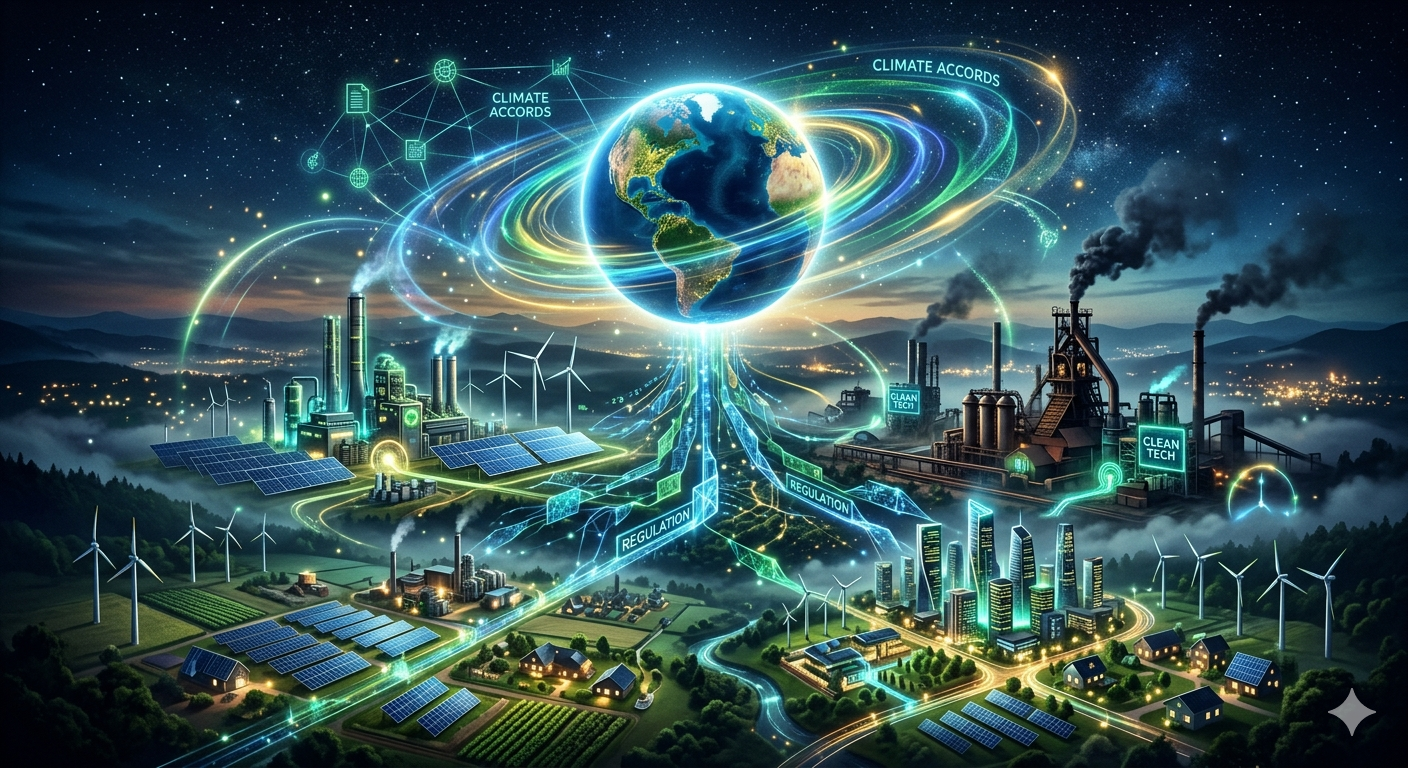
Climate change has emerged as one of the most pressing global challenges of the 21st century. Rising global temperatures, extreme weather events, sea-level rise, and biodiversity loss have compelled governments, international organizations, and industries to adopt climate change policies aimed at reducing greenhouse gas emissions and promoting sustainable development. These policies include carbon pricing mechanisms, emission trading systems, renewable energy mandates, environmental regulations, and international agreements such as the Paris Agreement.
While such policies are essential to mitigate environmental damage, they also have profound economic implications for global industries and developing economies. Climate policies influence production costs, investment patterns, technological innovation, trade competitiveness, employment, and economic growth. For developed economies with advanced technologies and financial resources, adapting to climate policies may create opportunities for green innovation and sustainable industrial growth. However, for developing economies—many of which rely on carbon-intensive industries and limited financial resources—the transition may present complex challenges.
Understanding these economic implications is crucial for designing balanced policies that protect the environment while ensuring economic stability and equitable development. This discussion examines the economic consequences of climate change policies for global industries and developing economies, highlighting both opportunities and challenges.
Climate Change Policies: Concept and Objectives
Meaning of Climate Change Policies
Climate change policies refer to governmental and international measures aimed at reducing greenhouse gas emissions, promoting renewable energy, enhancing energy efficiency, and adapting to climate impacts. These policies are implemented at national, regional, and international levels and often involve regulatory frameworks, economic incentives, and technological transformation.
Major Objectives of Climate Policies
Climate policies pursue several interconnected goals:
- Reduction of Greenhouse Gas Emissions
The primary aim is to limit global warming by reducing emissions of carbon dioxide, methane, and other greenhouse gases. - Promotion of Renewable Energy
Governments encourage the adoption of solar, wind, and hydropower technologies to replace fossil fuels. - Encouragement of Sustainable Industrial Practices
Industries are required to adopt cleaner technologies and improve energy efficiency. - Climate Adaptation and Resilience
Policies aim to help economies and communities adapt to unavoidable climate impacts. - Global Cooperation and Environmental Governance
International agreements promote coordinated action among nations.
These objectives have far-reaching economic consequences across various sectors and regions.
Economic Implications of Climate Policies on Global Industries
1. Increased Production Costs for Carbon-Intensive Industries
One of the most immediate economic impacts of climate policies is the increase in production costs for industries that rely heavily on fossil fuels. Carbon taxes, emission limits, and environmental compliance requirements force companies to invest in cleaner technologies and energy-efficient processes.
Industries such as steel, cement, chemicals, aviation, and shipping face higher operational costs due to emission reduction requirements. For example, carbon pricing mechanisms introduced under international frameworks such as the Kyoto Protocol and later climate agreements have compelled industries to internalize environmental costs.
These additional costs may reduce profit margins and lead to price increases for goods and services. In some cases, companies may relocate operations to countries with less stringent environmental regulations, a phenomenon known as carbon leakage.
2. Transformation of the Global Energy Sector
Climate policies have significantly reshaped the global energy industry. Governments worldwide are shifting from fossil fuels toward renewable energy sources.
Key economic effects include:
- Rapid growth of renewable energy industries
- Decline in coal-based power generation
- Increased investments in solar and wind infrastructure
- Emergence of green hydrogen and energy storage technologies
Large-scale investments in renewable energy have created new markets and employment opportunities. However, traditional fossil fuel industries such as coal mining and oil extraction face declining demand, leading to structural economic adjustments.
3. Innovation and Technological Development
Climate policies act as a powerful driver of technological innovation. When governments impose environmental regulations or carbon pricing, industries are incentivized to develop cleaner and more efficient technologies.
Important technological developments include:
- Carbon capture and storage (CCS)
- Electric vehicles and battery technologies
- Energy-efficient manufacturing systems
- Smart grids and digital energy management
Such innovations not only help industries comply with climate regulations but also create new competitive advantages in the global market.
4. Changes in Global Trade Patterns
Climate change policies are increasingly influencing international trade. Countries adopting strict environmental regulations often impose environmental standards on imported goods to ensure fair competition.
For instance, the Carbon Border Adjustment Mechanism aims to impose carbon costs on imports produced in countries with weaker climate policies. This measure protects domestic industries while encouraging global emission reductions.
However, such policies may create trade tensions between developed and developing countries. Export-oriented industries in developing nations may face additional costs to meet environmental standards imposed by developed markets.
5. Emergence of Green Finance and Sustainable Investment
Climate policies have accelerated the growth of green finance and sustainable investment. Financial institutions, governments, and private investors are increasingly allocating capital toward environmentally sustainable projects.
Important developments include:
- Green bonds and climate finance mechanisms
- ESG (Environmental, Social, and Governance) investment frameworks
- Sustainable infrastructure financing
These financial instruments enable industries to access funding for renewable energy projects, clean technologies, and climate adaptation initiatives.
6. Employment Shifts and Labor Market Impacts
Climate policies influence labor markets by creating new jobs in green industries while reducing employment in carbon-intensive sectors.
Positive impacts include:
- Growth of renewable energy jobs
- Expansion of green technology industries
- Development of sustainable agriculture and forestry sectors
Negative impacts include:
- Job losses in coal mining and fossil fuel industries
- Economic displacement of workers in traditional energy sectors
Governments often implement “just transition” policies to support workers affected by industrial transformation.
Economic Implications for Developing Economies
1. Financial Burden of Climate Compliance
Developing economies face significant financial challenges in implementing climate policies. Transitioning to low-carbon technologies requires substantial investments in infrastructure, research, and capacity building.
Many developing countries struggle with limited financial resources, making it difficult to meet international climate commitments. Climate mitigation efforts may divert funds from essential sectors such as healthcare, education, and poverty reduction.
International mechanisms such as the Green Climate Fund aim to support developing nations in addressing these financial constraints.
2. Impact on Industrial Competitiveness
Strict climate policies may affect the competitiveness of industries in developing countries. Many developing economies rely on energy-intensive manufacturing sectors such as textiles, steel, cement, and chemicals.
If developed nations impose carbon tariffs or environmental standards, exporters from developing countries may face higher compliance costs. This could reduce their competitiveness in global markets.
At the same time, adopting cleaner technologies may enhance long-term competitiveness by improving energy efficiency and reducing environmental risks.
3. Opportunities for Sustainable Development
Despite challenges, climate policies also create opportunities for developing economies to pursue sustainable development pathways.
Potential benefits include:
- Expansion of renewable energy industries
- Development of sustainable agriculture
- Improved energy access in rural areas
- Reduction in pollution-related health costs
Countries with abundant solar, wind, or hydropower resources can leverage these natural advantages to build sustainable energy systems.
4. Infrastructure Transformation
Climate policies encourage the modernization of infrastructure in developing economies. Investments in sustainable transport systems, smart cities, and energy-efficient buildings can improve economic productivity and urban living standards.
For example, initiatives promoting electric mobility and public transport reduce fuel imports and enhance energy security.
However, the high cost of infrastructure transformation remains a major challenge for many developing countries.
5. Climate Adaptation Costs
Developing economies are often more vulnerable to climate impacts such as droughts, floods, and cyclones. Climate policies must therefore include adaptation strategies to protect economic activities and livelihoods.
Adaptation measures may involve:
- Construction of climate-resilient infrastructure
- Development of drought-resistant agricultural systems
- Disaster risk management programs
These initiatives require significant financial resources and institutional capacity.
Sectoral Impacts of Climate Policies
Energy Sector
The energy sector is the most directly affected by climate policies. Fossil fuel industries face declining demand, while renewable energy sectors experience rapid growth.
Transitioning to clean energy requires investments in energy storage, grid modernization, and renewable infrastructure.
Manufacturing Sector
Manufacturing industries must adopt energy-efficient production methods and reduce emissions. Environmental regulations may increase production costs but also promote technological innovation and sustainable industrial practices.
Transportation Sector
Climate policies encourage the adoption of electric vehicles, public transportation systems, and low-carbon logistics. This transformation affects automobile manufacturers, fuel industries, and infrastructure development.
Agriculture Sector
Agriculture contributes significantly to greenhouse gas emissions through livestock production, fertilizer use, and deforestation. Climate policies promote sustainable farming practices, agroforestry, and climate-smart agriculture.
For developing economies, these policies can improve food security and environmental sustainability.
Role of International Cooperation
Global climate governance requires cooperation among countries with different economic capacities and development priorities.
International frameworks encourage collaboration in areas such as:
- Climate finance
- Technology transfer
- Capacity building
- Joint research and innovation
Developed nations are expected to support developing countries through financial assistance and technological support to ensure a fair and equitable transition to low-carbon economies.
Challenges in Implementing Climate Policies
Economic Inequality
Climate policies may disproportionately affect poorer communities and developing nations. Without adequate support mechanisms, environmental regulations could exacerbate economic inequality.
Political and Institutional Barriers
Political resistance, weak governance structures, and conflicting economic interests often hinder the effective implementation of climate policies.
Technological Limitations
Many low-carbon technologies remain expensive or underdeveloped. Developing countries may lack the technical expertise required for large-scale implementation.
Risk of Economic Disruption
Rapid transitions away from fossil fuels may lead to economic disruption in regions heavily dependent on carbon-intensive industries.
Strategies for Balanced Climate and Economic Policies
Promotion of Green Industrialization
Governments should encourage industries to adopt sustainable production methods and invest in green technologies.
International Financial Support
Developed nations must fulfill commitments to provide climate finance and technological assistance to developing economies.
Just Transition Policies
Workers affected by industrial transformation should receive training, social protection, and employment opportunities in emerging green sectors.
Strengthening Global Climate Governance
International cooperation should focus on equitable climate policies that balance environmental protection with economic development.
Conclusion
Climate change policies are reshaping the global economic landscape by influencing industrial practices, investment patterns, trade relations, and technological innovation. For global industries, these policies present both challenges and opportunities. While carbon-intensive sectors face rising costs and structural adjustments, green industries and renewable energy sectors are experiencing unprecedented growth.
For developing economies, the economic implications of climate policies are particularly complex. Limited financial resources, dependence on traditional industries, and vulnerability to climate impacts make the transition to low-carbon development more challenging. However, with appropriate international support, technological innovation, and sustainable development strategies, developing countries can transform these challenges into opportunities for long-term economic resilience.
Ultimately, the success of climate policies depends on achieving a balanced approach that integrates environmental sustainability with economic development and social equity. Global cooperation, equitable financial mechanisms, and inclusive policy frameworks will play a critical role in ensuring that the transition to a sustainable economy benefits all nations and industries.