Introduction
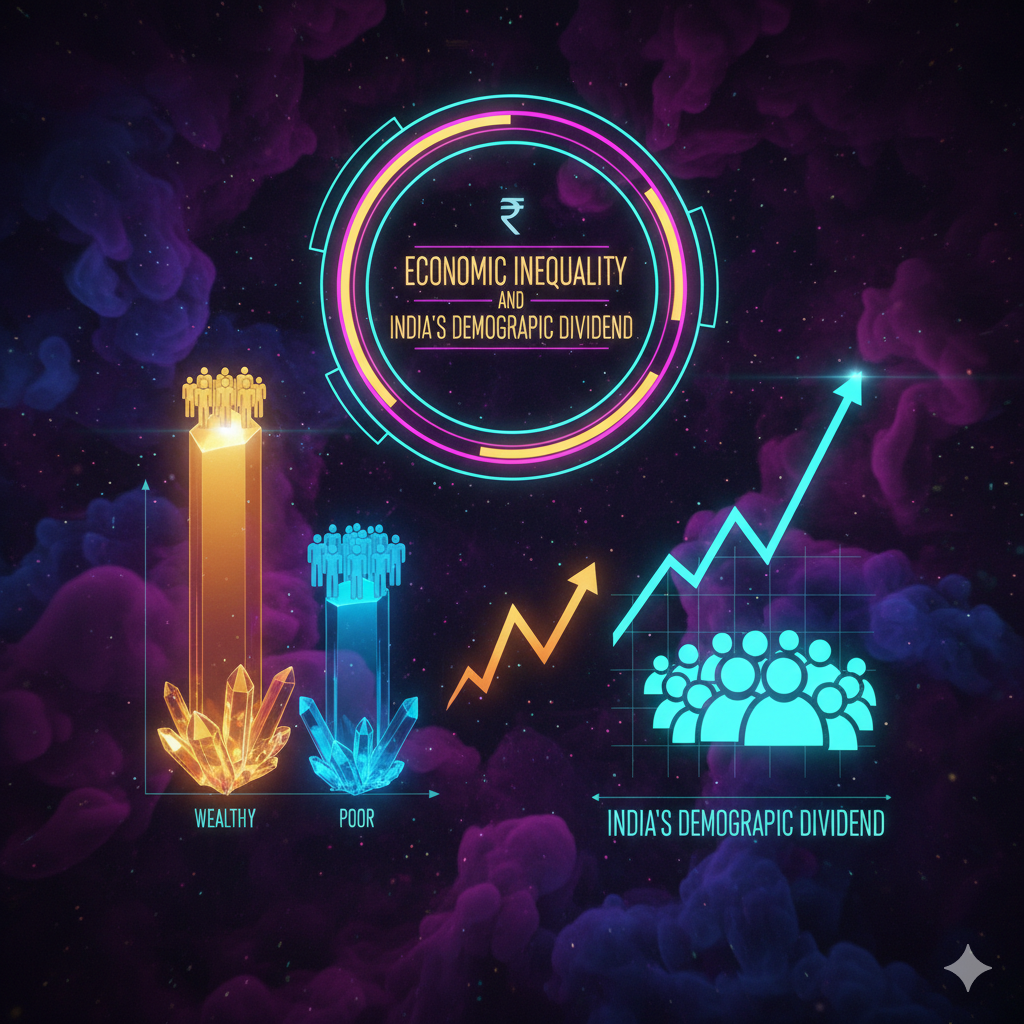
India is currently experiencing a unique demographic phenomenon: a demographic dividend, characterized by a large working-age population relative to dependents. This demographic structure presents an unparalleled opportunity for accelerated economic growth, productivity enhancement, and global competitiveness. Estimates suggest that by 2030, India will have the largest working-age population in the world, with over 65% of its population in the 15–59 age bracket.
However, economic inequality threatens to transform this potential advantage into a liability. The unequal distribution of income, wealth, education, skills, and opportunities undermines the ability of large segments of the population to participate meaningfully in economic growth. If not addressed, inequality could result in underemployment, social discontent, wasted human potential, and slower growth, thereby eroding the very benefits of the demographic dividend.
This essay critically analyses the relationship between economic inequality and India’s demographic dividend and proposes policy measures for ensuring equitable and sustainable development.
Understanding Economic Inequality in India
Economic inequality in India is multidimensional:
- Income Inequality: High-income groups have seen rapid income growth post-liberalisation, while the majority of low-skilled and informal workers experience stagnation.
- Wealth Inequality: Wealth is concentrated in the hands of a few, with assets like land, real estate, and financial instruments largely inaccessible to marginalized groups.
- Regional Disparities: Development is concentrated in urbanized and industrialized states, leaving rural and backward regions lagging.
- Gender Inequality: Female labour participation is low, wage gaps persist, and unpaid care work remains unaccounted for in economic calculations.
- Caste and Social Inequality: Marginalized communities face systemic barriers to education, employment, and social mobility.
- Educational and Skill Inequality: Unequal access to quality education limits employability and skill development.
The combined effect of these inequalities is the underutilization of India’s human capital, which directly affects the demographic dividend.
The Demographic Dividend: Potential and Pitfalls
1. Potential of the Demographic Dividend
- Labour Force Expansion: A large working-age population can accelerate productivity and growth if employed effectively.
- Savings and Investment: With more earners, household savings increase, which can be channeled into productive investment.
- Innovation and Entrepreneurship: A youthful population is more adaptable and open to technology and entrepreneurship.
- Global Competitiveness: Demographic advantage can make India a global manufacturing and service hub.
2. Risks Posed by Economic Inequality
- Underemployment and Unemployment: Inequality restricts access to formal jobs, creating underutilized talent pools.
- Skill Mismatch: The majority of youth lack access to quality education and skill training, limiting participation in high-productivity sectors.
- Regional Disparities: Backward regions fail to generate employment opportunities, forcing migration and urban congestion.
- Social Tensions: Unequal economic opportunities can exacerbate social unrest, particularly among marginalized communities.
- Wasted Demographic Potential: Without inclusive policies, a large portion of the working-age population remains unproductive, undermining growth.
Dimensions Linking Economic Inequality to Demographic Dividend
1. Income and Consumption Inequality
- Higher inequality concentrates income in a small segment of society.
- Low-income groups cannot afford education, health, or entrepreneurial investment.
- Reduced purchasing power limits domestic demand and growth potential.
2. Regional Disparities
- States like Maharashtra, Tamil Nadu, and Gujarat benefit from industrial and service sector growth.
- States in eastern and central India, such as Bihar, Odisha, and Chhattisgarh, lag behind.
- Regional imbalances result in uneven access to employment and skill development opportunities.
3. Social and Gender Inequalities
- Women and marginalized communities are underrepresented in formal employment.
- Societal barriers limit access to capital, education, and networks.
- Persistent social disparities reduce the effective labour force participation rate.
4. Sectoral Imbalances
- High-growth sectors (IT, finance, digital services) absorb a small portion of labour.
- Agriculture employs a large workforce but suffers from low productivity and income.
- Manufacturing has not expanded sufficiently to absorb surplus labour.
5. Educational and Skill Inequalities
- Only a fraction of youth have access to quality technical, vocational, and higher education.
- Skills required by modern industries are lacking in most rural and marginalized populations.
- Digital literacy gaps further compound inequality.
Current Policy Landscape and Gaps
1. Skill Development Initiatives
- Skill India Mission: Aims to train millions of youth in vocational and technical skills.
- Pradhan Mantri Kaushal Vikas Yojana (PMKVY): Focuses on skill certification and employability.
Gap: Coverage and quality are uneven, and many programs do not align with industry demands.
2. Education Policies
- Right to Education (RTE) Act: Expands access to primary education.
- National Education Policy 2020 (NEP): Emphasizes holistic and inclusive learning.
Gap: Quality of education varies widely between urban and rural areas; higher education remains inaccessible to marginalized communities.
3. Social Protection
- Mahatma Gandhi National Rural Employment Guarantee Act (MGNREGA): Provides rural employment.
- Direct Benefit Transfers (DBT): Ensure targeted financial assistance.
Gap: Social protection schemes reduce poverty but are insufficient to address structural inequality.
4. Financial Inclusion
- Jan Dhan Yojana, PM SVANidhi: Expand access to banking and credit.
Gap: Limited financial literacy and uneven regional access reduce impact.
Policy Measures to Ensure Equitable and Sustainable Development
To harness the demographic dividend effectively, India needs inclusive policies that reduce inequality and create productive opportunities. Key policy measures include:
1. Promote Employment-Rich Growth
- Focus on labour-intensive sectors such as manufacturing, MSMEs, and agro-processing.
- Encourage entrepreneurship and start-ups through incentives and capital support.
- Integrate technology adoption in a manner that complements human labour.
2. Strengthen Education and Skill Development
- Expand vocational and technical training aligned with industry needs.
- Improve quality of primary and secondary education, especially in backward regions.
- Introduce digital literacy programs to bridge the technology gap.
3. Reduce Regional Disparities
- Invest in infrastructure, transport, and industrial corridors in backward regions.
- Encourage decentralized industrial clusters to generate local employment.
- Implement targeted incentives for private investment in underdeveloped states.
4. Address Social and Gender Inequalities
- Strengthen affirmative action in education and employment.
- Provide childcare, safety, and workplace inclusion initiatives for women.
- Ensure marginalized communities have access to land, credit, and entrepreneurship support.
5. Financial Inclusion and Asset Ownership
- Expand microfinance, cooperative credit, and digital banking access.
- Encourage asset ownership among marginalized households to enhance economic security.
- Support cooperative and community-based enterprises.
6. Health and Well-Being
- Expand access to healthcare to improve labour productivity.
- Promote preventive health, nutrition, and maternal care, especially in rural areas.
- Healthier workers can contribute more effectively to the demographic dividend.
7. Harness Technology for Inclusion
- Use AI, big data, and digital platforms to target skill development and social benefits.
- Promote affordable digital access in rural and marginalized areas.
- Encourage innovation that creates inclusive job opportunities.
8. Fiscal and Policy Measures
- Progressive taxation to fund social and infrastructure programs.
- Strengthen implementation of existing welfare schemes.
- Encourage public-private partnerships to expand employment and infrastructure.
Challenges to Implementation
- Political and administrative capacity limitations at state and local levels.
- Resistance from entrenched social structures and caste-based hierarchies.
- Rapid technological change leading to skill obsolescence.
- Climate vulnerability affecting agriculture and rural livelihoods.
- Migration pressures on urban infrastructure if regional disparities persist.
Global Lessons
- East Asian Economies (South Korea, Taiwan): High investment in education and skill development led to inclusive demographic dividend utilization.
- Brazil and Latin America: High inequality limited the demographic dividend despite growth.
- Policy Implication: India must combine growth-oriented policies with strong redistributive and inclusive mechanisms.
Conclusion
India’s demographic dividend is a potential catalyst for economic transformation, but economic inequality threatens to undermine it. Unequal access to education, skills, employment, and assets prevents a significant portion of the working-age population from contributing productively to the economy. Regional, social, and gender disparities further limit inclusivity, creating risks of underemployment, social unrest, and wasted human potential.