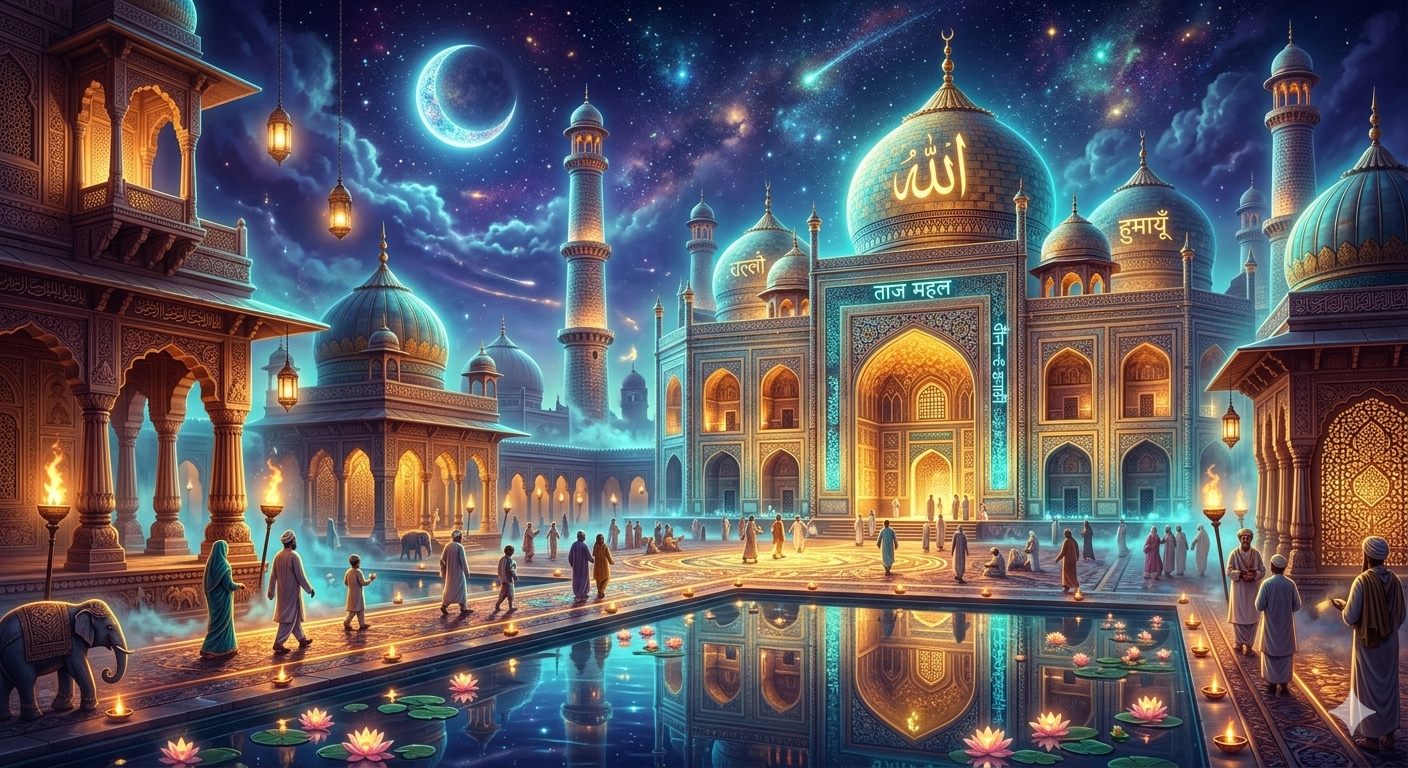
Introduction
Indo-Islamic architecture represents one of the most significant cultural syntheses in Indian history. It emerged through the interaction between indigenous Indian architectural traditions and Islamic styles brought by Turkish, Afghan, and Persian rulers. This fusion gave rise to a unique architectural idiom characterized by structural innovation, artistic refinement, and cultural integration.
The development of this style began during the Delhi Sultanate and reached its zenith under the Mughal Empire, where architecture became a powerful expression of imperial authority and aesthetic excellence.
Early Phase: Indo-Islamic Architecture under the Delhi Sultanate
Introduction of Islamic Architectural Elements
The initial phase of Indo-Islamic architecture began with the establishment of Muslim rule in India. The early rulers introduced new architectural features:
Key Elements
- Arches and domes
- Minarets and large courtyards
- Use of geometric and calligraphic decoration
Since the early builders lacked experience in these techniques, many structures reflected a combination of Indian craftsmanship and Islamic design.
Use of Spolia and Indigenous Influence
Early monuments often used materials from pre-existing Hindu and Jain temples.
- Columns and decorative motifs were reused
- Trabeate (beam-based) construction coexisted with arcuate (arch-based) style
This phase clearly shows the transitional nature of Indo-Islamic architecture.
Example: Qutub Complex
One of the earliest and most prominent examples is the Qutub Minar.
Features
- Tall minaret with intricate carvings
- Use of red sandstone
- Combination of Indian and Islamic motifs
It symbolizes the beginning of a new architectural tradition in India.
Evolution and Refinement: Pre-Mughal Developments
Tughlaq and Lodi Contributions
Later Sultanate rulers introduced improvements:
Tughlaq Architecture
- Simplicity and strength
- Sloping walls and minimal decoration
Lodi Architecture
- Introduction of garden tombs
- Better dome construction
These developments laid the foundation for Mughal architectural excellence.
Mughal Architecture: The Golden Age
Synthesis and Perfection of Styles
Under the Mughal Empire, Indo-Islamic architecture reached its peak. The Mughals combined:
- Persian architectural elements
- Indian craftsmanship
- Central Asian influences
This resulted in a highly refined and harmonious style.
Architectural Developments under Individual Mughal Rulers
Babur: Introduction of Garden Architecture
Babur introduced the concept of charbagh (four-part garden layout).
Key Features
- Symmetrical gardens
- Water channels and fountains
- Inspired by Persian traditions
Though Babur’s reign was short, he laid the groundwork for future developments.
Humayun: Transitional Phase
The tomb of Humayun in Delhi is a landmark monument.
Features
- First major garden tomb in India
- Use of red sandstone and white marble
- Double dome structure
This monument marks the transition to mature Mughal architecture.
Akbar: Fusion of Indian and Islamic Styles
The reign of Akbar witnessed large-scale construction and experimentation.
Fatehpur Sikri: Planned City
The city of Fatehpur Sikri reflects Akbar’s architectural vision.
Features
- Use of red sandstone
- Blend of Hindu, Jain, and Islamic elements
- Structures like Buland Darwaza, Panch Mahal
Akbar’s style emphasized strength, diversity, and creativity.
Jahangir: Refinement and Decoration
Under Jahangir, architecture became more refined.
Key Features
- Increased use of marble
- Delicate ornamentation
- Development of pietra dura work
This phase focused more on beauty than grandeur.
Shah Jahan: Peak of Mughal Architecture
The reign of Shah Jahan is considered the golden age of Mughal architecture.
Taj Mahal: Symbol of Perfection
The Taj Mahal is the finest example of Indo-Islamic architecture.
Features
- White marble construction
- Perfect symmetry
- Intricate inlay work (pietra dura)
- Central dome with minarets
It represents the culmination of architectural excellence.
Red Fort and Jama Masjid
Other important structures include:
- Red Fort
- Jama Masjid
These buildings reflect grandeur, symmetry, and urban planning.
Aurangzeb: Decline in Architectural Activity
During the reign of Aurangzeb:
- Focus shifted from architecture to military expansion
- Fewer monumental constructions
- Simpler structures
This marked the beginning of decline in architectural innovation.
Key Features of Indo-Islamic Architecture
Structural Innovations
- Use of arches and domes
- Development of large open spaces
- Double dome technique
Decorative Elements
- Calligraphy and geometric patterns
- Floral motifs and arabesques
- Inlay work using precious stones
Building Materials
- Red sandstone
- White marble
- Use of glazed tiles in some regions
Garden Architecture
- Charbagh layout
- Integration of water features
- Symbolism of paradise
Cultural Significance
Synthesis of Traditions
Indo-Islamic architecture represents:
- Fusion of Hindu, Persian, and Central Asian styles
- Cultural interaction and adaptation
Expression of Power and Faith
Monuments served as:
- Symbols of imperial authority
- Centers of religious and social life
Urban Development
Mughal architecture contributed to:
- Planned cities
- Development of infrastructure
- Integration of aesthetics and functionality
Impact and Legacy
Influence on Later Architecture
- Inspired Rajput and regional styles
- Continued influence during colonial period
Global Recognition
Monuments like the Taj Mahal are recognized worldwide as architectural masterpieces.
Critical Analysis
Strengths
1. Artistic Excellence
Mughal architecture achieved unmatched beauty and precision.
2. Cultural Integration
It promoted harmony between different traditions.
3. Technological Advancement
Innovations in construction techniques enhanced durability and aesthetics.
Limitations
1. High Cost
Construction of grand monuments required enormous resources.
2. Decline after Shah Jahan
Lack of patronage led to reduced innovation.
Conclusion
The development of Indo-Islamic architecture in medieval India reflects a remarkable journey of cultural synthesis and artistic achievement. Beginning with the experimental phase of the Delhi Sultanate and reaching perfection under the Mughal Empire, this architectural tradition created some of the world’s most iconic monuments.
Through structures like the Taj Mahal, Red Fort, and Qutub Minar, Indo-Islamic architecture continues to symbolize India’s rich cultural heritage and artistic brilliance.