Introduction
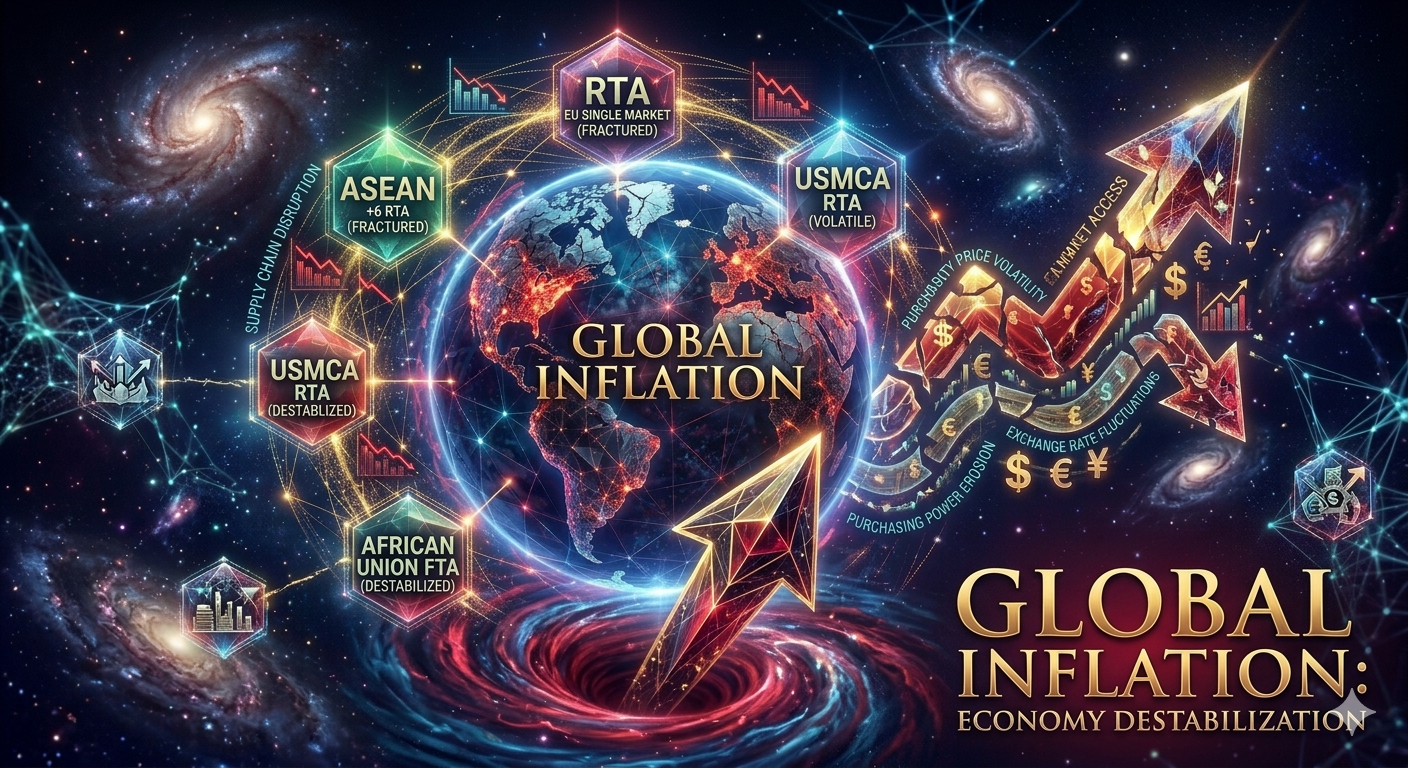
Inflation, defined as a sustained increase in the general price level of goods and services, has re-emerged as a major global economic challenge in recent years. After a prolonged period of low inflation following the Global Financial Crisis of 2008, the world witnessed a sharp surge in inflation, particularly after the COVID-19 pandemic.
This recent inflationary wave has affected both developed and developing economies, leading to rising living costs, economic uncertainty, and policy dilemmas. Central banks such as the Federal Reserve System and the Reserve Bank of India have played a crucial role in managing inflation through monetary policy tools.
This essay discusses the major causes of global inflation in recent years and critically evaluates the effectiveness of central banks in controlling it.
Understanding Inflation
Meaning and Types of Inflation
Inflation refers to the continuous rise in prices over time. It can be categorized into:
- Demand-pull inflation – caused by excess demand
- Cost-push inflation – caused by rising production costs
- Built-in inflation – driven by wage-price spirals
Measurement of Inflation
Inflation is typically measured using:
- Consumer Price Index (CPI)
- Wholesale Price Index (WPI)
Causes of Global Inflation in Recent Years
Post-Pandemic Demand Surge
Economic Recovery and Pent-Up Demand
After the COVID-19 lockdowns, economies reopened, leading to a surge in demand for goods and services.
Expansionary Fiscal Policies
Governments implemented large stimulus packages, increasing disposable incomes and boosting demand.
Supply Chain Disruptions
Global Supply Constraints
Lockdowns disrupted manufacturing and logistics, creating shortages of key goods.
Shipping and Logistics Issues
- Increased freight costs
- Delays in delivery
These factors contributed to higher prices globally.
Rising Energy Prices
Oil and Gas Price Increase
Energy prices surged due to:
- Supply constraints
- Geopolitical tensions
Impact on Production Costs
Higher energy costs increased the cost of goods and services across sectors.
Geopolitical Conflicts
Russia-Ukraine Conflict
The Russia-Ukraine War disrupted global supply of:
- Oil and gas
- Food grains
Global Market Uncertainty
Geopolitical tensions increased volatility in commodity markets.
Monetary Expansion and Liquidity
Low Interest Rates
Central banks maintained low interest rates during the pandemic.
Quantitative Easing
Large-scale asset purchases increased money supply, contributing to inflation.
Currency Depreciation
Weakening of Domestic Currencies
In many developing countries, currency depreciation made imports more expensive.
Imported Inflation
Higher import costs translated into domestic price increases.
Food Price Inflation
Agricultural Disruptions
- Climate change impacts
- Supply chain issues
Global Food Shortages
Reduced supply led to rising food prices worldwide.
Structural and Long-Term Factors
De-globalization Trends
- Trade restrictions
- Localization of supply chains
Labor Market Changes
- Labor shortages
- Rising wages
Impact of Global Inflation
Economic Impact
- Reduced purchasing power
- Lower economic growth
Social Impact
- Increased inequality
- Higher cost of living
Financial Market Impact
- Volatility in stock and bond markets
- Rising interest rates
Role of Central Banks in Controlling Inflation
Monetary Policy Tools
Interest Rate Hikes
Central banks increase interest rates to:
- Reduce borrowing
- Control demand
Open Market Operations
Buying and selling government securities to regulate money supply.
Reserve Requirements
Adjusting reserve ratios to control credit creation.
Inflation Targeting Framework
Setting Inflation Targets
Central banks aim to maintain inflation within a specific range.
Credibility and Expectations
Effective communication helps anchor inflation expectations.
Case Examples of Central Bank Actions
Federal Reserve System
The Federal Reserve System aggressively increased interest rates to combat inflation.
Reserve Bank of India
The Reserve Bank of India adopted a calibrated approach, balancing growth and inflation control.
Effectiveness of Central Banks
Successes
1. Controlling Demand
Higher interest rates reduce consumption and investment.
2. Stabilizing Inflation Expectations
Clear policy signals help prevent panic and speculation.
3. Strengthening Currency
Higher interest rates attract foreign investment, stabilizing exchange rates.
Limitations of Central Banks
Supply-Side Inflation
Monetary policy is less effective in addressing supply shocks.
Growth vs Inflation Trade-Off
Higher interest rates may slow economic growth.
Time Lag in Policy Impact
Monetary policy takes time to influence the economy.
Global Interdependence
Inflation is influenced by global factors beyond domestic control.
Challenges Faced by Central Banks
Policy Coordination Issues
Need for coordination with fiscal policy.
Uncertainty and Volatility
Rapidly changing global conditions complicate decision-making.
Debt Burden
Higher interest rates increase government debt servicing costs.
Way Forward
Balanced Policy Approach
- Combine monetary and fiscal measures
- Focus on both demand and supply-side solutions
Strengthening Supply Chains
- Improve logistics and infrastructure
- Reduce dependency on imports
Global Cooperation
- Coordinate policies among countries
- Stabilize global markets
Focus on Sustainable Growth
- Invest in renewable energy
- Promote long-term economic stability
Conclusion
Global inflation in recent years has been driven by a complex interplay of demand-side and supply-side factors, including post-pandemic recovery, supply chain disruptions, rising energy prices, and geopolitical tensions. Central banks such as the Federal Reserve System and the Reserve Bank of India have played a crucial role in controlling inflation through monetary policy measures.
While central banks have been effective in managing demand and stabilizing expectations, their ability to address supply-side constraints remains limited. Therefore, a comprehensive approach involving fiscal policy, structural reforms, and global cooperation is essential.
In conclusion, controlling inflation in a globalized economy requires not only effective central banking but also coordinated policy efforts to ensure sustainable and inclusive economic growth.