Introduction
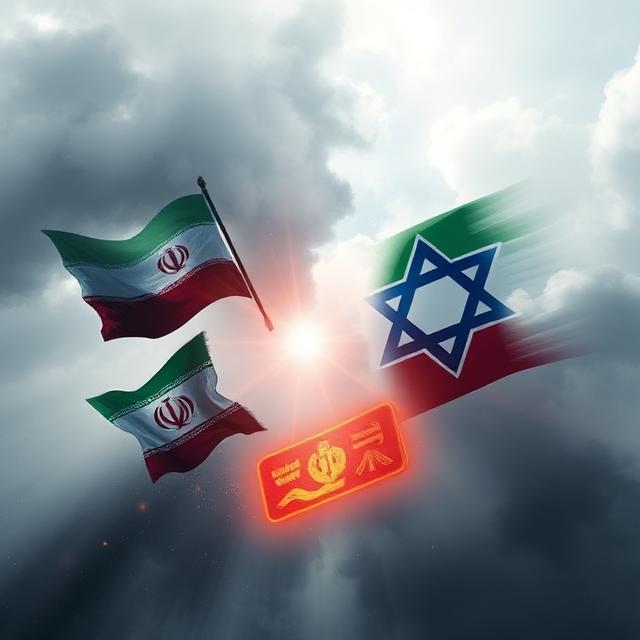
The relationship between Iran and Israel is one of the most complex and significant geopolitical relationships in the modern Middle East. Today the two states are often portrayed as strong adversaries, yet historically their relations were not always hostile. In fact, during the mid-twentieth century the two countries maintained political, economic, and strategic cooperation. However, the transformation of Iran’s political system after the Iranian Revolution dramatically changed the nature of the relationship, turning former partners into ideological rivals.
Understanding the history of Iran–Israel relations requires examining several phases: the period before the creation of Israel, the era of cooperation between 1948 and 1979, the ideological rupture after the Islamic Revolution, and the continuing geopolitical rivalry that shapes the region today.
This essay explains the historical evolution of Iran–Israel relations in a structured and educational manner.
1. Historical Background before 1948
1.1 Ancient Cultural and Religious Connections
Long before modern political conflicts emerged, the territories of Iran and the Jewish people shared historical links dating back more than two thousand years.
- The Persian Empire played an important role in Jewish history.
- In the 6th century BCE, the Persian ruler Cyrus the Great allowed Jewish exiles in Babylon to return to Jerusalem and rebuild their temple.
- Because of this act, Cyrus is remembered positively in Jewish historical tradition.
These early cultural interactions created long-standing historical connections between the Persian region and Jewish communities.
1.2 Jewish Communities in Iran
For centuries, Iran hosted one of the oldest Jewish communities in the world.
- Jewish populations lived in cities such as Tehran, Isfahan, and Shiraz.
- The community maintained cultural and religious traditions while being integrated into Persian society.
- Even during the twentieth century, Iran had a significant Jewish population that maintained links with Israel after its creation.
These historical connections later influenced diplomatic relations between the two states.
2. Creation of Israel and Early Iranian Response (1948–1950)
2.1 Establishment of Israel
The modern state of Israel was established in 1948 following the end of the British Mandate in Palestine.
However, Iran initially had reservations regarding the partition of Palestine.
- Iran opposed the United Nations plan to divide Palestine into Jewish and Arab states.
- Iranian leaders feared that the partition could lead to long-term regional conflict.
Despite these concerns, geopolitical realities soon led Iran to establish relations with Israel.
2.2 Recognition of Israel
By 1950, Iran formally recognized Israel.
Important aspects of early relations included:
- Diplomatic and trade connections
- Cooperation in security matters
- Economic exchanges, particularly energy trade
Although Iran did not publicize the relationship widely due to pressure from Arab countries, practical cooperation between the two nations gradually expanded.
3. The Era of Strategic Cooperation (1950–1979)
The period between 1950 and 1979 represented the most cooperative phase in Iran–Israel relations.
3.1 Political Context
During this time, Iran was ruled by the monarchy of Mohammad Reza Pahlavi, commonly known as the Shah of Iran.
The Shah’s government pursued a pro-Western foreign policy and maintained close ties with:
- The United States
- Western Europe
- Israel
This alignment was largely driven by shared strategic concerns in the Middle East.
3.2 Shared Strategic Interests
Iran and Israel found common ground due to regional geopolitical factors.
Key motivations included:
- Concern over Arab nationalism
Many Arab states opposed both Israel and the Shah’s Iran. - Containment of Soviet influence
Both countries were aligned with Western powers during the Cold War. - Regional security cooperation
Intelligence sharing and military cooperation strengthened their strategic partnership.
Thus, geopolitical interests outweighed ideological differences.
3.3 Economic Cooperation
Economic relations between Iran and Israel expanded rapidly.
Major areas of cooperation included:
- Trade and technological exchange
- Agricultural development
- Infrastructure projects
One of the most important aspects was energy trade.
Iran became a major supplier of oil to Israel during the 1960s and 1970s.
This trade relationship was crucial for Israel, which lacked significant domestic energy resources.
3.4 Military and Intelligence Cooperation
Iran and Israel also collaborated in military and intelligence activities.
Examples include:
- Intelligence cooperation between security agencies
- Joint military research projects
- Strategic defense agreements
One well-known collaboration was Project Flower, a joint missile development program launched in the late 1970s to build advanced anti-ship missile systems.
Such projects illustrate the depth of strategic cooperation during this period.
3.5 Diplomatic Presence
Diplomatic relations were institutionalized through official missions.
- Israel maintained an embassy in Tehran.
- The embassy functioned until the fall of the Iranian monarchy in 1979.
The existence of an Israeli embassy in Iran symbolized the close relationship between the two countries.
4. The Iranian Revolution and the Break in Relations (1979)
The turning point in Iran–Israel relations occurred in 1979.
4.1 The Iranian Revolution
The Iranian Revolution overthrew the monarchy of Mohammad Reza Pahlavi and replaced it with an Islamic political system.
The revolution was led by the influential religious leader Ruhollah Khomeini.
The new government fundamentally changed Iran’s domestic and foreign policies.
4.2 Ideological Transformation
The Islamic Republic adopted a strongly ideological worldview that opposed Israel.
Key ideological elements included:
- Opposition to Zionism
- Support for Palestinian nationalism
- Resistance to Western influence in the Middle East
The revolutionary leadership described Israel as an illegitimate state and a symbol of Western imperialism.
4.3 End of Diplomatic Relations
Immediately after the revolution, Iran cut off diplomatic ties with Israel.
Important changes included:
- Closure of the Israeli embassy in Tehran
- Transfer of the embassy building to Palestinian representatives
- Termination of political, economic, and military cooperation
These actions marked the beginning of long-term hostility between the two countries.
5. Ideological Conflict and Regional Rivalry (1980s–1990s)
After 1979, Iran and Israel increasingly became geopolitical rivals.
5.1 Iranian Support for Anti-Israel Groups
Iran began supporting groups opposed to Israel.
These included:
- The Lebanese organization Hezbollah
- Palestinian militant groups such as Hamas
Iran provided financial assistance, military training, and ideological support to these organizations.
This policy intensified tensions with Israel.
5.2 Regional Power Competition
Iran and Israel also competed for influence in the Middle East.
Areas of competition included:
- Lebanon
- Syria
- Palestinian territories
Both countries attempted to expand their influence through alliances and strategic partnerships.
5.3 Propaganda and Political Opposition
Iran’s leadership regularly criticized Israel in political speeches and international forums.
One symbolic example is Quds Day, established in 1979 to express solidarity with Palestinians and opposition to Israel.
This annual event became an important part of Iran’s ideological foreign policy.
6. The Iran–Israel Proxy Conflict (2000s–Present)
In the twenty-first century, the rivalry between Iran and Israel has increasingly taken the form of indirect conflict.
6.1 Proxy Warfare
Instead of direct military confrontation, the two countries have engaged in proxy conflicts.
These conflicts involve:
- Allied militias
- regional partners
- intelligence operations
Examples include:
- Conflicts in Lebanon
- Military activity in Syria
- Cyber operations and intelligence rivalry
This form of conflict reduces the risk of full-scale war while still allowing each side to challenge the other.
6.2 Nuclear Disputes
Another major source of tension is Iran’s nuclear program.
Israel has repeatedly expressed concern that Iran could develop nuclear weapons.
In response, Israel has:
- advocated international sanctions
- conducted intelligence operations against Iranian nuclear facilities
Iran, on the other hand, claims its nuclear program is for peaceful purposes.
6.3 Cyber and Intelligence Warfare
The rivalry has also extended into cyberspace.
Both countries have reportedly conducted cyber operations targeting:
- nuclear facilities
- military infrastructure
- government networks
This dimension of conflict reflects the changing nature of modern geopolitical competition.
7. Cultural and Social Dimensions
Despite political tensions, cultural and historical links between the two societies still exist.
7.1 Iranian Jewish Community
Iran continues to host a small Jewish community.
Although many Iranian Jews emigrated after the revolution, the community still maintains religious institutions and cultural traditions.
7.2 Iranian Jews in Israel
A large number of Iranian Jews migrated to Israel during the late twentieth century.
These communities maintain elements of Persian culture while participating fully in Israeli society.
Thus, cultural ties continue to exist even in the absence of diplomatic relations.
8. Major Causes of Iran–Israel Hostility
Several key factors explain the persistent tension between Iran and Israel.
8.1 Ideological Differences
The Islamic Republic’s ideological opposition to Israel remains a fundamental factor.
8.2 Regional Power Rivalry
Both countries seek influence in the Middle East.
8.3 The Palestinian Issue
Iran strongly supports the Palestinian cause, which places it in opposition to Israeli policies.
8.4 Nuclear and Security Concerns
Israel views Iran’s military capabilities and nuclear ambitions as a strategic threat.
9. Impact on Middle Eastern Politics
The rivalry between Iran and Israel has had major consequences for regional politics.
9.1 Formation of Alliances
Many Middle Eastern countries have formed alliances in response to the rivalry.
9.2 Militarization of the Region
The conflict has contributed to increased military spending and strategic competition.
9.3 Influence on Global Politics
Major global powers such as the United States and Russia have also been drawn into Middle Eastern geopolitical dynamics.
10. Possibilities for Future Relations
The future of Iran–Israel relations remains uncertain.
Several possible scenarios exist:
- Continued hostility and proxy conflict
- Gradual diplomatic engagement
- Regional security arrangements involving multiple states
The outcome will depend on changes in political leadership, regional dynamics, and international diplomacy.
Conclusion
The historical relationship between Iran and Israel illustrates how international relations can transform dramatically over time. From ancient cultural connections to strategic cooperation in the twentieth century, and finally to intense ideological rivalry after the 1979 Iranian Revolution, the relationship has undergone profound changes.
Before 1979, Iran and Israel were close strategic partners, cooperating in economic, military, and intelligence matters. However, the establishment of the Islamic Republic fundamentally altered Iran’s foreign policy and led to the complete breakdown of diplomatic relations.
Today, Iran and Israel remain major geopolitical rivals in the Middle East. Their rivalry influences regional conflicts, global diplomacy, and security policies across the world. Understanding this complex history is essential for analyzing contemporary international politics and the future stability of the Middle East.