Introduction
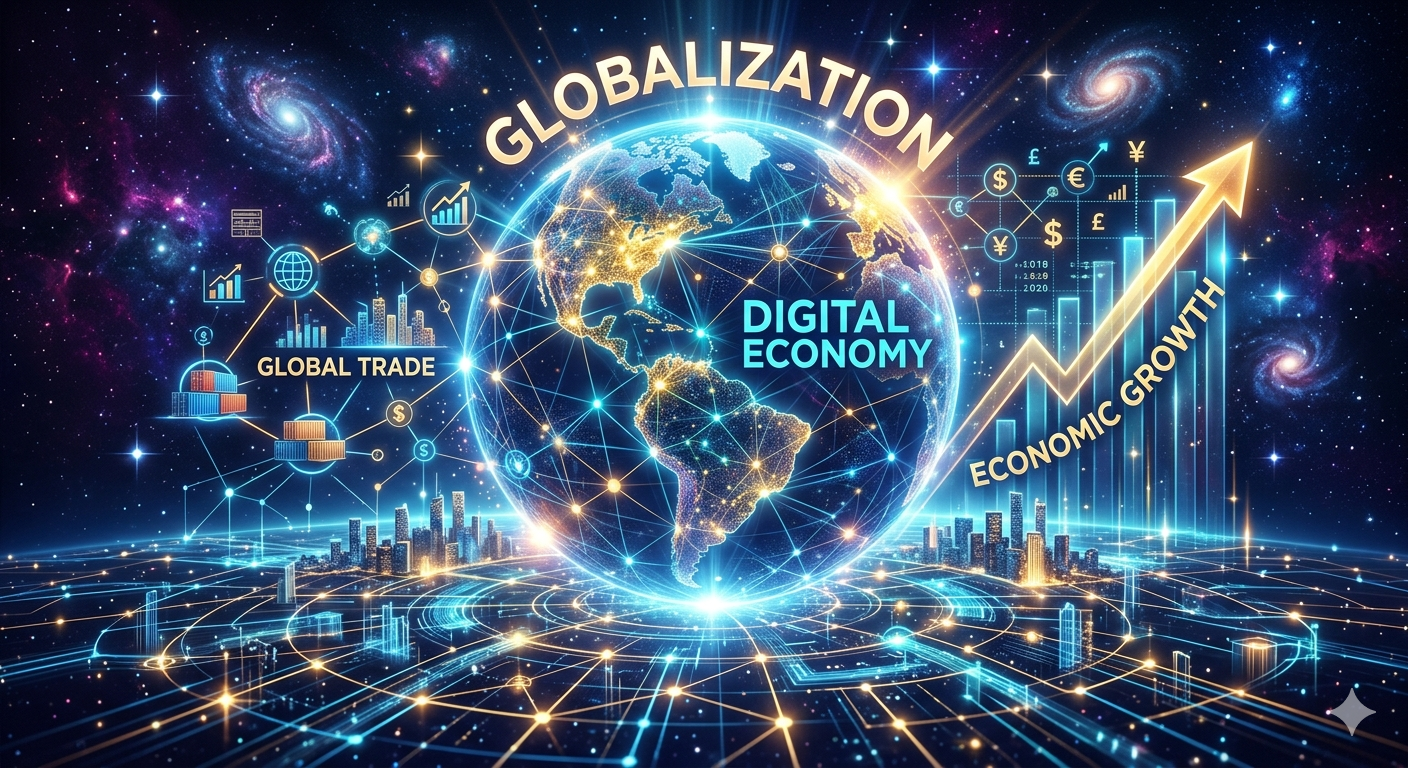
Globalization refers to the increasing interconnectedness and interdependence of economies, societies, and cultures across the world through trade, investment, technology, and the movement of people. Over the past few decades, globalization has emerged as one of the most transformative forces shaping the economic landscape of developing countries.
Institutions such as the World Trade Organization, International Monetary Fund, and World Bank have played a key role in promoting globalization through trade liberalization, financial integration, and structural reforms.
For developing economies, globalization has been both a source of immense opportunity and significant challenges. While it has accelerated economic growth, reduced poverty, and enhanced technological capabilities, it has also led to inequalities, environmental degradation, and vulnerability to global shocks.
Understanding Globalization
Meaning and Scope
Globalization is a multidimensional process involving:
- Economic integration through trade and investment
- Technological diffusion across borders
- Cultural exchange and social interaction
- Political cooperation and global governance
Key Features of Globalization
1. Trade Liberalization
Reduction of tariffs and non-tariff barriers to facilitate free trade among nations.
2. Capital Mobility
Free flow of capital in the form of Foreign Direct Investment (FDI) and portfolio investment.
3. Technological Advancement
Rapid spread of technology, especially information and communication technologies (ICT).
4. Global Value Chains
Production processes are fragmented and spread across different countries.
Opportunities Created by Globalization for Developing Economies
Economic Growth and Development
1. Expansion of Markets
Globalization allows developing countries to access larger international markets, increasing exports and production.
2. Increase in GDP Growth
Export-oriented growth strategies have helped countries like China and India achieve rapid economic expansion.
Foreign Direct Investment (FDI) Inflows
1. Capital Formation
FDI provides much-needed capital for infrastructure development and industrialization.
2. Technology Transfer
Multinational corporations bring advanced technologies and management practices.
Employment Generation
1. Industrial and Service Sector Jobs
Growth in manufacturing and services creates employment opportunities.
2. Rise of Outsourcing and Offshoring
Developing countries benefit from business process outsourcing (BPO) and IT services.
Technological Advancement
1. Access to Modern Technology
Developing countries gain access to cutting-edge technologies.
2. Digital Integration
Integration into the global digital economy enhances efficiency and productivity.
Poverty Reduction
1. Income Growth
Economic expansion leads to higher incomes and improved living standards.
2. Reduction in Extreme Poverty
Globalization has contributed to lifting millions out of poverty, especially in Asia.
Improvement in Infrastructure
1. Development of Transport and Communication
Global trade necessitates better infrastructure.
2. Urbanization
Cities grow as centers of economic activity.
Cultural Exchange and Social Development
1. Exposure to Global Ideas
Globalization promotes awareness, education, and innovation.
2. Empowerment
Access to information enhances social empowerment, especially for marginalized groups.
Challenges of Globalization for Developing Economies
Rising Inequality
1. Income Inequality
Benefits of globalization are unevenly distributed, widening the gap between rich and poor.
2. Regional Disparities
Urban areas benefit more than rural regions.
Vulnerability to Global Economic Shocks
1. Financial Crises
Developing economies are highly vulnerable to global financial crises such as the Global Financial Crisis of 2008.
2. External Dependence
Heavy reliance on exports makes economies sensitive to global demand fluctuations.
Threat to Domestic Industries
1. Competition from Multinationals
Local industries struggle to compete with large global firms.
2. Deindustrialization Risks
Some sectors decline due to lack of competitiveness.
Employment Challenges
1. Job Insecurity
Globalization often leads to informal and precarious employment.
2. Skill Gap
Workers may lack the skills required in a globalized economy.
Environmental Degradation
1. Resource Exploitation
Increased industrial activity leads to overuse of natural resources.
2. Pollution
Rapid industrialization contributes to environmental damage.
Cultural Homogenization
1. Loss of Local Culture
Global culture can overshadow traditional practices.
2. Consumerism
Increased exposure to global markets promotes consumerist lifestyles.
Policy Constraints
1. Reduced Sovereignty
Global institutions influence domestic policies.
2. Pressure for Liberalization
Countries may adopt policies not suited to their local needs.
Sectoral Impact of Globalization
Agriculture
Opportunities
- Access to global markets
- Adoption of modern farming techniques
Challenges
- Price volatility
- Competition from subsidized foreign products
Industry
Opportunities
- Integration into global value chains
- Industrial diversification
Challenges
- Dependence on foreign technology
- Competition from imports
Services Sector
Opportunities
- Growth of IT and outsourcing
- Expansion of tourism and financial services
Challenges
- Job polarization
- Unequal access to opportunities
Case Study: India and Globalization
Positive Impacts
1. Economic Growth
Post-1991 reforms led to high GDP growth.
2. IT Sector Boom
India became a global hub for IT services.
3. Rise in Foreign Investment
Increased inflows of FDI boosted development.
Negative Impacts
1. Inequality
Urban-rural divide widened.
2. Agricultural Distress
Farmers face global competition and price instability.
Role of International Institutions
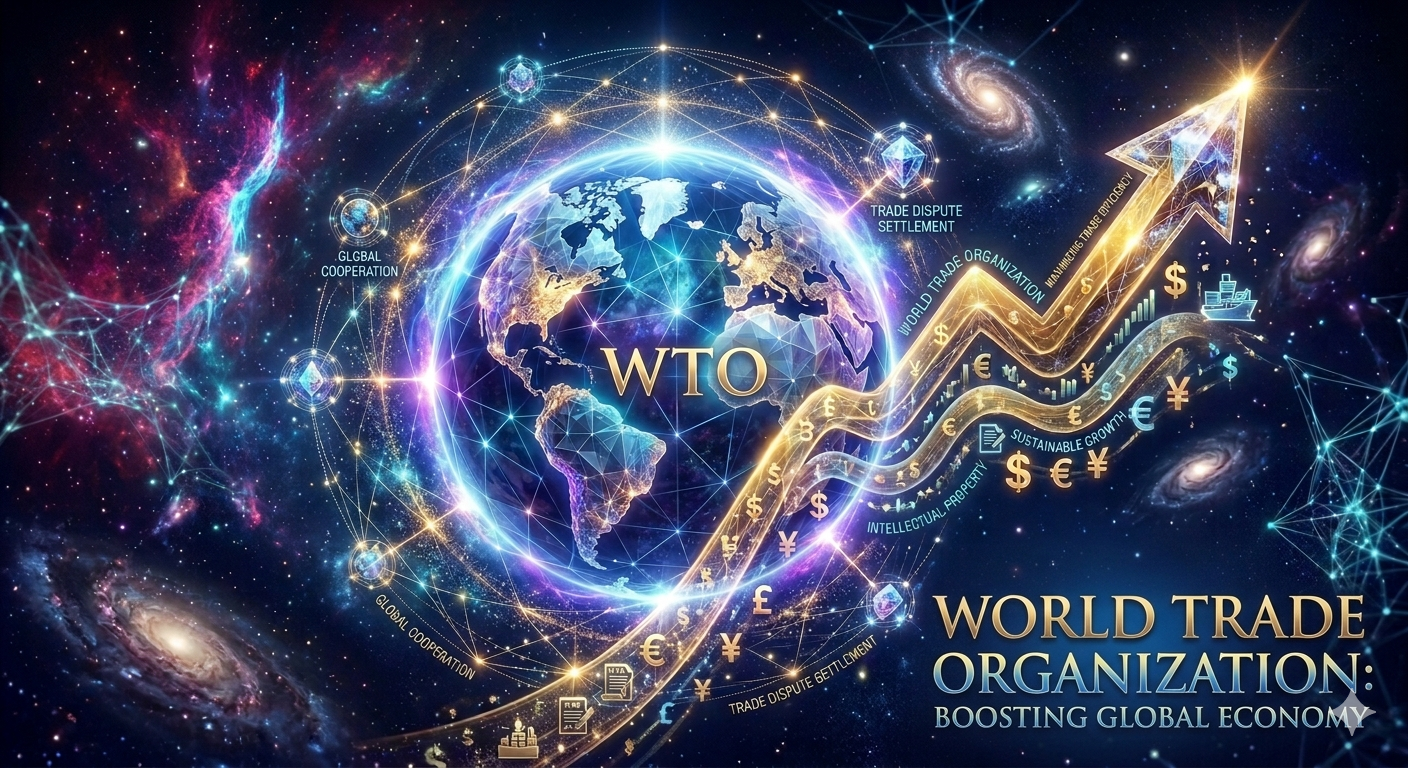
World Trade Organization (WTO)
- Promotes free trade
- Resolves trade disputes
- Faces criticism for favoring developed countries
International Monetary Fund (IMF)
- Provides financial assistance
- Imposes structural reforms
- Criticized for stringent conditions
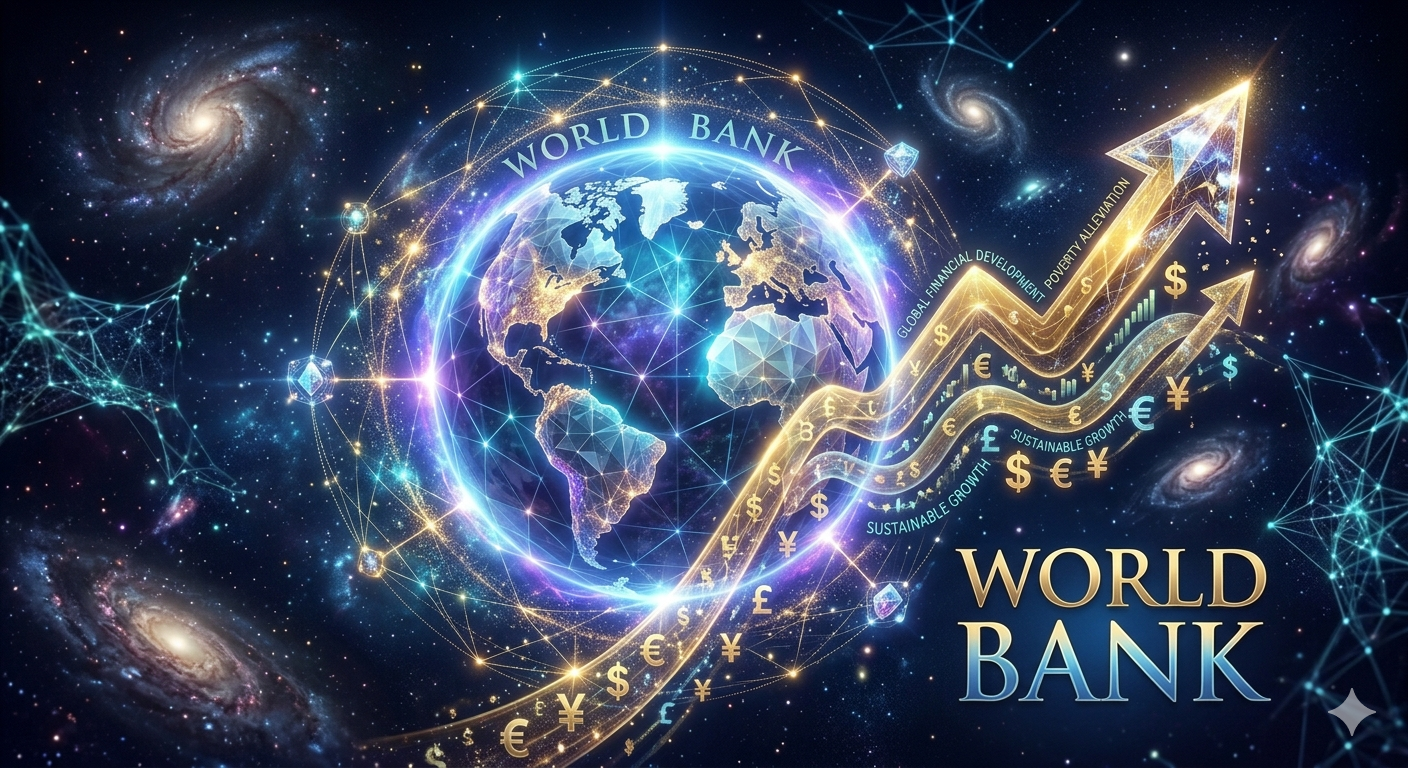
World Bank
- Supports development projects
- Focuses on poverty reduction
- Plays a key role in infrastructure financing
Way Forward for Developing Economies
Inclusive Growth Strategies
- Focus on equitable distribution of benefits
- Invest in education and skill development
Strengthening Domestic Industries
- Promote local industries through supportive policies
- Encourage innovation and entrepreneurship
Sustainable Development
- Adopt environmentally friendly practices
- Balance growth with ecological preservation
Policy Autonomy
- Design policies suited to national priorities
- Avoid excessive dependence on global institutions
Bridging the Digital Divide
- Expand access to digital infrastructure
- Promote digital literacy
Conclusion
Globalization has fundamentally reshaped the economic trajectory of developing countries by integrating them into the global economy. It has provided unprecedented opportunities for growth, technological advancement, and poverty reduction. However, these benefits have come with significant challenges, including inequality, environmental degradation, and economic vulnerability.
For developing economies, the key lies in harnessing the advantages of globalization while mitigating its adverse effects. This requires a balanced approach that emphasizes inclusive growth, sustainable development, and strong domestic policies.
In conclusion, globalization is neither inherently beneficial nor harmful—it is a dynamic process whose outcomes depend on how effectively countries manage and adapt to it. A strategic and inclusive approach can ensure that globalization becomes a catalyst for long-term development and prosperity.