Introduction
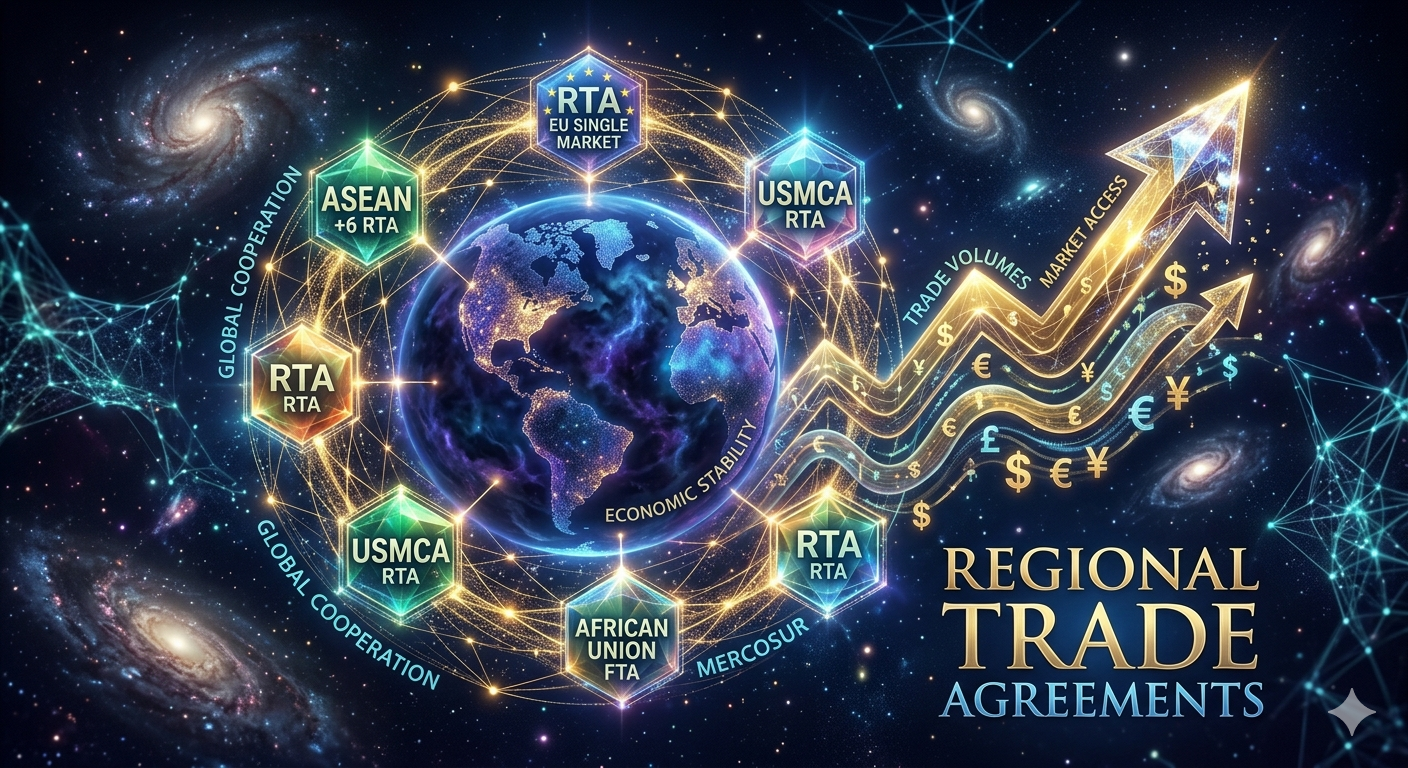
In the era of globalization, countries increasingly rely on regional cooperation to enhance economic growth and competitiveness. One of the most significant developments in this regard has been the rise of Regional Trade Agreements (RTAs), which aim to promote trade liberalization among member countries. Among these, the Regional Comprehensive Economic Partnership (RCEP) stands out as the world’s largest trade agreement, encompassing major economies across Asia-Pacific.
RCEP includes countries such as China, Japan, South Korea, and members of ASEAN, making it a powerful force in shaping global trade patterns. Although India opted out of the agreement, its implications still significantly affect the global and regional economic landscape.
This essay evaluates the impact of RCEP and similar RTAs on global trade dynamics by examining their advantages, challenges, and long-term implications.
Understanding Regional Trade Agreements (RTAs)
Meaning and Concept
Regional Trade Agreements are treaties between two or more countries within a specific region aimed at reducing trade barriers such as tariffs and quotas. These agreements facilitate:
- Free movement of goods and services
- Investment flows
- Economic cooperation
Types of RTAs
1. Free Trade Agreements (FTAs)
Eliminate tariffs among member countries.
2. Customs Unions
Common external tariff for non-members.
3. Economic Unions
Integration of economic policies and markets.
Overview of RCEP
Formation and Objectives
The Regional Comprehensive Economic Partnership was signed in 2020 with the aim of:
- Promoting trade liberalization
- Strengthening regional supply chains
- Enhancing economic integration
Key Features of RCEP
1. Large Economic Coverage
Covers nearly 30% of global GDP and population.
2. Tariff Reduction
Gradual elimination of tariffs on a majority of goods.
3. Rules of Origin
Unified rules simplify trade among member countries.
4. Focus on Supply Chains
Encourages regional production networks.
Impact on Global Trade Dynamics
Trade Creation and Expansion
Positive Effects
1. Increased Trade Among Members
Reduction in tariffs boosts trade flows within the region.
2. Market Access Expansion
Businesses gain access to larger markets, enhancing export opportunities.
Negative Effects
1. Trade Diversion
Trade may shift away from more efficient non-member countries.
2. Discrimination Against Non-Members
Countries outside RCEP may face disadvantages.
Strengthening Regional Supply Chains
Integrated Production Networks
- RCEP facilitates cross-border production
- Enhances efficiency and reduces costs
Resilience to Global Shocks
- Regional integration helps manage disruptions like pandemics
- Reduces dependence on distant markets
Impact on Developing Countries
Opportunities
1. Industrial Growth
Participation in global value chains promotes industrialization.
2. Technology Transfer
Access to advanced technologies from developed members.
3. Employment Generation
Expansion of manufacturing and services creates jobs.
Challenges
1. Competitive Pressure
Domestic industries may struggle against stronger economies.
2. Unequal Benefits
Larger economies may capture a greater share of gains.
Impact on Global Trade Governance
Shift from Multilateralism to Regionalism
- RTAs like RCEP indicate a shift from global frameworks like the World Trade Organization to regional agreements.
Fragmentation of Global Trade Rules
- Multiple RTAs create complex and overlapping trade rules
- Leads to a “spaghetti bowl” effect
Impact on Major Economies
China’s Growing Influence
- RCEP strengthens the economic position of China
- Enhances its leadership in global trade
Japan and South Korea
- Improved access to regional markets
- Strengthening of manufacturing sectors
India’s Perspective
Although India is not a member:
Concerns
- Trade deficit with member countries
- Threat to domestic industries
Opportunities
- Potential for future negotiations
- Strengthening bilateral trade agreements
Impact on Global Value Chains (GVCs)
Enhanced Integration
- RCEP promotes deeper integration into GVCs
- Encourages specialization and efficiency
Shift in Production Centers
- Manufacturing may shift to countries with cost advantages
- Creates new economic hubs in Asia-Pacific
Digital Trade and Services
Promotion of Digital Economy
- RCEP includes provisions for e-commerce
- Facilitates cross-border digital transactions
Challenges
- Data localization issues
- Cybersecurity concerns
Environmental and Social Implications
Environmental Concerns
- Increased production may lead to environmental degradation
- Lack of strict environmental standards
Labor Issues
- Risk of exploitation in low-cost labor markets
- Need for labor protection policies
Criticism of RCEP
Limited Depth Compared to Other Agreements
- Less comprehensive than agreements like CPTPP
Lack of Strong Regulatory Framework
- Weak provisions on labor and environment
Dominance of Large Economies
- Smaller economies may have limited bargaining power
Long-Term Implications for Global Trade
Emergence of Regional Trade Blocs
- RCEP contributes to formation of economic blocs
- May lead to geopolitical competition
Reshaping Global Trade Patterns
- Asia-Pacific becomes a central hub of global trade
Impact on Multilateral Trade System
- Weakening role of global institutions
- Need for reform in global trade governance
Way Forward
Strengthening Multilateral Cooperation
- Revitalize global institutions like WTO
- Ensure inclusive trade policies
Balancing Regional and Global Interests
- Harmonize RTAs with global trade rules
Supporting Developing Countries
- Capacity building and technical assistance
- Ensuring equitable distribution of benefits
Sustainable and Inclusive Trade
- Incorporate environmental and labor standards
- Promote fair trade practices
Conclusion
Regional Trade Agreements such as the Regional Comprehensive Economic Partnership have significantly transformed global trade dynamics by promoting regional integration, enhancing supply chains, and increasing trade flows. They have created new opportunities for economic growth, especially in developing countries, while also presenting challenges related to inequality, competition, and trade fragmentation.
While RCEP strengthens the Asia-Pacific region’s role in global trade, it also highlights the shifting balance from multilateral to regional frameworks. The future of global trade will depend on how effectively countries balance regional cooperation with global integration.
In conclusion, RTAs like RCEP are powerful tools for economic development, but their success depends on ensuring inclusivity, sustainability, and alignment with broader global trade objectives.