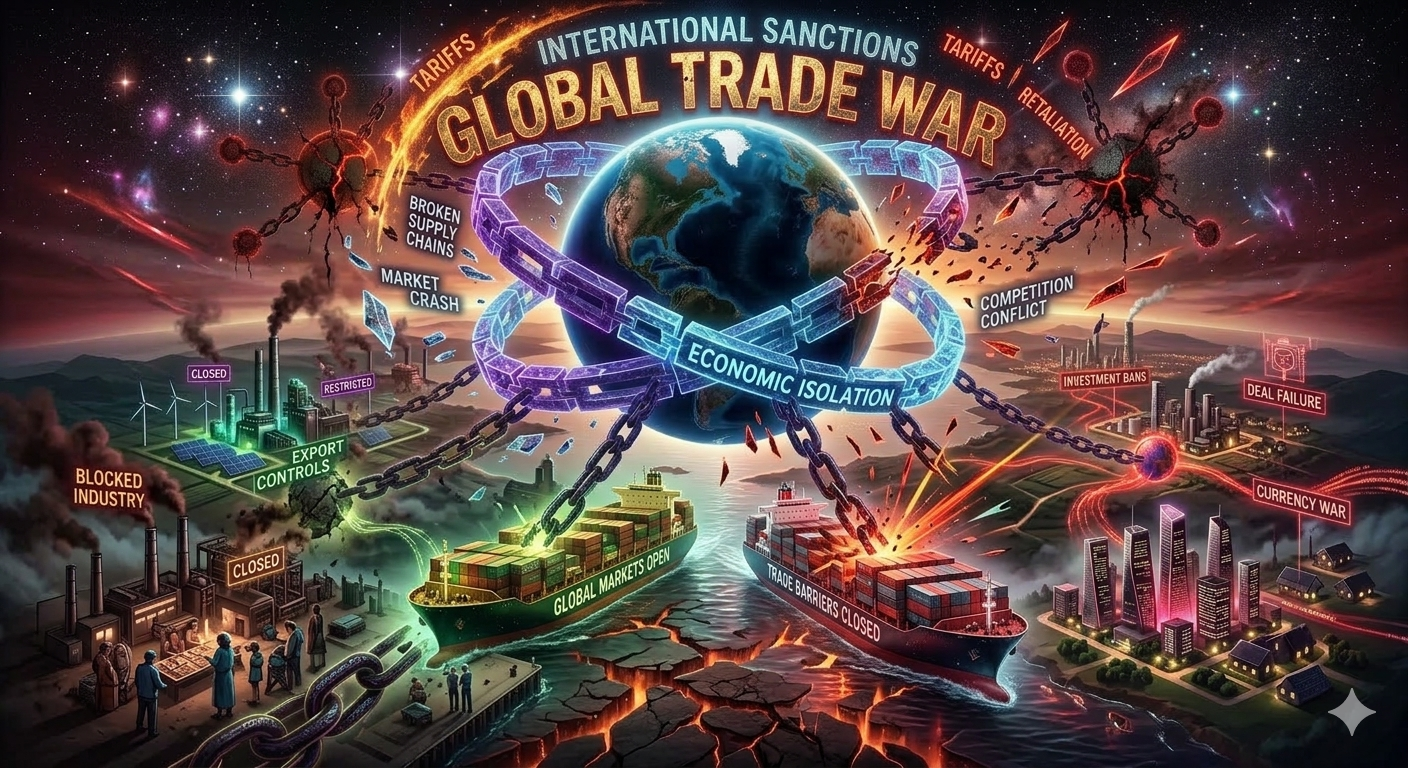
Energy resources play a central role in the functioning of the global economy, and among them oil remains one of the most influential commodities. Oil fuels transportation, supports industrial production, and powers global trade networks. Because of its critical role, fluctuations in oil prices have significant economic consequences across the world. When oil prices rise sharply, the effects are felt in almost every sector of the global economy, from manufacturing and transportation to agriculture and financial markets.
Oil prices are influenced by multiple factors including geopolitical tensions, supply disruptions, production decisions by oil-producing nations, and changes in global demand. Organizations such as the Organization of the Petroleum Exporting Countries play a major role in regulating oil supply in global markets. In addition, geopolitical events such as conflicts, sanctions, and political instability can significantly alter the balance of supply and demand.
For developing countries, the impact of rising oil prices can be particularly severe. Many of these nations depend heavily on imported energy to sustain economic growth. As a result, fluctuations in oil prices can affect inflation, fiscal stability, trade balances, and overall economic development. This discussion examines the global economic implications of rising oil prices and analyzes how energy market fluctuations influence developing nations.
Understanding Oil Prices and Global Energy Markets
Meaning of Oil Price Fluctuations
Oil price fluctuations refer to the changes in the cost of crude oil in international markets over time. These changes occur due to shifts in supply and demand, geopolitical developments, economic conditions, and technological innovations in energy production.
Crude oil is traded globally through benchmark pricing systems such as the Brent Crude and the West Texas Intermediate. These benchmarks serve as reference prices for international oil transactions.
Factors Responsible for Rising Oil Prices
Several key factors contribute to rising oil prices in global markets:
- Supply Constraints
Production cuts by oil-producing countries or disruptions due to natural disasters and conflicts can reduce global supply. - Rising Global Demand
Economic growth in large economies increases demand for energy resources. - Geopolitical Tensions
Conflicts in major oil-producing regions often lead to uncertainty in supply. - Currency Fluctuations
Since oil is traded in U.S. dollars, exchange rate movements affect oil prices globally. - Speculation in Commodity Markets
Investors and financial institutions often influence price movements through trading activities.
These factors collectively determine the direction and volatility of oil prices.
Impact of Rising Oil Prices on the Global Economy
1. Increased Inflationary Pressures
One of the most immediate effects of rising oil prices is inflation. Oil is a fundamental input for transportation, manufacturing, and energy generation. When oil prices increase, production and transportation costs rise across industries.
Higher costs are eventually passed on to consumers through increased prices for goods and services. This leads to broader inflationary pressures in the economy.
2. Higher Transportation and Logistics Costs
Global trade relies heavily on shipping, aviation, and road transport, all of which depend on petroleum products. Rising oil prices significantly increase transportation costs.
Higher shipping costs can raise the prices of imported goods and reduce the competitiveness of export industries.
3. Slower Global Economic Growth
Rising oil prices often act as a constraint on economic growth. When businesses face higher energy costs, they may reduce production or postpone investment decisions.
Consumers may also reduce spending because of higher fuel costs and rising prices of essential goods. As a result, overall economic activity may slow down.
4. Impact on Industrial Production
Many industries depend on oil as a raw material or energy source. Sectors such as petrochemicals, plastics, fertilizers, and manufacturing are particularly sensitive to oil price changes.
Higher oil prices increase operational costs for these industries, reducing profit margins and productivity.
5. Volatility in Global Financial Markets
Energy prices influence financial markets worldwide. When oil prices rise sharply, investors often react by adjusting portfolios and reallocating investments.
Stock markets may experience volatility, particularly in sectors that rely heavily on energy. At the same time, energy companies may experience increased revenues during periods of high oil prices.
6. Redistribution of Global Wealth
Rising oil prices can lead to a transfer of wealth from oil-importing countries to oil-exporting nations. Countries rich in oil resources experience increased revenues and improved trade balances.
However, oil-importing countries may face higher import bills and fiscal pressures.
Impact of Oil Price Fluctuations on Developing Countries
1. Rising Import Bills and Trade Deficits
Many developing countries rely heavily on imported petroleum products to meet their energy needs. When oil prices increase, the cost of energy imports rises significantly.
This leads to higher trade deficits and puts pressure on foreign exchange reserves.
2. Inflation and Cost of Living
Rising oil prices directly affect the cost of living in developing countries. Transportation costs increase, leading to higher prices for food and consumer goods.
In economies where a large proportion of income is spent on basic necessities, inflation can significantly reduce living standards.
3. Fiscal Pressure on Governments
Many developing country governments provide fuel subsidies to protect consumers from rising energy prices. When global oil prices increase, the cost of maintaining these subsidies rises sharply.
This creates fiscal pressure on government budgets and may lead to increased public debt.
4. Impact on Economic Growth
Higher energy costs can slow economic growth in developing countries. Businesses may face rising production expenses, reducing profitability and investment.
Industries such as manufacturing, agriculture, and transportation are particularly vulnerable to energy price shocks.
5. Currency Depreciation and External Debt Pressure
Rising oil import bills can weaken the currencies of developing nations. As foreign exchange reserves decline, currencies may depreciate against major global currencies.
Currency depreciation increases the cost of servicing external debt and importing essential goods.
6. Impact on Food Security
Energy prices significantly influence agricultural production. Oil is used in farm machinery, irrigation systems, fertilizer production, and transportation of agricultural goods.
When oil prices rise, food production and distribution costs increase, potentially threatening food security in vulnerable countries.
Case Studies of Oil Price Shocks
Global Oil Price Surge After the Pandemic
The economic recovery following the COVID-19 pandemic led to a sharp increase in energy demand worldwide. As industries resumed operations and transportation activities increased, oil prices rose significantly.
This surge placed pressure on energy-importing developing economies, increasing inflation and fiscal deficits.
Impact of the Russia–Ukraine Conflict
The Russian invasion of Ukraine disrupted global energy markets and created uncertainty in oil and gas supplies. Sanctions and geopolitical tensions affected global oil trade flows and contributed to higher energy prices.
Many developing countries experienced rising fuel costs and economic instability during this period.
Long-Term Structural Implications
Transition Toward Renewable Energy
Rising oil prices often encourage countries to invest in renewable energy sources such as solar, wind, and hydropower. This transition helps reduce dependence on fossil fuels and enhances energy security.
Diversification of Energy Sources
Countries increasingly seek to diversify energy sources by investing in alternative fuels, nuclear energy, and energy efficiency programs.
Strengthening Strategic Petroleum Reserves
Many nations maintain strategic oil reserves to protect against supply disruptions and sudden price spikes.
Policy Measures to Address Oil Price Volatility
Governments and international organizations can adopt several strategies to mitigate the impact of oil price fluctuations:
- Promoting renewable energy and sustainable energy systems
- Improving energy efficiency in industries and transportation
- Diversifying energy imports and suppliers
- Strengthening regional energy cooperation
- Developing social protection programs to support vulnerable populations
These measures can help countries reduce the economic risks associated with volatile energy markets.
Conclusion
Oil prices continue to play a decisive role in shaping the global economic landscape. As a critical energy resource, oil influences production costs, transportation systems, industrial activity, and international trade. When oil prices rise, the effects ripple through the global economy, contributing to inflation, financial market volatility, and slower economic growth.
For developing countries, the consequences of rising oil prices are particularly significant. Increased import bills, fiscal pressures, inflation, and currency instability can create serious economic challenges. At the same time, fluctuations in energy markets highlight the importance of energy diversification and sustainable development strategies.
Global economic stability therefore depends on effective energy policies, international cooperation, and investments in alternative energy sources. By reducing dependence on fossil fuels and strengthening economic resilience, countries can better manage the economic impacts of fluctuating oil prices and ensure sustainable development in an increasingly interconnected world.