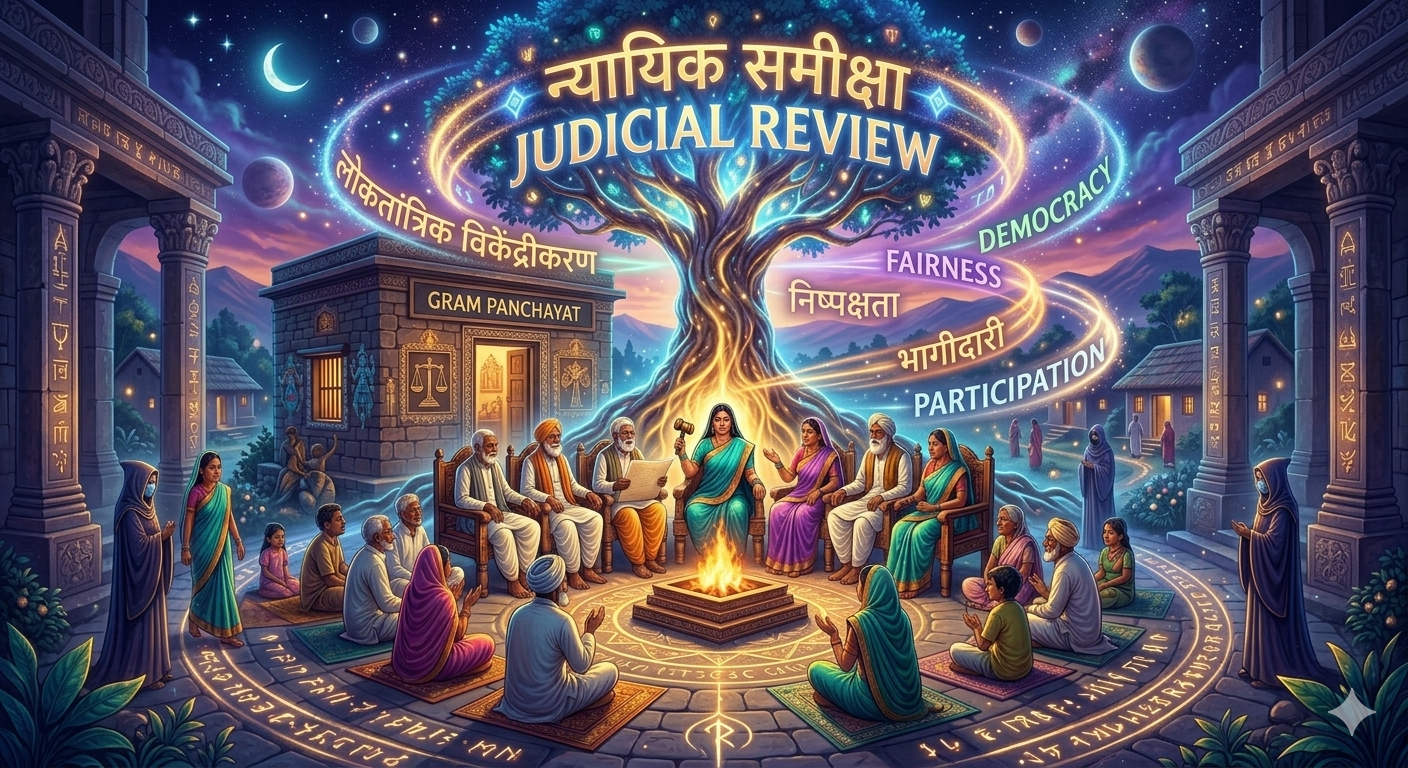
The Panchayati Raj system represents one of the most significant democratic innovations in India’s governance structure. It refers to a system of local self-government in rural areas that enables people at the grassroots level to participate directly in decision-making and governance. The concept of local governance through village councils has existed in India for centuries. However, it gained constitutional status with the passage of the 73rd Constitutional Amendment Act, which came into effect in 1993.
This amendment institutionalized democratic decentralization by granting constitutional recognition to Panchayati Raj Institutions (PRIs) and empowering them to function as units of self-government. It aimed to bring governance closer to the people, ensure effective implementation of development programs, and strengthen democratic values in rural India.
The Panchayati Raj system has played a crucial role in enhancing participatory governance, promoting social justice, and improving rural development outcomes. It has created platforms where local communities can voice their concerns, manage local resources, and actively contribute to decision-making processes.
Historical Background of Panchayati Raj in India
Early Traditions of Local Self-Governance
India has a long tradition of village-level governance. Historically, village councils known as “panchayats” existed as informal institutions that settled disputes, managed resources, and maintained social order. These councils were often composed of respected elders of the village who made decisions through consensus.
During the colonial period, these traditional institutions weakened due to centralized administrative systems introduced by the British government. However, the idea of decentralized governance continued to influence policymakers and leaders.
Recommendations after Independence
After independence, several committees emphasized the need for decentralized governance. One of the most important recommendations came from the Balwant Rai Mehta Committee in 1957. The committee suggested a three-tier system of local government consisting of:
- Village level institutions
- Intermediate level bodies
- District level authorities
The recommendations aimed to involve rural communities in planning and implementing development programs.
Later committees such as those led by Ashok Mehta and L. M. Singhvi also emphasized strengthening local self-government and giving constitutional recognition to Panchayati Raj institutions.
These recommendations eventually paved the way for the 73rd Constitutional Amendment Act, which institutionalized Panchayati Raj in the constitutional framework of India.
Constitutional Foundation of Panchayati Raj Institutions
The 73rd Constitutional Amendment Act
The 73rd Constitutional Amendment Act is considered a landmark reform in India’s democratic structure. It inserted Part IX into the Constitution and provided constitutional status to Panchayati Raj institutions.
Key provisions of this amendment include:
- Establishment of a three-tier Panchayati Raj system in rural areas.
- Regular elections every five years.
- Reservation of seats for Scheduled Castes, Scheduled Tribes, and women.
- Creation of State Election Commissions for conducting local elections.
- Establishment of State Finance Commissions to ensure financial resources for PRIs.
- Devolution of powers and responsibilities related to economic development and social justice.
The Eleventh Schedule
The amendment also added the Eleventh Schedule to the Constitution. This schedule contains 29 subjects that may be transferred to Panchayats, including agriculture, irrigation, rural housing, health, education, and social welfare.
These provisions ensured that Panchayati Raj institutions became integral components of India’s democratic governance.
Structure of the Panchayati Raj System
Three-Tier System of Local Governance
The Panchayati Raj system operates through a three-tier structure designed to promote effective governance at different administrative levels.
Village Level: Gram Panchayat
The Gram Panchayat is the lowest level of the Panchayati Raj system. It functions at the village level and is directly elected by the villagers.
Key responsibilities include:
- Maintenance of village infrastructure
- Implementation of government welfare schemes
- Management of local resources
- Sanitation and public health initiatives
Intermediate Level: Panchayat Samiti
The Panchayat Samiti operates at the block or intermediate level. It coordinates development programs among several villages and supervises the functioning of Gram Panchayats.
Major functions include:
- Planning block-level development projects
- Monitoring implementation of schemes
- Providing technical support to village councils
District Level: Zila Parishad
The Zila Parishad functions at the district level and acts as the highest tier of rural local governance.
Its responsibilities include:
- Preparing district development plans
- Coordinating activities of Panchayat Samitis
- Allocating funds for rural development projects
Together, these three levels create a decentralized administrative system that brings governance closer to the people.
Role of Local Self-Government Institutions in Rural Development
Promotion of Participatory Governance
One of the most significant contributions of Panchayati Raj institutions is the promotion of participatory democracy. Local citizens can directly participate in decision-making processes through village meetings known as the Gram Sabha.
The Gram Sabha includes all adult residents of the village and serves as a forum where people can:
- Discuss development issues
- Approve local budgets
- Monitor government schemes
- Hold elected representatives accountable
This participatory mechanism strengthens democratic practices at the grassroots level.
Implementation of Development Programs
Panchayati Raj institutions play a key role in implementing various government development schemes related to:
- Rural employment
- Agriculture and irrigation
- Education and healthcare
- Housing and sanitation
Because local authorities have better knowledge of local conditions, they can implement these programs more effectively and ensure that benefits reach the intended beneficiaries.
Empowerment of Marginalized Communities
The Panchayati Raj system has significantly contributed to the political empowerment of marginalized groups. Reservation policies introduced under the 73rd Constitutional Amendment Act ensure representation for:
- Scheduled Castes (SCs)
- Scheduled Tribes (STs)
- Women
Currently, at least one-third of seats in Panchayati Raj institutions are reserved for women, although many states have increased this reservation to 50 percent. This has helped millions of women enter public life and participate in governance.
Importance of Panchayati Raj in Strengthening Grassroots Democracy
Decentralization of Power
One of the most important features of Panchayati Raj institutions is decentralization. By transferring administrative and financial powers from central and state governments to local bodies, governance becomes more responsive and efficient.
Decentralization helps:
- Reduce bureaucratic delays
- Improve transparency in decision-making
- Ensure better accountability of local leaders
Enhancing Political Participation
Panchayati Raj institutions provide opportunities for ordinary citizens to participate in political processes. Rural residents who previously had little access to decision-making can now elect representatives, attend Gram Sabha meetings, and influence policy decisions.
This widespread participation strengthens democratic culture and encourages citizens to take responsibility for their communities.
Improving Accountability and Transparency
Since Panchayati Raj representatives live within the same communities they serve, they are more directly accountable to the people. Citizens can easily monitor the activities of their local leaders and question them in Gram Sabha meetings.
This local accountability mechanism promotes transparency and reduces corruption in the implementation of development projects.
Contribution to Rural Development and Social Justice
Addressing Local Needs Effectively
Local governments have better knowledge of the specific needs of their communities. Therefore, Panchayati Raj institutions can design development programs that are more suitable for local conditions.
Examples include:
- Construction of rural roads
- Water supply management
- Improvement of primary schools and health centers
Promotion of Inclusive Development
Panchayati Raj institutions help promote inclusive development by ensuring that marginalized groups receive equal opportunities. Reservation policies have enabled underrepresented communities to participate in governance and influence decision-making.
Strengthening Community Participation
Through Gram Sabha meetings and local development committees, Panchayati Raj institutions encourage community participation in development activities. This participatory approach improves the effectiveness and sustainability of development initiatives.
Financial Powers and Resource Mobilization
Role of State Finance Commissions
The State Finance Commission plays an important role in strengthening Panchayati Raj institutions. It reviews the financial position of local bodies and recommends the distribution of financial resources between the state government and Panchayats.
Local Revenue Generation
Panchayats can also generate revenue through local taxes and fees such as:
- Property taxes
- Market fees
- Water charges
These financial resources enable Panchayats to implement development projects and provide public services more effectively.
Challenges Faced by Panchayati Raj Institutions
Despite their importance, Panchayati Raj institutions face several challenges that limit their effectiveness.
Limited Financial Resources
Many Panchayats depend heavily on state and central government funds. Limited local revenue sources restrict their ability to implement development programs independently.
Administrative and Technical Constraints
Local representatives often lack technical expertise and administrative training. This can affect the quality of planning and implementation of development projects.
Political Interference
In some cases, higher-level political authorities influence the functioning of Panchayats, reducing their autonomy and decision-making power.
Social Inequalities
Traditional social hierarchies and power structures in rural areas sometimes hinder the effective participation of marginalized groups, particularly women and disadvantaged communities.
Reforms Needed to Strengthen Panchayati Raj
To enhance the effectiveness of Panchayati Raj institutions, several reforms are necessary.
Strengthening Financial Autonomy
Greater financial powers should be granted to Panchayats so that they can generate and manage their own resources more effectively.
Capacity Building and Training
Training programs should be provided to Panchayat representatives to improve their administrative, financial, and leadership skills.
Greater Devolution of Powers
State governments must transfer more responsibilities related to planning and development to Panchayati Raj institutions.
Use of Technology in Governance
Digital technologies can improve transparency and efficiency in local governance through online monitoring, digital records, and e-governance platforms.
Conclusion
The Panchayati Raj system represents a vital component of India’s democratic framework. By decentralizing power and empowering local communities, it has transformed governance in rural areas. The constitutional recognition provided by the 73rd Constitutional Amendment Act has strengthened local self-government institutions and enabled them to play an active role in rural development.
Panchayati Raj institutions promote participatory governance, social justice, and accountability by involving citizens directly in decision-making processes. They serve as important platforms for addressing local needs, empowering marginalized communities, and improving the delivery of public services.
However, challenges such as financial constraints, administrative limitations, and political interference must be addressed to fully realize the potential of these institutions. With continued reforms and support, Panchayati Raj institutions can further strengthen grassroots democracy and contribute significantly to India’s inclusive and sustainable development.