The end of the World War II in 1945 marked a decisive turning point in global politics. Unlike the aftermath of the First World War, which created fragile peace arrangements, the post–Second World War order fundamentally reshaped the structure of international relations. Old European empires declined, new superpowers emerged, ideological rivalries intensified, and formal military alliances institutionalized global divisions.
The world transitioned from a multipolar European-dominated system to a bipolar structure dominated by the United States and the Soviet Union. This essay examines the major alliances and power structures that emerged after the war, analyzing their formation, objectives, and long-term impact in both paragraph-wise and point-wise formats.
I. Emergence of Bipolar World Order
1. Rise of Two Superpowers
The most significant structural change after 1945 was the rise of two dominant global powers:
- The United States
- The Soviet Union
European powers such as Britain, France, and Germany were economically and militarily weakened. In contrast:
- The United States possessed industrial strength, nuclear capability, and global financial influence.
- The Soviet Union had a massive army and expanded territorial control in Eastern Europe.
This created a bipolar world order, replacing the earlier European balance-of-power system.
2. Ideological Division
The new global structure was not merely geopolitical but ideological:
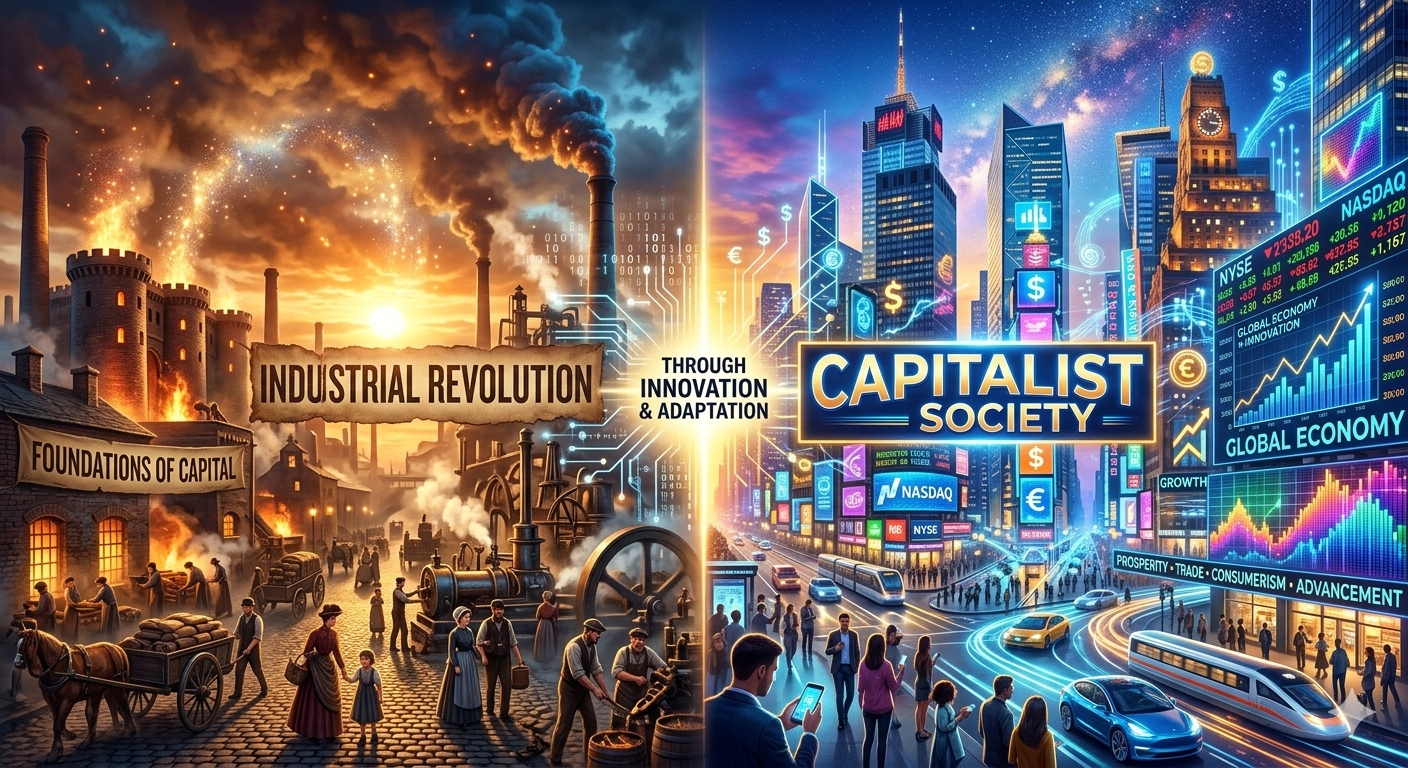
- The United States promoted liberal democracy and capitalism.
- The Soviet Union advocated socialism and centralized state control.
This ideological competition gave birth to the Cold War.
II. Formation of Western Alliances
1. The North Atlantic Treaty Organization (NATO)
In 1949, the Western powers formed the NATO.
Objectives:
- Collective defense against Soviet expansion
- Military cooperation among member states
- Political coordination within the Western bloc
Article 5 of NATO declared that an attack on one member would be considered an attack on all.
Significance:
- Institutionalized military alliance in peacetime
- Strengthened transatlantic relations
- Formalized Western bloc unity
NATO became the cornerstone of Western security policy during the Cold War.
2. The Marshall Plan (Economic Alliance Structure)
The United States introduced the Marshall Plan in 1947 to rebuild war-torn Europe.
Key Features:
- Financial aid for European reconstruction
- Promotion of economic stability
- Prevention of communist influence
Although primarily economic, it reinforced political alignment with the U.S. and strengthened Western Europe’s recovery.
3. Formation of the European Integration Movement
The devastation of war encouraged European cooperation. This led to institutions that eventually evolved into the European Union.
Early Steps:
- European Coal and Steel Community (1951)
- European Economic Community (1957)
These institutions aimed to:
- Prevent further wars in Europe
- Promote economic interdependence
- Create regional stability
European integration became a new regional power structure within the Western bloc.
III. Formation of Eastern Bloc Alliances
1. Warsaw Pact
In response to NATO, the Soviet Union established the Warsaw Pact in 1955.
Objectives:
- Military alliance among socialist states
- Counterbalance NATO
- Maintain Soviet control over Eastern Europe
Member states included Poland, Hungary, East Germany, Czechoslovakia, and others.
Impact:
- Institutionalized division of Europe
- Strengthened Soviet dominance
- Increased militarization
2. Council for Mutual Economic Assistance (COMECON)
The Soviet Union created COMECON to coordinate economic policies among socialist states.
Key Goals:
- Promote socialist economic cooperation
- Reduce dependence on Western markets
- Strengthen centralized planning
This formed the economic foundation of the Eastern bloc.
IV. The United Nations and Collective Security
After the failure of the League of Nations, a new global organization was formed in 1945: the United Nations.
1. Structure
- General Assembly
- Security Council
- International Court of Justice
- Specialized agencies
The Security Council included five permanent members:
- United States
- Soviet Union (later Russia)
- United Kingdom
- France
- China
Each had veto power.
2. Role in Power Structure
The United Nations institutionalized global diplomacy.
Functions:
- Conflict resolution
- Peacekeeping missions
- Promotion of human rights
- Economic and social cooperation
Although often limited by Cold War rivalries, the UN provided a platform for international dialogue.
V. Emergence of Nuclear Deterrence System
1. Nuclear Arms Race
The United States dropped atomic bombs on Japan in 1945. Soon, the Soviet Union developed its own nuclear weapons.
This created a new power structure based on deterrence.
Key Concept:
- Mutually Assured Destruction (MAD)
The possession of nuclear weapons prevented direct war between superpowers but increased global tension.
2. Military Alliances Beyond Europe
(a) SEATO (Southeast Asia Treaty Organization)
(b) CENTO (Central Treaty Organization)
These alliances extended Cold War rivalry into Asia and the Middle East.
VI. The Non-Aligned Movement (NAM)
Not all nations wished to join either bloc. Newly independent countries sought neutrality.
The Non-Aligned Movement emerged in 1961.
Founding Leaders:
- Jawaharlal Nehru
- Josip Broz Tito
- Gamal Abdel Nasser
Objectives:
- Avoid alignment with superpowers
- Promote peaceful coexistence
- Support anti-colonial struggles
NAM represented a third force in global politics.
VII. Decolonization and Shift in Global Power
1. Collapse of Colonial Empires
After 1945:
- Britain and France gradually lost colonies.
- Asia and Africa saw independence movements.
This created dozens of new sovereign states.
2. Rise of the “Third World”
Newly independent nations sought:
- Economic development
- Political stability
- Global recognition
This expanded the international system beyond Euro-American dominance.
VIII. Economic Power Structures
1. Bretton Woods Institutions
The Bretton Woods Conference (1944) created:
- International Monetary Fund
- World Bank
Objectives:
- Promote financial stability
- Facilitate reconstruction
- Encourage international trade
These institutions institutionalized American economic leadership.
2. Dollar-Centered Global Economy
The U.S. dollar became the global reserve currency. This strengthened American economic dominance.
IX. Cold War as a Global Power Structure
The Cold War structured global politics from 1945 to 1991.
Characteristics:
- Proxy wars (Korea, Vietnam)
- Ideological propaganda
- Arms race
- Intelligence warfare
Although direct war was avoided, indirect conflicts shaped global alignments.
X. Long-Term Consequences of Post-War Alliances
1. Institutionalization of Military Blocs
Alliances like NATO and the Warsaw Pact entrenched division. Even after the Cold War, NATO continues to exist.
2. End of Bipolarity
With the dissolution of the Soviet Union in 1991:
- The Warsaw Pact collapsed.
- The United States emerged as the sole superpower (unipolar moment).
However, new multipolar tendencies later developed.
3. Rise of Regional Organizations
Post-war trends encouraged regional cooperation:
- European Union
- ASEAN
- African Union
Regionalism became an important power structure.
XI. Comparative Analysis: Pre-War vs Post-War Power Structure
| Before 1945 | After 1945 |
|---|---|
| European dominance | US–Soviet bipolarity |
| Colonial empires | Decolonized nation-states |
| Balance of power diplomacy | Formal military alliances |
| Weak League of Nations | Stronger United Nations |
The shift was structural and ideological.
XII. Critical Evaluation
Positive Outcomes:
- Institutionalized international cooperation
- Prevented direct superpower war
- Encouraged European unity
- Facilitated decolonization
Negative Outcomes:
- Prolonged Cold War tensions
- Nuclear threat to humanity
- Proxy wars and regional instability
- Ideological polarization
XIII. Conclusion
The aftermath of the Second World War fundamentally transformed global politics. The emergence of NATO and the Warsaw Pact institutionalized military alliances, while the United Nations provided a framework for collective security. The bipolar rivalry between the United States and the Soviet Union defined international relations for nearly half a century.
Simultaneously, decolonization expanded the number of sovereign states, leading to the rise of the Non-Aligned Movement. Economic institutions like the IMF and World Bank structured global finance under American leadership.
Thus, the post-1945 world order was characterized by ideological rivalry, military alliances, nuclear deterrence, and institutionalized diplomacy. The alliances and power structures formed after the Second World War continue to influence global politics even in the 21st century.