Introduction
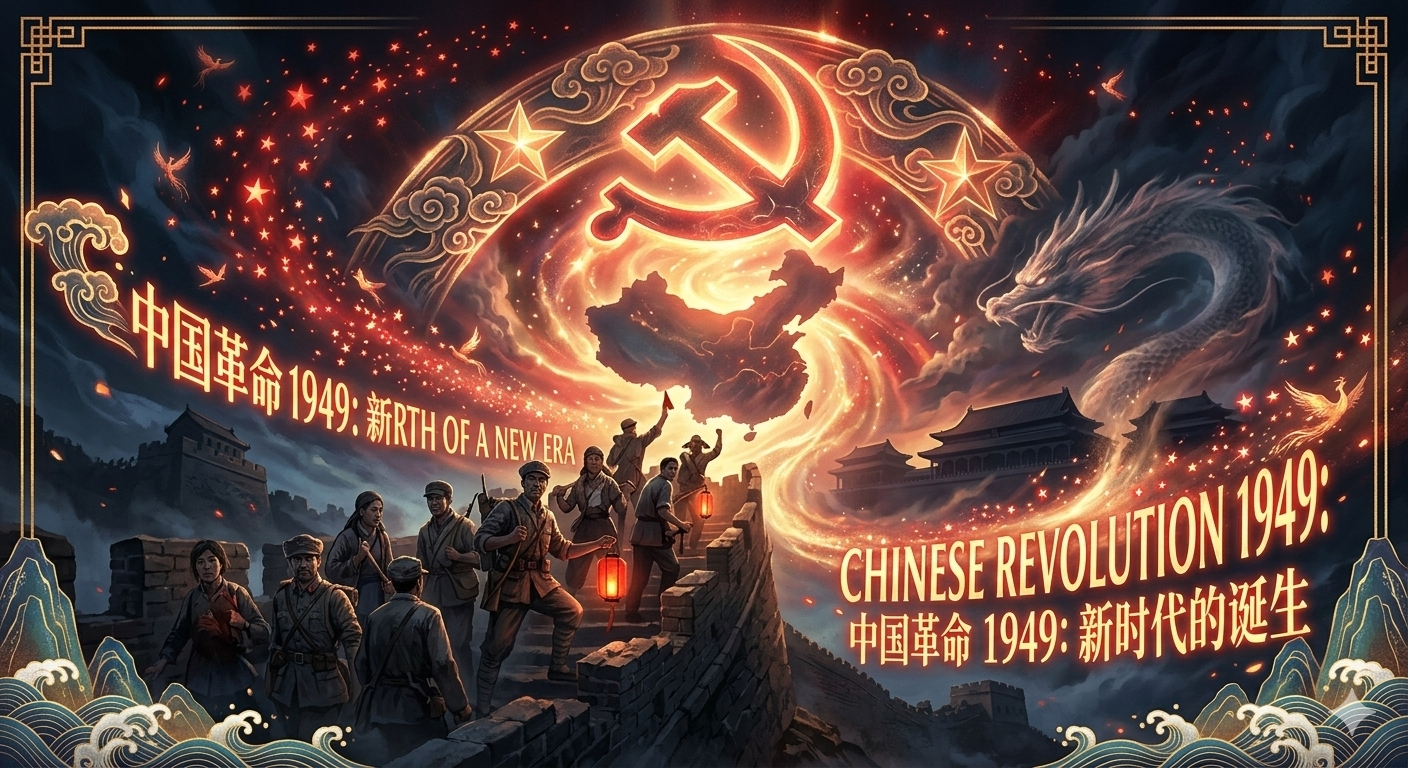
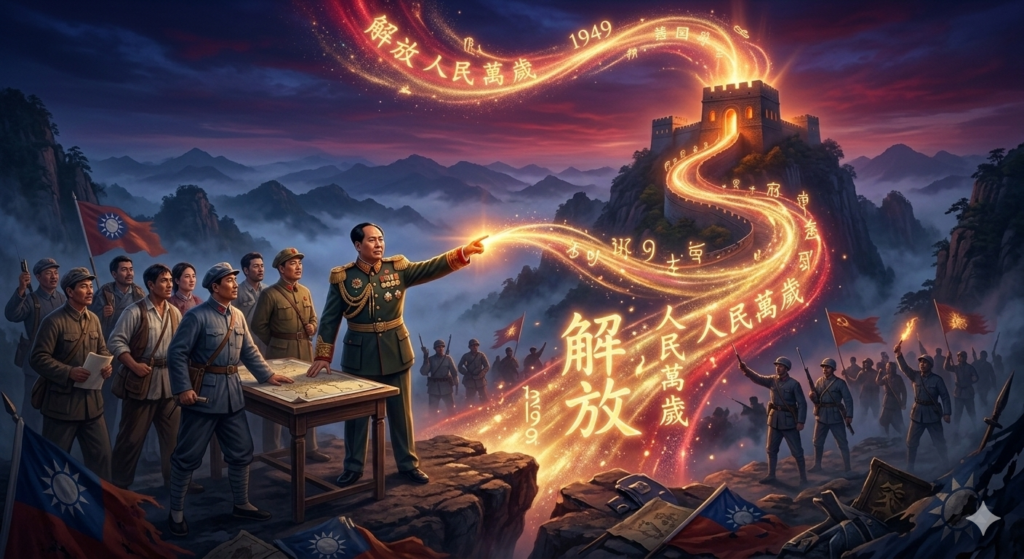
The Chinese Revolution marked a turning point not only in Chinese history but also in the political landscape of Asia. After decades of civil war and foreign interference, the Communist Party led by Mao Zedong defeated the Nationalist government and established the People’s Republic of China on 1 October 1949. The Nationalist government led by Chiang Kai-shek retreated to Taiwan.
The success of the Chinese Communist Revolution had profound consequences for Asia. It reshaped regional politics, intensified Cold War rivalries, encouraged revolutionary movements, altered diplomatic relations, and influenced the ideological direction of several Asian states. The emergence of communist China also changed the balance of power in the region and contributed to the formation of new political alliances.
The following sections examine the major political changes that occurred in Asia after the Chinese Revolution of 1949.
1. Establishment of a Communist Government in China
The most immediate political change was the transformation of China into a socialist state.
Key Political Transformations
- The monarchy and nationalist political systems that previously existed in China were replaced by a communist one-party state.
- The Chinese Communist Party became the sole political authority.
- The government adopted Marxist–Leninist ideology as the foundation of the political system.
Political Impact
The creation of a communist government introduced a new ideological force in Asia. China became the largest communist country in the world and a powerful advocate of socialist revolution.
2. Strengthening of the Global Communist Movement
The success of the Chinese Revolution inspired communist movements across Asia.
Spread of Communist Ideology
The revolution demonstrated that a communist movement could succeed in a largely agrarian society. This challenged the earlier assumption that communism could only develop in industrialized nations.
Regions Influenced
Communist movements gained momentum in several Asian countries:
- Vietnam
- North Korea
- Laos
- Cambodia
Political Impact
These movements strengthened the communist bloc in Asia and created ideological divisions between communist and non-communist states.
3. Intensification of the Cold War in Asia
The Chinese Revolution significantly intensified the Cold War in the Asian continent.
Alignment with the Soviet Union
After 1949, China established close relations with the Soviet Union, forming a powerful communist alliance.
Reaction of the Western Powers
The United States viewed the Chinese Revolution as a major strategic setback.
As a result:
- The United States strengthened its alliances in Asia.
- Military and economic assistance was provided to anti-communist governments.
Political Impact
Asia became a major arena of Cold War rivalry between communist and capitalist powers.
4. Division of Korea and the Korean War
The Chinese Revolution influenced developments on the Korean Peninsula.
Background
Korea had already been divided after World War II into:
- North Korea
- South Korea
Korean War
The ideological conflict escalated into the Korean War.
China intervened in the war in support of North Korea.
Political Consequences
- Korea remained permanently divided.
- The war reinforced Cold War divisions in Asia.
5. Impact on the Vietnam War and Southeast Asia
The Chinese Revolution significantly influenced political developments in Southeast Asia.
Support for Communist Movements
China provided political and military support to revolutionary movements, particularly in Vietnam.
Rise of Communist Leadership
The Vietnamese revolutionary leader Ho Chi Minh received support from communist countries including China.
Vietnam War
The conflict eventually escalated into the Vietnam War.
Political Impact
The Chinese Revolution helped strengthen communist influence in Southeast Asia.
6. Emergence of Taiwan as a Separate Political Entity
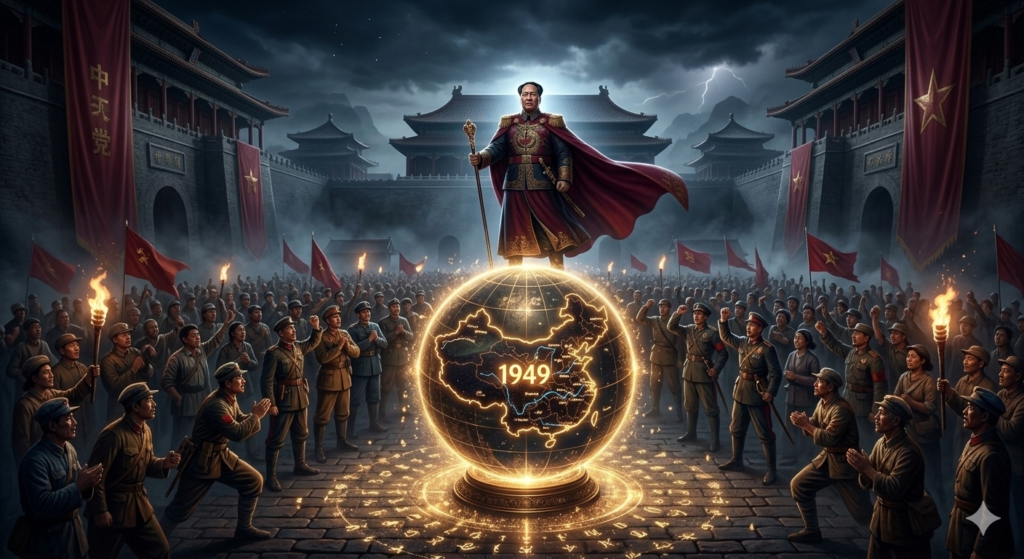
One of the most significant political outcomes of the Chinese Revolution was the creation of two rival Chinese governments.
Formation of Two Governments
After the revolution:
- The Communist government ruled mainland China.
- The Nationalist government continued to operate in Taiwan.
International Political Implications
For many years, both governments claimed to represent the legitimate government of China.
Political Impact
This situation created long-term tensions in East Asia and continues to influence regional politics today.
7. Influence on Decolonization Movements
The Chinese Revolution encouraged anti-colonial movements across Asia.
Ideological Inspiration
Many nationalist leaders in Asia saw the Chinese Revolution as proof that colonial domination and foreign influence could be resisted successfully.
Countries Influenced
Political movements in several countries were inspired by the revolution, including:
- Indonesia
- Malaysia
- Myanmar
Political Impact
The revolution strengthened anti-imperialist sentiment and accelerated the process of decolonization in Asia.
8. Rise of Non-Aligned and Neutral Policies
Some Asian countries attempted to remain neutral in the Cold War rivalry.
Non-Aligned Movement
Leaders such as Jawaharlal Nehru supported the idea of maintaining independence from both communist and capitalist blocs.
This policy contributed to the formation of the Non-Aligned Movement.
Political Impact
The emergence of neutral states helped prevent the complete polarization of Asia into two opposing camps.
9. Strengthening of Asian Communist States
After 1949, several Asian countries adopted communist systems of government.
Examples
Communist governments were established in:
- North Korea
- Vietnam
- Laos
Political Impact
The expansion of communist governments created a powerful socialist bloc within Asia.
10. Military Alliances and Security Arrangements
The rise of communist China encouraged the formation of new military alliances.
Western Alliances
To counter communist influence, Western powers supported the creation of alliances such as:
- SEATO
Purpose
These alliances aimed to prevent the spread of communism in Asia.
Political Impact
The formation of such alliances increased military tensions and strategic competition in the region.
11. Transformation of China’s Foreign Policy
The Chinese Revolution also transformed China’s international political role.
Early Foreign Policy
Initially, China closely aligned with the Soviet Union.
Later Developments
Over time, China pursued an independent foreign policy and sought influence among developing countries.
Political Impact
China became a major political and diplomatic actor in Asian affairs.
12. Shift in the Balance of Power in Asia
The emergence of communist China significantly altered the balance of power.
Key Changes
- China became a major military and political power.
- Western powers had to reconsider their strategic policies in Asia.
- Regional political dynamics became more complex.
Impact
China’s rise reshaped diplomatic relations across Asia.
13. Influence on Revolutionary Movements
The Chinese Revolution inspired revolutionary movements in several Asian countries.
Maoist Influence
The revolutionary strategy developed by Mao Zedong, particularly the idea of peasant-based revolution, influenced many insurgent movements.
Impact
Several political movements adopted Maoist ideology as a model for revolutionary struggle.
14. Ideological Division within the Communist World
Although China initially cooperated with the Soviet Union, differences eventually emerged.
Sino-Soviet Split
In the 1960s, relations between China and the Soviet Union deteriorated.
Political Impact
This division created rival centers of communist leadership and further complicated Cold War politics in Asia.
15. Long-Term Political Consequences
The Chinese Revolution had lasting political effects on Asia.
Key Long-Term Outcomes
- Strengthening of communist ideology in several regions.
- Continued geopolitical tensions in East Asia.
- Emergence of China as a major global power.
These developments continue to influence international relations today.
Critical Evaluation
The Chinese Revolution of 1949 produced both positive and negative political consequences in Asia.
Positive Effects
- Encouraged anti-colonial and nationalist movements.
- Strengthened political awareness among Asian populations.
- Promoted new political systems and ideologies.
Negative Effects
- Intensified Cold War conflicts in Asia.
- Contributed to wars such as the Korean and Vietnam conflicts.
- Created long-term geopolitical tensions.
Thus, while the revolution inspired political change, it also increased ideological rivalry and regional instability.
Conclusion
The Chinese Revolution was a transformative event that reshaped the political landscape of Asia. The establishment of the People’s Republic of China under Mao Zedong strengthened the global communist movement and intensified Cold War rivalry in the region.
The revolution influenced the political development of many Asian countries by encouraging revolutionary movements, shaping foreign alliances, and altering the balance of power. It contributed to conflicts such as the Korean War and the Vietnam War while also inspiring nationalist and anti-colonial struggles.
Overall, the Chinese Revolution was one of the most significant political events of the twentieth century, with far-reaching consequences that continue to shape Asian politics and international relations.