Introduction
Poverty reduction has remained a central objective of India’s development strategy since Independence. Over the decades, several institutions and scholars have produced different estimates of poverty using varying methodologies, poverty lines, and indicators. While these estimates often differ in magnitude, a common conclusion emerging from most studies is that poverty levels in India have declined over time. However, the pace, depth, and uniformity of this decline remain contested, particularly when rural and urban poverty indicators are examined separately. A critical assessment is therefore necessary to understand whether poverty reduction has been broad-based and sustainable, or whether structural vulnerabilities persist beneath aggregate improvements.
Understanding Poverty Measurement in India
Poverty in India has traditionally been measured in terms of consumption expenditure, based on minimum calorie requirements and later broader expenditure norms. Over time, methodologies have evolved from calorie-based norms to expenditure-based poverty lines and, more recently, multidimensional approaches.
The Planning Commission earlier relied on poverty lines derived from the Tendulkar and Rangarajan Committees, while later assessments have used household consumption surveys. In recent years, multidimensional poverty indices (MPI) have been introduced, incorporating indicators such as education, health, nutrition, sanitation, and living standards.
Despite methodological differences, most estimates point towards a long-term decline in poverty, particularly since the economic reforms of the 1990s. However, these trends must be interpreted cautiously, as changes in methodology often affect comparability across time.
Evidence of Declining Poverty Levels
Most official and independent estimates suggest a consistent reduction in poverty ratios over time. Rapid economic growth, expansion of welfare schemes, rural employment programs, and improved access to basic services have contributed to this trend.
In rural areas, poverty reduction has been supported by agricultural diversification, higher rural wages, increased non-farm employment, and targeted interventions such as employment guarantee schemes and food security programs. In urban areas, expansion of service-sector employment and informal economic activities has helped absorb surplus labor migrating from rural regions.
Multidimensional poverty estimates further indicate improvements in indicators such as school enrollment, electrification, access to sanitation, and cooking fuel, suggesting a broader improvement in living conditions beyond income measures.
Rural Poverty: Trends and Challenges
Rural India has historically accounted for a majority of the poor, largely due to dependence on agriculture, landlessness, and seasonal employment. Over time, rural poverty ratios have declined faster than urban poverty in percentage terms, reflecting targeted policy interventions.
Programs such as rural employment guarantees, public distribution systems, housing schemes, and health initiatives have improved income security and reduced vulnerability. Infrastructure development in rural areas—roads, electricity, drinking water, and digital connectivity—has also enhanced access to markets and services.
However, rural poverty remains deeply linked to structural issues. Fragmentation of landholdings, low agricultural productivity, climate vulnerability, and disguised unemployment continue to constrain income growth. Regional disparities are stark, with poverty concentrated in rain-fed, tribal, and backward regions.
Moreover, declining poverty ratios do not necessarily imply reduced vulnerability. Many rural households hover just above the poverty line and remain susceptible to shocks such as crop failure, health emergencies, or price fluctuations.
Urban Poverty: Emerging Realities
Urban poverty presents a different set of challenges. While poverty ratios in urban areas are lower than in rural areas, the absolute number of urban poor has increased due to rapid urbanization and migration.
Urban poverty is closely associated with informal employment, lack of social security, high living costs, and inadequate housing. Slums and informal settlements reflect deficiencies in urban planning and service delivery. Migrant workers often lack access to public services due to documentation barriers and mobility.
Unlike rural poverty, which benefits from targeted schemes, urban poverty has historically received less policy attention. Employment insecurity, rising housing rents, and limited access to affordable healthcare exacerbate urban vulnerability, even for those classified as non-poor by consumption standards.
The COVID-19 pandemic exposed the fragility of urban livelihoods, highlighting how quickly income shocks can push vulnerable households back into poverty, questioning the durability of poverty reduction gains.
Limitations of Poverty Estimates
Despite evidence of declining poverty, several limitations weaken the conclusiveness of this claim. First, consumption-based poverty lines may underestimate deprivation by ignoring health costs, education quality, housing insecurity, and environmental stress.
Second, methodological changes over time make inter-temporal comparisons difficult. Shifts in survey design, recall periods, and poverty thresholds can artificially inflate or deflate poverty trends.
Third, income and consumption data often fail to capture informal earnings accurately, especially in urban areas. This leads to underestimation of both poverty and vulnerability.
Fourth, inequality has increased in recent decades. Even as poverty declines, unequal growth limits the distributional impact of economic expansion. High inequality means that aggregate poverty reduction may coexist with persistent deprivation among specific groups.
Multidimensional Poverty: A Broader Perspective
Multidimensional poverty indices offer a more holistic view of deprivation by incorporating non-income indicators. These estimates generally show faster poverty reduction compared to income-based measures, reflecting improvements in public service delivery.
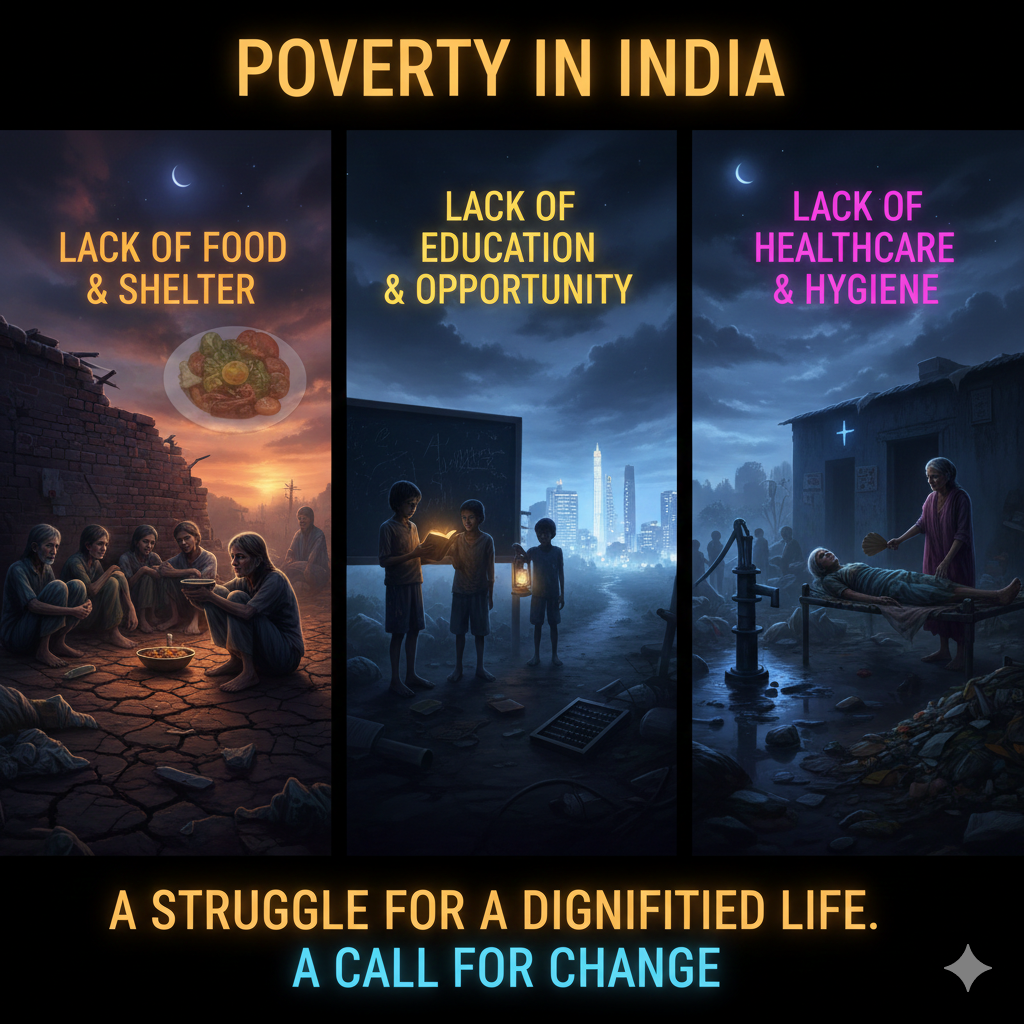
Access to toilets, electricity, drinking water, schooling, and healthcare has expanded significantly, contributing to better human development outcomes. However, quality gaps remain—especially in education and healthcare—raising concerns about the depth of improvement.
Rural areas have seen sharper reductions in multidimensional poverty due to infrastructure expansion, while urban areas show slower progress in housing quality and sanitation for informal settlements.
Critical Assessment: Do All Estimates Indicate Real Poverty Reduction?
While most estimates indicate a decline in poverty over time, this does not imply that poverty has been eliminated or that the reduction is uniform and irreversible. The nature of poverty has changed rather than disappeared.
Rural poverty has become less visible but more vulnerability-driven, while urban poverty has become more complex and multidimensional. Employment insecurity, informalization, and rising costs of living threaten recent gains.
Furthermore, shocks such as pandemics, climate change, inflation, and jobless growth can reverse poverty reduction trends. Thus, declining poverty ratios should not lead to policy complacency.
Way Forward
Sustaining poverty reduction requires shifting focus from mere poverty alleviation to vulnerability reduction. This involves strengthening employment generation, improving quality of education and healthcare, expanding urban social protection, and addressing regional disparities.
Rural strategies must prioritize agricultural resilience, non-farm employment, and climate adaptation, while urban policies should address housing, informal sector security, and migrant inclusion.
Improved data collection, regular surveys, and multidimensional assessments are essential for accurate monitoring and targeted interventions.
Conclusion
It is reasonable to agree that most poverty estimates in India indicate a reduction in poverty levels over time. However, this decline is uneven across rural and urban areas and masked by methodological limitations and rising vulnerabilities. Rural poverty has declined due to targeted interventions, while urban poverty remains under-addressed and increasingly complex.
Therefore, poverty reduction in India should be viewed as a dynamic process rather than a completed achievement. A nuanced, multidimensional, and region-specific approach is essential to ensure that progress is inclusive, sustainable, and resilient to future shocks.