Introduction
Health is not merely the absence of disease; it is a foundational pillar of human well-being, social justice, and economic progress. In a welfare state, providing accessible and affordable healthcare to citizens is considered a moral imperative, rooted in the principles of equity, dignity, and social responsibility. However, in the contemporary development discourse, health—particularly primary health care (PHC)—has acquired an even broader significance. It is now widely recognized as a necessary precondition for sustainable development, influencing economic productivity, social stability, environmental resilience, and intergenerational equity.
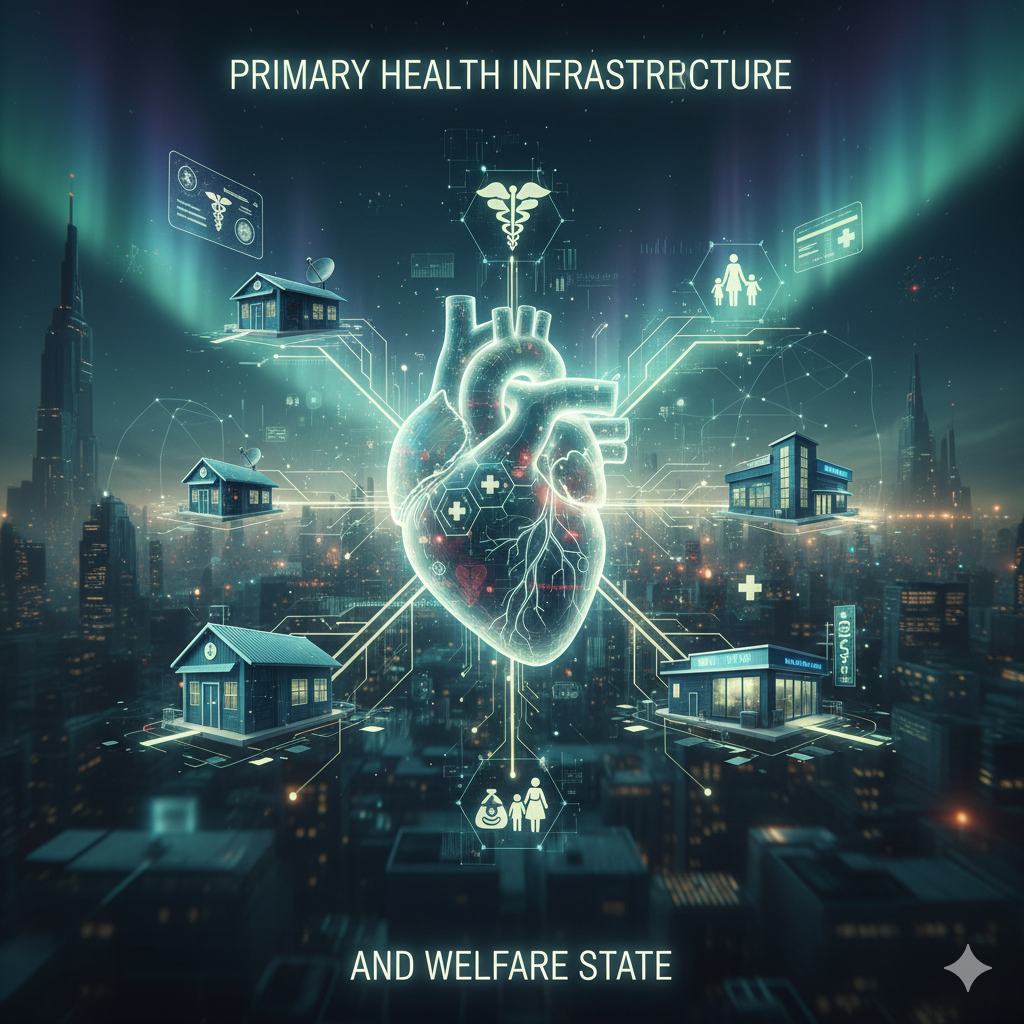
Primary health structure refers to the first level of contact between individuals and the healthcare system, encompassing preventive, promotive, curative, and rehabilitative services. This essay critically analyzes how primary health care goes beyond ethical obligations of a welfare state and becomes indispensable for achieving sustainable development.
Understanding Primary Health Structure
Meaning and Scope of Primary Health Care
Primary health care is a comprehensive approach to health that emphasizes:
- Preventive care (immunization, nutrition, sanitation)
- Promotive care (health education, awareness)
- Basic curative services
- Community participation and decentralization
It is people-centric rather than hospital-centric and focuses on early intervention, which is cost-effective and socially inclusive.
Primary Health Care in the Indian Context
In India, the primary health structure includes:
- Sub-centres
- Primary Health Centres (PHCs)
- Community Health Centres (CHCs)
- Health and Wellness Centres
These institutions form the backbone of public health delivery, especially in rural and underserved areas.
Primary Health Care as a Moral Imperative of a Welfare State
Ethical Foundations of Welfare State
A welfare state is based on the idea that the state has a responsibility to ensure a minimum standard of living and dignity for all citizens. Health is central to this vision because:
- Ill health undermines human dignity
- Healthcare inequality deepens social injustice
- Vulnerable groups suffer disproportionately
Thus, access to basic health services is not charity but a right.
Social Justice and Equity
Primary health care promotes:
- Universal access regardless of income
- Reduction of urban-rural health disparities
- Protection of marginalized communities such as women, children, elderly, and the poor
From a moral standpoint, denying basic healthcare contradicts the principles of equality and justice embedded in democratic governance.
Linking Primary Health Structure with Sustainable Development
Sustainable development is defined as development that meets present needs without compromising the ability of future generations to meet their own needs. Health is deeply interconnected with all three pillars of sustainability—economic, social, and environmental.
Primary Health Care and Economic Sustainability
Healthy Population as Human Capital
A healthy population is more productive, innovative, and resilient. Primary health care contributes to economic sustainability by:
- Reducing disease burden
- Minimizing loss of workdays
- Enhancing labour productivity
Preventive health measures cost significantly less than tertiary care, making PHC a fiscally sustainable investment.
Breaking the Cycle of Poverty and Illness
Poor health often leads to:
- Loss of income
- High out-of-pocket expenditure
- Intergenerational poverty
Strong primary health systems prevent catastrophic health spending and enable households to invest in education, nutrition, and livelihoods—key drivers of long-term development.
Primary Health Structure and Social Sustainability
Strengthening Social Cohesion
Accessible primary health services foster:
- Trust in public institutions
- Sense of security among citizens
- Reduced social unrest arising from exclusion
When communities feel cared for, social cohesion and political stability improve.
Gender Equality and Child Development
Primary health care plays a crucial role in:
- Maternal and child health
- Family planning
- Nutrition and immunization
Improved health outcomes for women and children have multiplier effects on education, workforce participation, and demographic stability.
Primary Health Care and Environmental Sustainability
Preventive Health and Environmental Awareness
Primary health systems promote:
- Clean water and sanitation
- Hygiene practices
- Disease prevention linked to environmental conditions
This reduces health risks associated with pollution, climate change, and ecological degradation.
Climate Resilience and Public Health
Climate change increases health risks such as:
- Heat stress
- Vector-borne diseases
- Water-borne infections
A robust primary health infrastructure enhances community resilience by enabling early detection, preparedness, and response to climate-induced health challenges.
Role of Primary Health Care in Achieving Sustainable Development Goals (SDGs)
Primary health care is central to multiple SDGs, including:
- SDG 3: Good Health and Well-Being
- SDG 1: No Poverty
- SDG 2: Zero Hunger
- SDG 5: Gender Equality
- SDG 10: Reduced Inequalities
Thus, PHC acts as a cross-cutting enabler of sustainable development rather than a sectoral intervention.
Preventive Approach: The Core Strength of Primary Health Structure
Cost-Effectiveness and Long-Term Benefits
Primary health care focuses on prevention rather than cure. This approach:
- Reduces long-term healthcare costs
- Limits disease outbreaks
- Enhances population resilience
From a sustainability perspective, prevention ensures efficient use of limited resources.
Community Participation and Ownership
Primary health care encourages:
- Local involvement
- Decentralized decision-making
- Health awareness at the grassroots level
Such participatory models ensure that development is people-driven and sustainable over time.
Challenges in Strengthening Primary Health Structure
Despite its importance, primary health care faces several challenges:
- Inadequate funding
- Shortage of trained personnel
- Infrastructure gaps in rural areas
- Urban bias in healthcare investment
These challenges weaken the foundation of sustainable development and require urgent policy attention.
Way Forward: Strengthening Primary Health for Sustainable Development
To make primary health care a true enabler of sustainability:
- Public health expenditure must be increased
- Primary care should be integrated with nutrition, sanitation, and education
- Technology and digital health should be leveraged
- Community health workers should be empowered
A preventive, inclusive, and decentralized health system is essential for long-term national development.
Conclusion
Primary health structure is far more than a moral obligation of a welfare state; it is a strategic necessity for sustainable development. While ethical considerations justify state responsibility toward health, developmental logic reinforces it as an indispensable investment in human capital, social stability, and environmental resilience.
A nation cannot achieve sustainable growth with an unhealthy population. By prioritizing primary health care, the state not only fulfills its moral duty but also lays the foundation for inclusive, resilient, and sustainable development. In this sense, primary health care is not a cost, but a long-term asset for national progress.