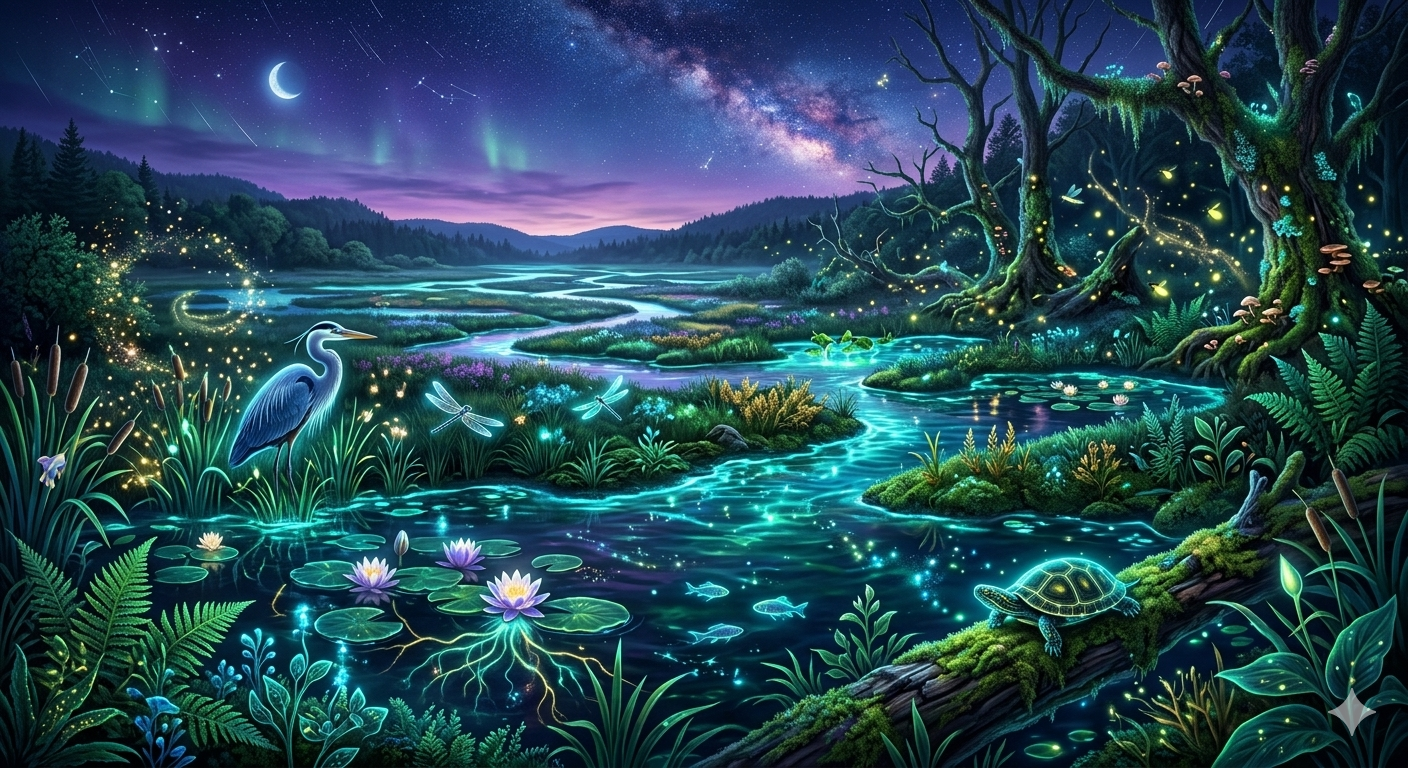
Wetlands are among the most productive and biologically diverse ecosystems on Earth. They are transitional zones between terrestrial and aquatic environments where water plays a dominant role in determining the structure and function of the ecosystem. Wetlands include marshes, swamps, mangroves, floodplains, peatlands, and shallow lakes. These ecosystems support a wide variety of plant and animal species and perform numerous ecological functions that are essential for environmental sustainability.
Biodiversity conservation refers to the protection, preservation, and sustainable management of the variety of life forms present on Earth, including plants, animals, microorganisms, and their ecosystems. Wetlands play a vital role in conserving biodiversity because they provide unique habitats that support a large number of species, many of which cannot survive in other ecosystems.
Despite their ecological importance, wetlands are among the most threatened ecosystems due to urbanization, pollution, agricultural expansion, climate change, and land reclamation. Understanding the role of wetlands in biodiversity conservation is therefore essential for protecting natural ecosystems and maintaining ecological balance.
This discussion explains the concept of wetlands, their ecological characteristics, their importance in biodiversity conservation, the threats they face, and strategies for their protection.
Understanding Wetlands
Definition of Wetlands
Wetlands are areas of land that remain saturated with water either permanently or seasonally. The presence of water creates unique soil conditions and supports specially adapted vegetation known as hydrophytes.
Wetlands are characterized by three main features:
- Presence of water either on the surface or just below the soil
- Hydric soils that are saturated with water
- Vegetation adapted to waterlogged conditions
These features create habitats that support diverse biological communities.
Types of Wetlands
Wetlands exist in various forms depending on geographic location, water sources, and environmental conditions.
Some major types include:
1. Marshes
Marshes are wetlands dominated by grasses and soft-stem plants. They are commonly found along rivers, lakes, and coastal regions.
2. Swamps
Swamps are wetlands dominated by trees and shrubs. They provide habitat for many birds, reptiles, and mammals.
3. Mangrove Wetlands
Mangroves occur in tropical coastal areas where salt-tolerant trees grow in tidal waters. They support rich marine biodiversity.
4. Peatlands
Peatlands are wetlands where partially decomposed organic matter accumulates over time. These wetlands store large amounts of carbon.
5. Floodplain Wetlands
These wetlands occur along rivers and are periodically flooded, providing fertile environments for diverse species.
Each type of wetland contributes uniquely to biodiversity conservation.
Characteristics of Wetland Ecosystems
Wetlands have distinct ecological characteristics that make them highly productive and suitable for supporting diverse life forms.
Important characteristics include:
- High biological productivity
- Availability of water throughout the year or seasonally
- Rich nutrient cycles
- Complex food webs
- Diverse vegetation types
These characteristics make wetlands ideal habitats for a wide variety of species.
Role of Wetlands in Biodiversity Conservation
Wetlands play a crucial role in maintaining biological diversity at local, regional, and global levels.
Habitat for Diverse Species
One of the most important roles of wetlands is providing habitat for numerous species of plants and animals. Wetlands serve as breeding, feeding, and nesting grounds for many organisms.
Important biodiversity supported by wetlands includes:
- Aquatic plants and algae
- Fish and amphibians
- Water birds and migratory birds
- Insects and microorganisms
- Mammals such as otters and beavers
Many endangered and rare species depend on wetlands for survival.
Support for Migratory Birds
Wetlands are critical stopover sites for migratory birds during their long journeys between breeding and wintering grounds.
These ecosystems provide:
- Food resources such as fish, insects, and aquatic plants
- Safe resting places
- Breeding and nesting areas
Without wetlands, many migratory bird species would struggle to survive their seasonal migrations.
Nursery Grounds for Aquatic Life
Wetlands serve as natural nurseries for fish, amphibians, and other aquatic organisms. The shallow waters and dense vegetation provide protection from predators and abundant food.
Benefits include:
- Higher survival rates for young organisms
- Increased fish populations
- Enhanced aquatic biodiversity
Many commercially important fish species begin their life cycles in wetlands.
Conservation of Plant Diversity
Wetlands support a wide range of plant species adapted to waterlogged conditions.
Examples include:
- Mangrove trees
- Water lilies
- Reeds and grasses
- Floating aquatic plants
These plants play an important role in stabilizing the ecosystem and providing food and shelter for wildlife.
Support for Amphibians and Reptiles
Wetlands provide ideal habitats for amphibians such as frogs and salamanders, which require moist environments for breeding.
They also support reptiles like:
- Turtles
- Crocodiles
- Water snakes
The survival of many amphibian and reptile species depends directly on the health of wetland ecosystems.
Maintenance of Genetic Diversity
Wetlands host numerous species with unique genetic traits. Preserving these ecosystems helps maintain genetic diversity, which is essential for species adaptation and resilience.
Genetic diversity contributes to:
- Evolutionary processes
- Disease resistance in species
- Adaptation to environmental changes
Thus, wetlands play a key role in maintaining the genetic richness of life on Earth.
Ecological Functions of Wetlands Supporting Biodiversity
Wetlands perform several ecological functions that indirectly support biodiversity conservation.
Water Purification
Wetlands act as natural filters by removing pollutants and sediments from water.
They help in:
- Absorbing excess nutrients
- Trapping sediments
- Breaking down toxic substances
Cleaner water supports healthier ecosystems and diverse species.
Flood Control
Wetlands absorb excess rainwater and reduce the impact of floods.
They function as natural sponges by:
- Storing water during heavy rainfall
- Slowly releasing water into rivers and groundwater
This flood regulation protects habitats and species living in surrounding areas.
Carbon Storage and Climate Regulation
Wetlands store large amounts of carbon in their soils and vegetation, helping reduce greenhouse gases in the atmosphere.
This contributes to:
- Climate regulation
- Reduction of global warming
- Stabilization of ecosystems
Stable climate conditions support biodiversity survival.
Nutrient Cycling
Wetlands play a crucial role in nutrient cycling, where nutrients are recycled within the ecosystem.
Processes such as decomposition and microbial activity help maintain soil fertility and support plant growth.
Healthy nutrient cycles ensure sustainable ecosystems for various species.
Economic and Social Importance of Wetlands for Biodiversity
Wetlands also provide resources that support human livelihoods while promoting biodiversity conservation.
Important benefits include:
- Fisheries and aquaculture
- Agriculture and irrigation support
- Ecotourism and recreation
- Medicinal plants and raw materials
When managed sustainably, wetlands can support both biodiversity and human development.
Threats to Wetlands and Biodiversity
Despite their importance, wetlands are rapidly declining due to human activities.
Urbanization and Land Reclamation
Many wetlands are drained and converted into land for housing, industries, and infrastructure.
This leads to:
- Loss of natural habitats
- Decline in species populations
Pollution
Industrial waste, agricultural chemicals, and sewage often flow into wetlands.
This causes:
- Water contamination
- Death of aquatic organisms
- Loss of biodiversity
Climate Change
Rising temperatures, changing rainfall patterns, and sea-level rise affect wetland ecosystems.
Impacts include:
- Drying of wetlands
- Alteration of species distribution
- Increased vulnerability of ecosystems
Overexploitation of Resources
Overfishing, hunting, and excessive harvesting of plants can disrupt wetland ecosystems and reduce biodiversity.
Wetland Conservation Strategies
To protect biodiversity, effective wetland conservation measures must be implemented.
Establishment of Protected Areas
Governments can designate wetlands as protected areas, wildlife sanctuaries, or national parks.
This ensures that ecosystems remain undisturbed.
Sustainable Wetland Management
Sustainable management practices include:
- Regulating fishing activities
- Preventing pollution
- Maintaining natural water flow
These practices help maintain ecological balance.
Community Participation
Local communities play a crucial role in protecting wetlands.
Community-based conservation programs encourage people to protect and sustainably use wetland resources.
Restoration of Degraded Wetlands
Restoration projects aim to revive damaged wetlands through activities such as:
- Replanting vegetation
- Re-establishing natural water flow
- Removing pollutants
These actions help restore biodiversity.
Environmental Awareness and Education
Educating people about the importance of wetlands encourages conservation efforts and responsible environmental behavior.
Public awareness programs can significantly reduce wetland destruction.
Role of International Cooperation in Wetland Conservation
Wetlands are globally important ecosystems that require international cooperation for their protection.
Global initiatives focus on:
- Protecting migratory bird habitats
- Conserving wetlands of international importance
- Promoting sustainable management practices
Such cooperation helps ensure long-term biodiversity conservation.
Conclusion
Wetlands are among the most valuable ecosystems on Earth due to their rich biodiversity and essential ecological functions. They provide habitats for numerous plant and animal species, support migratory birds, serve as breeding grounds for aquatic life, and maintain genetic diversity. In addition, wetlands perform critical ecological functions such as water purification, flood control, climate regulation, and nutrient cycling.
However, wetlands are increasingly threatened by human activities such as urbanization, pollution, land reclamation, and climate change. The destruction of wetlands leads to loss of biodiversity, environmental degradation, and disruption of ecological balance.
Therefore, conserving wetlands is essential for protecting biodiversity and maintaining environmental sustainability. Through effective conservation strategies, sustainable management practices, community participation, and environmental awareness, wetlands can be preserved for future generations.
In conclusion, wetlands play an indispensable role in biodiversity conservation and environmental stability. Protecting these ecosystems is not only important for wildlife but also for the survival and well-being of human societies.