Introduction
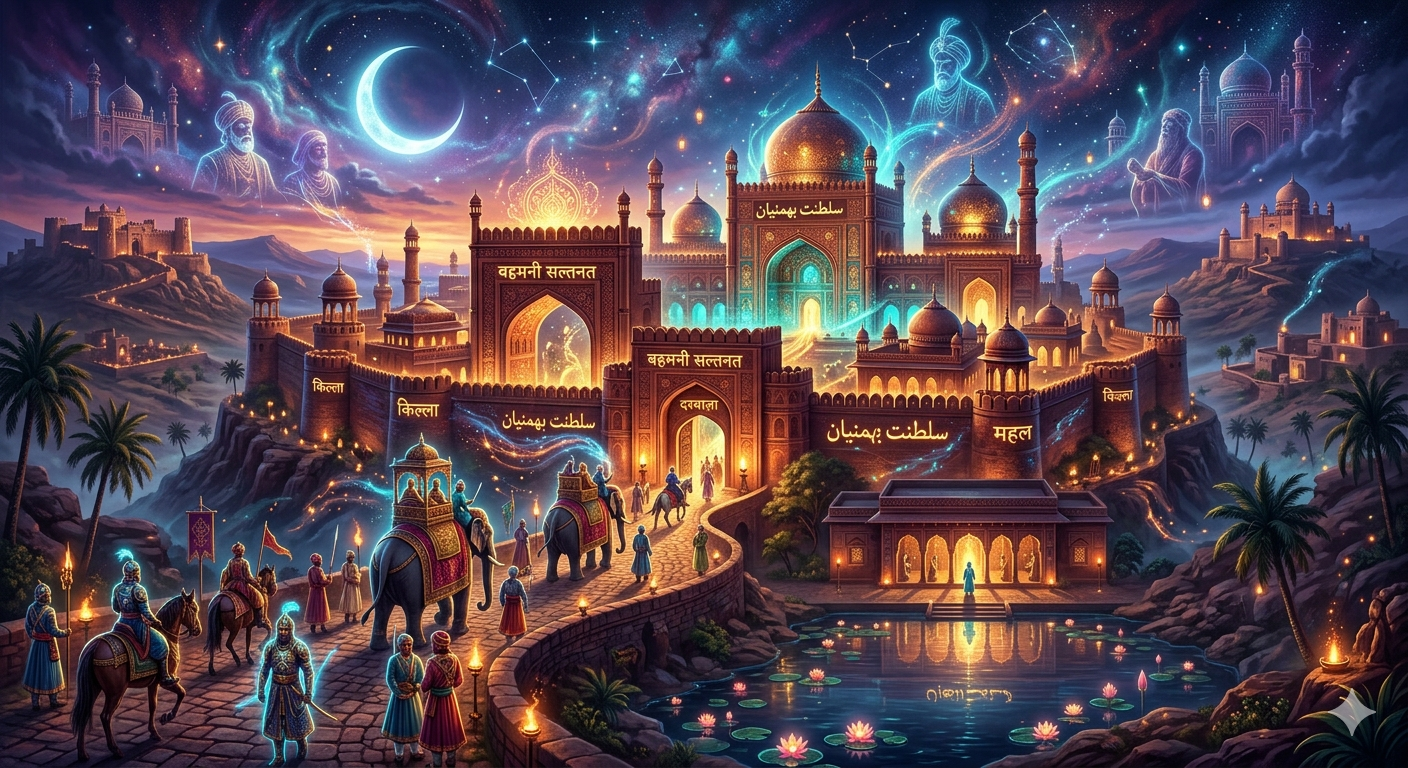
The Bahmani Sultanate (1347–1527) occupies a crucial position in the medieval history of South India. Established by Ala-ud-Din Bahman Shah, it marked the beginning of an independent Indo-Islamic political power in the Deccan region. The emergence of the Bahmani state not only challenged the dominance of northern empires like the Delhi Sultanate but also created a distinct political, cultural, and administrative identity in the Deccan.
The significance of the Bahmani Sultanate lies in its contributions to political organization, cultural synthesis, architecture, economic development, and the shaping of future Deccan states. It also played a decisive role in the long-standing rivalry with the Vijayanagara Empire, which defined the history of South India for nearly two centuries.
Political Significance of the Bahmani Sultanate
Formation of an Independent Deccan Power
The Bahmani Sultanate was the first major independent Muslim kingdom in South India.
- It broke away from the authority of the Delhi Sultanate, marking the decline of northern control over the Deccan.
- The establishment of a centralized state in the Deccan laid the foundation for regional political autonomy.
- It helped create a separate political identity for the Deccan region, distinct from North India.
This development was significant because it encouraged the rise of other regional powers and decentralization of authority in medieval India.
Administrative Innovations and Governance
The Bahmani rulers developed an efficient administrative system.
- The kingdom was divided into provinces called Tarafs, each governed by a noble.
- The administration was influenced by Persian models but adapted to local conditions.
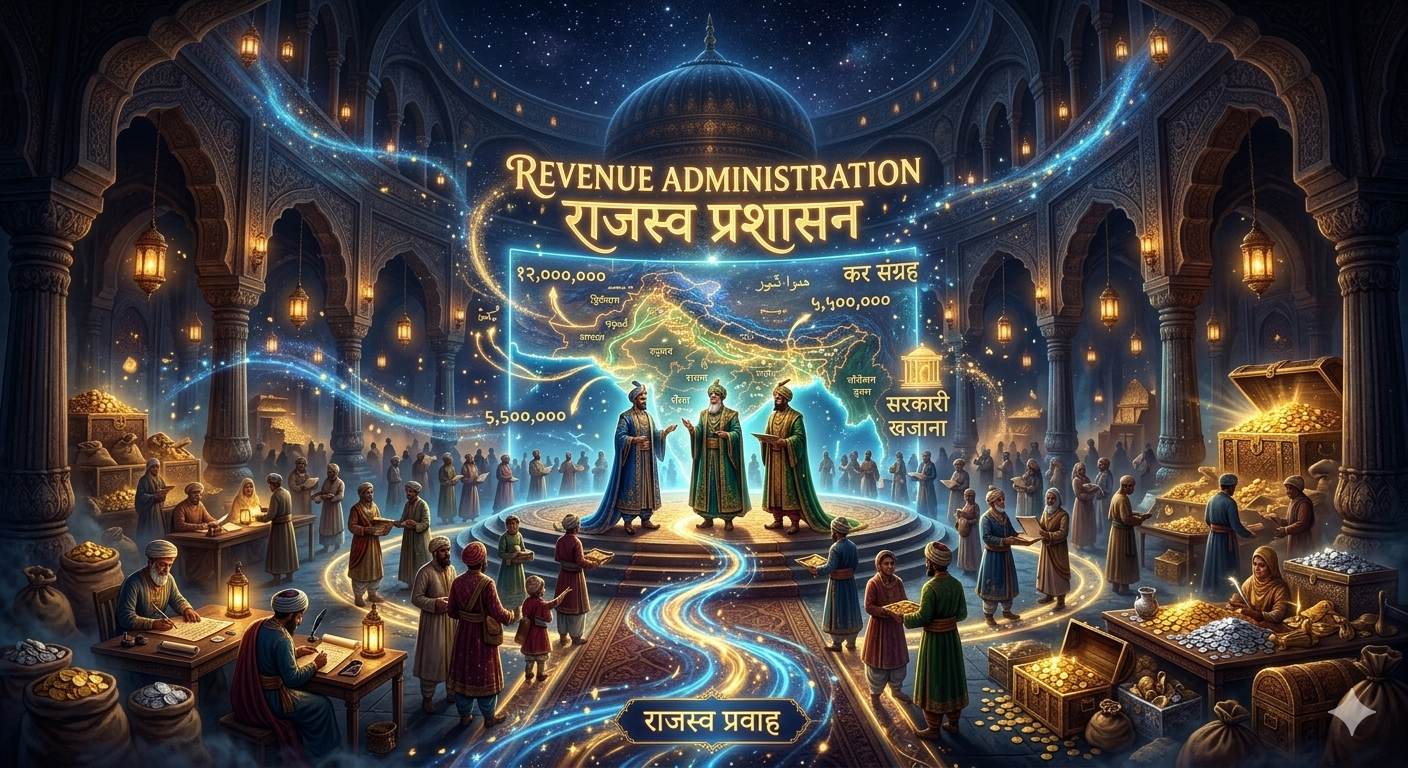
- A well-organized revenue system ensured regular income to the state.
- Key officials like the Wazir and military commanders played crucial roles.
The most notable administrator was Mahmud Gawan, whose reforms strengthened the central authority.
Key Contributions of Mahmud Gawan
- Reorganization of provinces for better control.
- Reduction of corruption among nobles.
- Establishment of efficient revenue assessment.
- Promotion of merit-based appointments.
These reforms helped stabilize the state and ensured effective governance.
Role in Deccan Politics and Power Balance
The Bahmani Sultanate played a central role in shaping political dynamics in South India.
- It constantly engaged in conflicts with the Vijayanagara Empire, especially over the Raichur Doab.
- This rivalry maintained a balance of power in the region.
- The Bahmani state acted as a buffer between northern and southern powers.
The continuous wars, although destructive, contributed to military advancements and strategic planning.
Military Significance
Development of a Strong Military System
The Bahmani Sultanate maintained a powerful army.
- It included cavalry, infantry, and artillery units.
- The use of gunpowder and firearms marked a shift in warfare techniques.
- Fortifications and strategic defense systems were strengthened.
Conflict with the Vijayanagara Empire
The rivalry with the Vijayanagara Empire was one of the defining features of South Indian history.
- Frequent battles were fought over fertile and strategic territories.
- The Raichur Doab became a major center of conflict.
- These wars contributed to the militarization of the Deccan region.
This prolonged conflict shaped the political and military landscape of South India.
Cultural Significance
Promotion of Indo-Islamic Culture
The Bahmani Sultanate played a vital role in the cultural synthesis of the Deccan.
- Persian culture blended with local traditions.
- Development of the Deccani language, which later influenced Urdu.
- Patronage of literature, poetry, and art.
The Deccan became a cultural melting pot due to interactions between different communities.
Patronage of Education and Learning
Education flourished under the Bahmani rulers.
- Establishment of madrasas and libraries.
- Scholars from Persia and Central Asia were invited.
- The famous madrasa built by Mahmud Gawan in Bidar became a center of learning.
Importance of Educational Institutions
- Spread of knowledge in theology, science, and literature.
- Promotion of intellectual exchange.
- Development of a scholarly environment in the Deccan.
Architectural Contributions
Development of Indo-Islamic Architecture in the Deccan
The Bahmani Sultanate made significant contributions to architecture.
- Construction of mosques, palaces, forts, and tombs.
- Use of arches, domes, and intricate decorations.
- Influence of Persian architectural styles combined with local elements.
Important Architectural Monuments
- Gol Gumbaz (later period influence)
- Bahmani tombs at Bidar and Gulbarga
- Mahmud Gawan Madrasa
Features of Bahmani Architecture
- Massive domes and wide arches.
- Use of decorative tile work.
- Integration of local craftsmanship with Islamic styles.
These architectural achievements influenced later Deccan Sultanates.
Economic Significance
Agricultural Development
Agriculture formed the backbone of the Bahmani economy.
- Expansion of irrigation systems.
- Cultivation of crops like rice, wheat, and cotton.
- Improvement in land revenue systems.
Trade and Commerce
The Bahmani Sultanate encouraged trade.
- Development of trade routes connecting the Deccan with ports.
- Trade with Persia, Arabia, and other regions.
- Export of textiles, spices, and precious stones.
Economic Impact
- Growth of urban centers.
- Increase in wealth and prosperity.
- Strengthening of commercial networks.
Social Significance
Cultural Integration and Social Harmony
The Bahmani Sultanate contributed to social integration.
- Interaction between Hindus and Muslims led to cultural exchange.
- Local customs were incorporated into administration and society.
- Sufi saints played a key role in promoting harmony.
Role of Sufism
Sufism flourished during this period.
- Sufi saints spread ideas of tolerance and unity.
- Their teachings attracted people from different communities.
- They helped reduce religious tensions.
Decline and Emergence of Deccan Sultanates
Causes of Decline
The Bahmani Sultanate declined in the late 15th century due to:
- Internal conflicts among nobles (Deccanis vs Afaqis).
- Weak successors after strong rulers.
- Assassination of Mahmud Gawan.
- Administrative breakdown.
Formation of Successor States
After its decline, the Bahmani Sultanate split into five Deccan Sultanates:
- Ahmadnagar
- Bijapur
- Golconda
- Bidar
- Berar
These states continued the legacy of Bahmani administration and culture.
Long-Term Significance
Foundation for Deccan Sultanates
The Bahmani Sultanate laid the groundwork for future states.
- Administrative systems were adopted by successor kingdoms.
- Cultural traditions continued to evolve.
- Political fragmentation led to regional diversity.
Impact on South Indian History
The Bahmani Sultanate had a lasting impact on South India.
- It shaped the political history of the Deccan.
- Influenced the development of Indo-Islamic culture.
- Contributed to architectural and literary traditions.
- Played a key role in the balance of power with Vijayanagara.
Critical Evaluation
Positive Contributions
- Establishment of a strong Deccan state.
- Promotion of cultural synthesis.
- Development of trade and economy.
- Advancement in architecture and education.
Limitations
- Continuous warfare drained resources.
- Internal conflicts weakened the state.
- Lack of stable succession policies.
Conclusion
The Bahmani Sultanate was a turning point in the history of South India. It marked the rise of a powerful regional state that challenged northern dominance and shaped the political, cultural, and economic landscape of the Deccan. Its rivalry with the Vijayanagara Empire, administrative innovations under Mahmud Gawan, and contributions to architecture and culture highlight its importance.
Despite its eventual decline, the legacy of the Bahmani Sultanate lived on through the Deccan Sultanates, making it a foundational chapter in medieval Indian history. Its role in fostering cultural integration and regional identity ensures its enduring significance in the study of South Indian history.