Introduction
The parliamentary system is one of the most important pillars of democracy in India. It represents the collective will of the people and serves as the primary institution responsible for making laws, debating public issues, and holding the government accountable. The Parliament of India functions as the supreme legislative body of the country and plays a vital role in maintaining democratic governance.
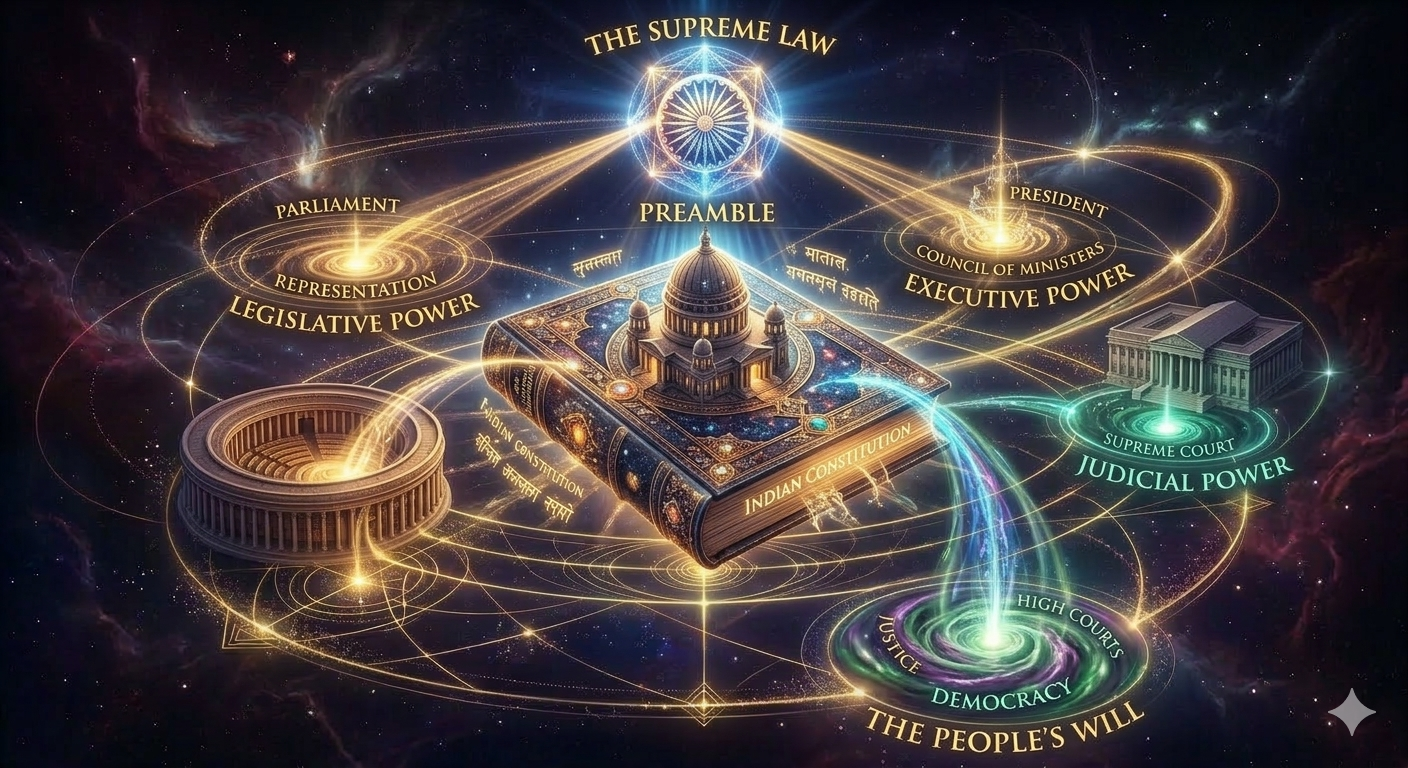
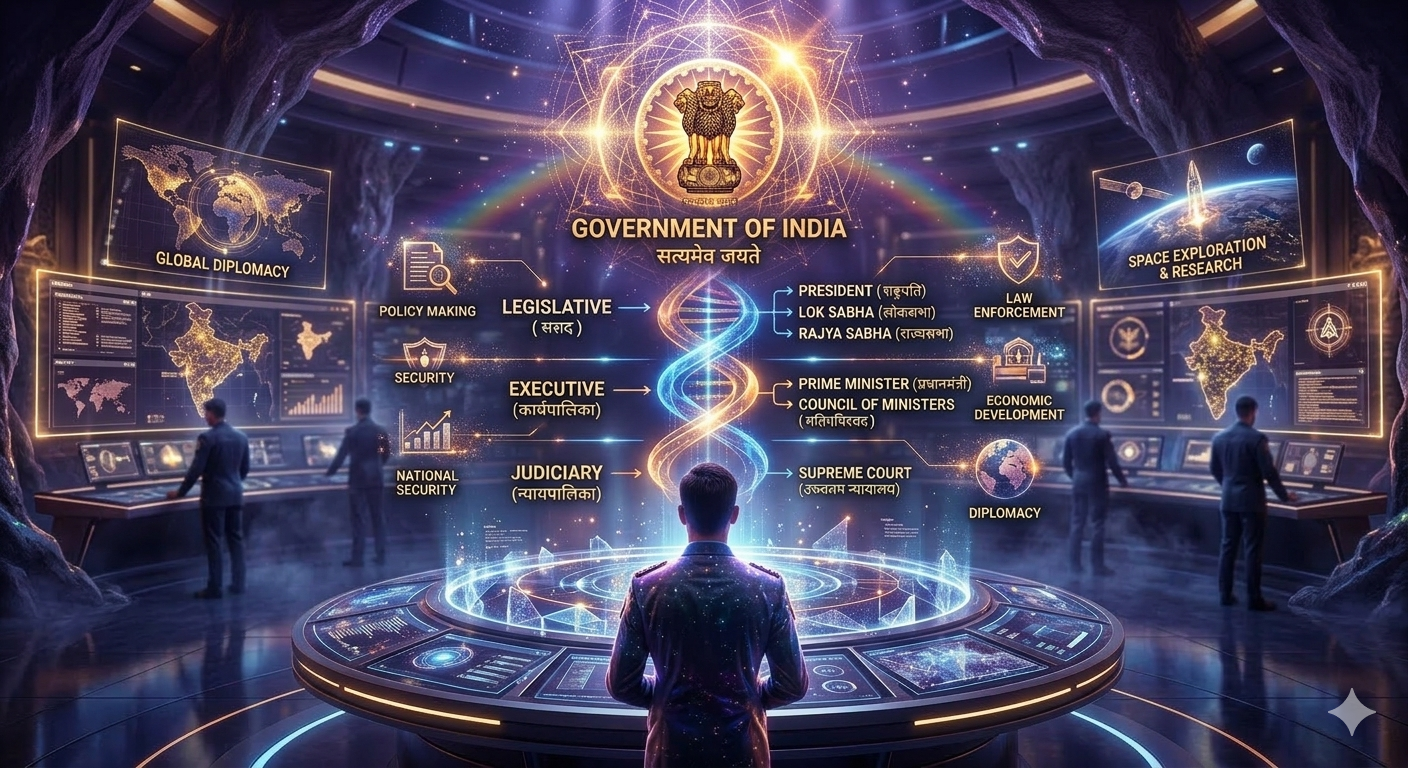
The structure and functioning of Parliament are defined by the Constitution of India. According to the Constitution, the Parliament consists of three components: the President and two houses—Lok Sabha and Rajya Sabha.
The Indian Parliament performs several critical functions including legislation, financial control, executive oversight, representation of citizens, and policy discussion. These functions ensure that the government operates within constitutional limits and reflects the interests of the people.
Constitutional Basis of the Indian Parliament
Establishment under the Constitution
The Parliament of India derives its authority from the Constitution of India, which provides the legal framework for its composition, powers, and procedures. The Constitution ensures that Parliament acts as the central law-making authority for the country.
The parliamentary system adopted by India is influenced by the British model of government, where the executive branch is accountable to the legislature. This arrangement strengthens democratic accountability and ensures that the government remains responsible to the elected representatives.
Components of Parliament
The Indian Parliament consists of three parts:
- The President of India
- The Lok Sabha
- The Rajya Sabha
Although the President is not a member of either house, no law can be enacted without the President’s approval. Therefore, the President forms an integral part of the parliamentary structure.
Bicameral Structure of Parliament
Meaning of Bicameral Legislature
India follows a bicameral legislative system, which means that the Parliament consists of two houses. This system is designed to ensure balanced decision-making and representation.
The bicameral structure allows:
- Representation of the people through the Lok Sabha
- Representation of states through the Rajya Sabha
- Careful examination of legislative proposals
This structure improves the quality of legislation and prevents hasty decisions.
Lok Sabha: The House of the People
Composition of Lok Sabha
The Lok Sabha is the lower house of Parliament and represents the citizens of India directly. Members of the Lok Sabha are elected through universal adult suffrage, meaning that every eligible citizen has the right to vote.
The maximum strength of the Lok Sabha is 552 members, which may include:
- Members elected from states
- Members elected from union territories
- Nominated members in special circumstances (historically)
These members represent different constituencies across the country.
Tenure of Lok Sabha
The normal term of the Lok Sabha is five years, although it may be dissolved earlier by the President on the advice of the government.
During a national emergency, its tenure may be extended according to constitutional provisions.
Powers and Functions of Lok Sabha
The Lok Sabha holds significant authority in the legislative process.
Important powers include:
- Passing ordinary bills and constitutional amendments
- Controlling the executive through debates and questions
- Approving the national budget and financial proposals
- Passing motions such as no-confidence motions
Since the government is responsible to the Lok Sabha, it plays a decisive role in determining the stability of the executive.
Rajya Sabha: The Council of States
Composition of Rajya Sabha
The Rajya Sabha represents the states and union territories of India. Unlike the Lok Sabha, its members are not directly elected by the people.
Members are elected by the elected members of the state legislative assemblies through a system of proportional representation.
The maximum strength of the Rajya Sabha is 250 members, including:
- Members elected from states and union territories
- Members nominated by the President for their expertise in fields such as literature, science, art, and social service
Permanent Nature of Rajya Sabha
The Rajya Sabha is a permanent body and cannot be dissolved. However, one-third of its members retire every two years.
This system ensures continuity and stability in the legislative process.
Powers and Functions of Rajya Sabha
Although the Lok Sabha is more powerful in financial matters, the Rajya Sabha plays an important role in legislation.
Its functions include:
- Reviewing and revising legislation passed by the Lok Sabha
- Representing the interests of states
- Participating in constitutional amendment processes
- Discussing national policies and public issues
The Rajya Sabha also provides a platform for experienced individuals who may not participate directly in electoral politics.
Legislative Functions of Parliament
Law-Making Authority
The most fundamental function of the Parliament of India is law-making. Parliament has the authority to create, modify, and repeal laws governing the country.
The legislative process generally involves the following steps:
- Introduction of a bill
- Debate and discussion in both houses
- Voting and approval
- Assent by the President
Once approved, the bill becomes a law applicable throughout the country.
Types of Bills
Parliament deals with different types of bills, including:
- Ordinary bills
- Money bills
- Financial bills
- Constitutional amendment bills
Each type follows specific procedures as defined in the Constitution.
Financial Functions of Parliament
Control over Public Finances
One of the most important powers of Parliament is control over government finances.
The government cannot spend public money without parliamentary approval. This ensures accountability and transparency in financial administration.
Budget Approval
Every year, the government presents the Union Budget in the Lok Sabha. Parliament examines and debates the budget proposals before approving them.
Key financial functions include:
- Approval of taxation policies
- Allocation of government expenditure
- Examination of financial bills
- Review of government spending
These powers ensure that public funds are used responsibly.
Oversight Functions of Parliament
Accountability of the Executive
The Parliament plays a crucial role in holding the executive branch accountable for its actions.
Members of Parliament question ministers, debate government policies, and demand explanations for administrative decisions.
Tools of Parliamentary Oversight
Several mechanisms are used to monitor the government:
- Question Hour
- Zero Hour discussions
- Parliamentary committees
- No-confidence motions
- Debates on public policies
These mechanisms strengthen democratic accountability and transparency.
Deliberative Functions of Parliament
Forum for National Debate
Parliament serves as an important platform for discussion on national and international issues.
Members of Parliament represent diverse regions and communities, bringing different perspectives to debates.
Importance of Deliberation
Parliamentary debates help:
- Analyze public policies
- Highlight citizens’ concerns
- Improve legislation through discussion
- Encourage democratic dialogue
These discussions contribute to informed decision-making.
Representative Functions of Parliament
Representation of the People
Parliament acts as the voice of the people. Members elected to the Lok Sabha represent citizens from various constituencies across the country.
Through their representatives, citizens can express their concerns and influence government policies.
Representation of States
The Rajya Sabha ensures that the interests of states are protected within the national legislative framework.
This arrangement reflects the federal structure of India’s political system.
Constitutional and Judicial Functions
Amendment of the Constitution
Parliament has the authority to amend the Constitution when necessary. Constitutional amendments allow the legal framework to adapt to changing circumstances.
However, certain amendments require approval from state legislatures as well.
Role in Judicial Matters
Parliament also performs certain judicial functions.
These include:
- Impeachment of the President
- Removal of judges of higher courts
- Investigation of constitutional violations
These responsibilities maintain constitutional discipline within public institutions.
Importance of Parliament in Indian Democracy
Pillar of Democratic Governance
The Parliament of India is essential for maintaining democratic governance. It represents the collective will of the people and ensures that laws reflect the interests of society.
Key Contributions
The Parliament contributes to democracy by:
- Creating laws for national development
- Monitoring government performance
- Representing public opinion
- Ensuring financial accountability
Through these functions, Parliament strengthens democratic institutions.
Challenges Facing the Indian Parliament
Despite its importance, Parliament faces several challenges.
Some of the major issues include:
- Disruptions during parliamentary sessions
- Delays in legislative processes
- Political conflicts between parties
- Limited time for policy discussions
Addressing these challenges is necessary to improve parliamentary efficiency.
Conclusion
The Parliament of India plays a central role in the governance of the nation. As the supreme legislative body established under the Constitution of India, it performs critical functions such as law-making, financial control, executive oversight, and representation of the people.
With its bicameral structure consisting of the Lok Sabha and the Rajya Sabha, the Parliament ensures balanced decision-making and democratic accountability.
By providing a forum for debate, creating laws, and monitoring government actions, the Parliament strengthens the democratic system of India. Its continued effectiveness is essential for maintaining transparency, accountability, and the rule of law in the country.