pcs mains examinations

The Revolutionary Organization Behind the Kakori Conspiracy Case of 1925

The struggle for India’s independence was marked by both non-violent movements and armed resistance against British rule. One of the most daring revolutionary activities of the early 20th century was the Kakori Conspiracy Case of 1925. This event was orchestrated by the Hindustan Republican Association (HRA), a revolutionary organization committed to overthrowing British rule through…

Read More
pcs mains examinations

The Civil Disobedience Movement: Leadership, Causes, and Impact

The Civil Disobedience Movement, launched in 1930, was one of the most significant mass movements in India’s struggle for independence. Mahatma Gandhi led this movement, which aimed at non-violent resistance against British rule. It was characterized by mass protests, boycotts, and non-cooperation with British authorities. The immediate cause of the movement was the British monopoly…

Read More
pcs mains examinations

The Lahore Session of 1929: The Historic Resolution for Poorna Swaraj

The Indian National Congress (INC) played a pivotal role in India’s struggle for independence. Among its many significant sessions, the Lahore Session of 1929 stands out as a turning point in India’s freedom movement. It was in this session that the resolution for ‘Poorna Swaraj’ (Complete Independence) was officially adopted. This marked a shift from…

Read More
pcs mains examinations

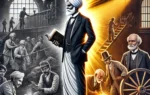
Gandhi Rejects British Honor: The Shocking Truth Behind the ‘Kaiser-e-Hind’ Title Renunciation!

Mahatma Gandhi was awarded the title of ‘Kaiser-e-Hind’ by the British government in 1915 for his humanitarian service in South Africa. However, in 1920, he renounced the title in protest against British atrocities in India, particularly the Jallianwala Bagh Massacre and the Rowlatt Act. This decision was part of the Non-Cooperation Movement, a mass civil…

Read More
pcs mains examinations

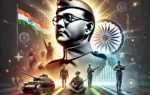
Subhas Chandra Bose and His Role in India’s Independence Struggle

Subhas Chandra Bose, one of India’s most dynamic freedom fighters, played a crucial role in the country’s struggle for independence. Unlike other leaders who pursued non-violent methods, Bose strongly believed that armed revolution and direct confrontation with the British were necessary for India’s freedom. His leadership of the Indian National Army (INA) and diplomatic efforts…

Read More
pcs magazine

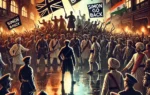
Impact of the Simon Commission on Indian Politics

The Simon Commission, officially known as the Indian Statutory Commission, was sent by the British government in 1927 to evaluate India’s constitutional progress and recommend reforms. However, the absence of any Indian members in the commission led to widespread protests and a major political upheaval. This article explores the background, objectives, key events, and the…

Read More