Home » Pluralism in India
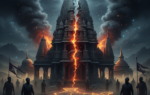
Communalism in India

Communalism in India: A Product of Power Struggles and Relative Deprivation

Introduction Communalism refers to a social phenomenon in which religious identity becomes the primary basis for political mobilization, social conflict, and group loyalty. In plural societies like India, communalism poses a serious challenge to social harmony and democratic governance. While communal tensions are often portrayed as outcomes of religious differences, a deeper sociological analysis reveals…

Read More
Indian Secularism in Comparison with Western Traditions

Understanding Indian Secularism in Comparison with Western Traditions

Introduction Secularism is widely regarded as a foundational principle of modern democratic states, ensuring freedom of religion and equality of all citizens. However, secularism does not carry a single universal meaning. Different societies have shaped it according to their historical experiences, cultural diversity, and political needs. India and the Western world represent two distinct models…

Read More
Cultural Practices in the Name of Secularism

Challenges to Cultural Practices in the Name of Secularism

Introduction Secularism is widely regarded as one of the foundational pillars of modern democratic societies. In the Indian context, secularism implies equal respect for all religions and the protection of diverse cultural traditions. India’s Constitution envisions a society where individuals freely practice their faith while maintaining harmony among communities. However, in recent decades, a growing…

Read More
Indian Society Unique in Sustaining Its Culture

What Makes Indian Society Unique in Sustaining Its Culture? A Sociological Analysis

Introduction Indian society is often described as one of the oldest living civilizations in the world. Despite centuries of political upheavals, foreign invasions, colonial rule, and rapid modernization, India has remarkably preserved its cultural continuity. From ancient philosophical traditions to everyday social practices, Indian culture continues to thrive alongside modern institutions. What makes this resilience…

Read More
Multicultural Indian Society

Has Caste Lost Its Relevance? Understanding Its Role in Multicultural Indian Society

Introduction India is globally recognized for its extraordinary cultural diversity, marked by variations in language, religion, region, ethnicity, and social customs. Among these dimensions, caste has historically been one of the most influential organizing principles of Indian society. Originating in ancient social stratification systems, caste structured occupation, social interaction, marriage, and access to resources. With…

Read More
Indian Society: Tradition Meets Transformation

Indian Society: Tradition Meets Transformation

Introduction Indian society is one of the world’s oldest continuously living civilizations. Over thousands of years, it has experienced invasions, colonialism, modernization, globalization, and rapid technological change. Yet, despite these transformations, Indian society has preserved a remarkable continuity of traditional social values. Concepts such as family bonds, respect for elders, spiritual orientation, community life, and…

Read More
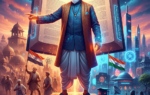
Maulana Abul Kalam Azad: His Contribution to Pre- and Post-Independence India

Maulana Abul Kalam Azad: His Contribution to Pre- and Post-Independence India

Introduction Maulana Abul Kalam Azad stands among the foremost architects of modern India. A freedom fighter, scholar, journalist, and visionary educationist, Azad combined spiritual depth with political realism. His life represents a synthesis of nationalism, pluralism, and intellectual leadership. Unlike many contemporaries who specialized in either political activism or institutional governance, Azad contributed significantly to…

Read More