Home » UPSC Environment Notes
Economy and Environment: Interlinkages and the Role of Environmental Taxes

Economy and Environment: Interlinkages and the Role of Environmental Taxes

Introduction The relationship between the economy and the environment is one of the most crucial and complex aspects of modern development. The economy depends heavily on the natural environment for raw materials, energy, water, and ecological services, while economic activities often put pressure on the environment through pollution, resource depletion, and ecosystem degradation. Striking a…


Read More
impact of ocean currents and water masses on marine life and coastal environments

Impacts of Ocean Currents and Water Masses on Marine Life and Coastal Environments

Introduction Oceans cover more than 70% of the Earth’s surface and are essential for maintaining global climate, supporting biodiversity, and regulating biogeochemical cycles. Within this vast expanse, ocean currents and water masses play critical roles in shaping marine ecosystems, influencing climate, and affecting coastal environments. While ocean currents are large-scale horizontal flows of seawater driven…

Read More
restoring mountain ecosystems

Restoring Mountain Ecosystems from the Negative Impact of Development Initiatives and Tourism

Introduction Mountain ecosystems are among the most fragile and biodiverse ecosystems on Earth. They provide essential ecosystem services such as water regulation, biodiversity conservation, soil stabilization, climate regulation, and cultural heritage. These ecosystems support millions of people directly and indirectly through agriculture, forest products, and tourism. However, in recent decades, development initiatives and tourism have…

Read More
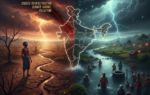
Water Stress in India: Regional Variations, Causes, and Implications

Water Stress in India: Regional Variations, Causes, and Implications

Introduction Water is one of the most essential natural resources, critical for human survival, agriculture, industry, and ecosystem sustainability. India, with a population exceeding 1.4 billion, faces a growing challenge of water stress, characterized by the scarcity of water relative to demand. Rapid population growth, urbanization, industrialization, climate change, and unsustainable water management have intensified…

Read More
Factories for Localization of Agro-Based Food Processing Industries

Factories for Localization of Agro-Based Food Processing Industries in North-West India

Introduction Agro-based food processing industries play a pivotal role in adding value to agricultural produce, reducing post-harvest losses, generating employment, and contributing to regional economic growth. India’s north-west region, encompassing Punjab, Haryana, Rajasthan, and western Uttar Pradesh, is often referred to as the “Granary of India” due to its high agricultural productivity. The localization of…

Read More
impact of global warming

The Impact of Global Warming on Coral Life Systems

Introduction Coral reefs, often referred to as the “rainforests of the sea,” are among the most biologically diverse and productive ecosystems on Earth. They provide shelter, food, and breeding grounds for nearly one-quarter of all marine species, despite covering less than 1% of the ocean floor. Beyond biodiversity, coral ecosystems contribute to human societies by…

Read More
melting of Arctic Ice and Antarctic Glaciers and their impact on weather patterns and human activities

Impacts of Arctic Ice and Antarctic Glacier Melting on Weather Patterns and Human Activities

Introduction Climate change has accelerated the melting of polar ice in both the Arctic and Antarctic regions, leading to significant consequences for global weather systems and human societies. While both regions are polar and covered by ice, the Arctic is a frozen ocean surrounded by land, whereas the Antarctic is a frozen continent surrounded by…

Read More
pcs mains examinations

Invasive Species and Their Impact on Native Biodiversity in India: Threats and Mitigation Strategies

Introduction Biodiversity is a cornerstone of ecological balance and sustainability. However, one of the most significant threats to native biodiversity—often overshadowed by issues like pollution and deforestation—is the introduction and spread of invasive alien species (IAS). In India, a biodiversity-rich country with a wide range of ecosystems, invasive species pose a major threat to native…

Read More