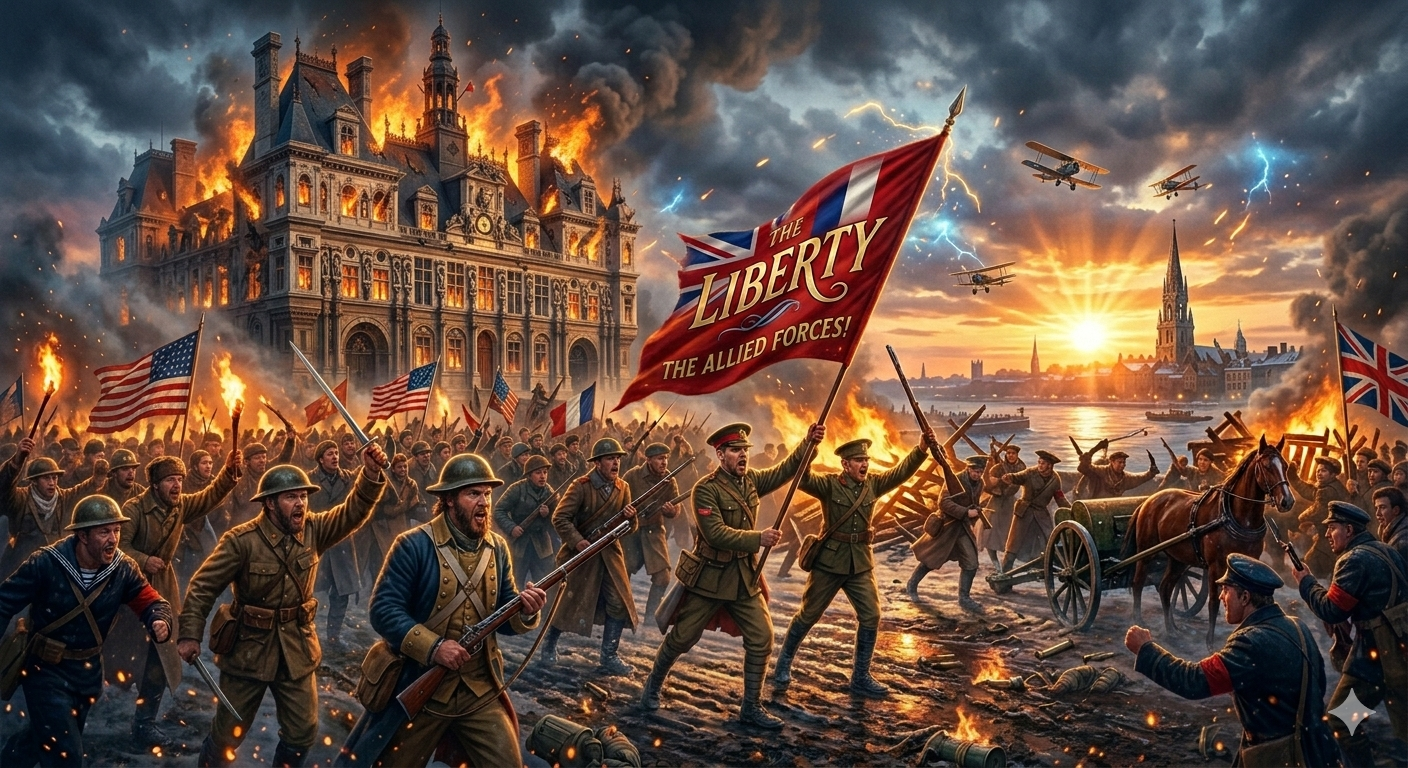
The World War I (1914–1918) was one of the most destructive conflicts in human history. Often referred to as the “Great War,” it involved major global powers and resulted in unprecedented military, political, economic, and social transformations. When the war ended in November 1918, the world was dramatically altered. Empires collapsed, borders were redrawn, economies were devastated, and new ideologies gained ground.
The consequences of the First World War can be broadly categorized into immediate effects (1918–1925) and long-term effects (1920s–1940s and beyond). These consequences reshaped global politics and laid the foundation for future conflicts, including the World War II.
This essay provides a detailed educational analysis of both the immediate and long-term consequences in a paragraph-wise and point-wise format.
I. Immediate Consequences of the First World War
The immediate consequences refer to the direct outcomes that followed the war’s end in 1918.
1. Political Consequences
(a) Collapse of Major Empires
One of the most significant immediate effects was the collapse of four major empires:
- German Empire
- Austro-Hungarian Empire
- Ottoman Empire
- Russian Empire
These imperial structures had dominated Europe and parts of Asia for centuries. Their sudden collapse created political instability and power vacuums.
Key Points:
- Monarchies were overthrown.
- New republics emerged.
- Political instability increased in Central and Eastern Europe.
(b) Treaty of Versailles (1919)
The most important peace settlement was the Treaty of Versailles.
Its major provisions included:
- Heavy war reparations on Germany
- Territorial losses for Germany
- Military restrictions on German forces
- War guilt clause (Article 231)
Immediate Effects:
- Economic strain on Germany
- National humiliation
- Political resentment
The harsh terms later contributed to political extremism in Germany.
(c) Creation of New Nation-States
The principle of “self-determination,” advocated by Woodrow Wilson, led to the formation of new countries such as:
- Poland
- Czechoslovakia
- Yugoslavia
- Finland
- Baltic states
However, these new borders often included ethnic minorities, leading to future tensions.
2. Economic Consequences
(a) Economic Devastation
Europe’s economy was severely damaged:
- Industrial infrastructure destroyed
- Agricultural production declined
- Massive war debts accumulated
Countries like France and Belgium suffered physical destruction, while Britain faced financial exhaustion.
(b) Inflation and Debt Crisis
Germany experienced hyperinflation in the early 1920s due to reparations and internal instability.
Key Economic Impacts:
- Currency devaluation
- Rising unemployment
- Dependence on American loans
- Global financial instability
This economic fragility contributed to the later Great Depression.
3. Social Consequences
(a) Human Loss and Psychological Trauma
The war caused approximately 16–20 million deaths and millions more injuries.
Immediate social effects included:
- A “lost generation” of young men
- Widows and orphans
- Psychological trauma (shell shock)
Society faced deep emotional scars.
(b) Role of Women
During the war, women worked in factories and industries. After the war:
- Women gained greater social recognition.
- In several countries, women obtained voting rights (e.g., Britain in 1918).
This marked a significant shift in gender roles.
4. Geopolitical Changes
(a) Redrawing of Middle Eastern Borders
The Ottoman Empire’s collapse led to new mandates controlled by Britain and France.
Artificial boundaries were drawn in:
- Iraq
- Syria
- Lebanon
- Palestine
These arrangements later became sources of prolonged conflict.
(b) Formation of the League of Nations
The League of Nations was established to prevent future wars.
Objectives:
- Promote collective security
- Encourage disarmament
- Resolve disputes diplomatically
However, it lacked enforcement power and major participation (notably the United States).
II. Long-Term Consequences of the First World War
The long-term consequences extended into the 1920s, 1930s, and beyond, shaping global politics and society.
1. Rise of Totalitarian Regimes
(a) Fascism in Italy
Economic hardship and dissatisfaction with peace settlements enabled the rise of fascism under Benito Mussolini.
(b) Nazism in Germany
Resentment over the Treaty of Versailles and economic crisis facilitated the rise of Adolf Hitler and the Nazi Party.
Long-Term Political Impacts:
- Militarization
- Expansionist policies
- Suppression of democracy
These developments directly contributed to World War II.
2. Spread of Communism
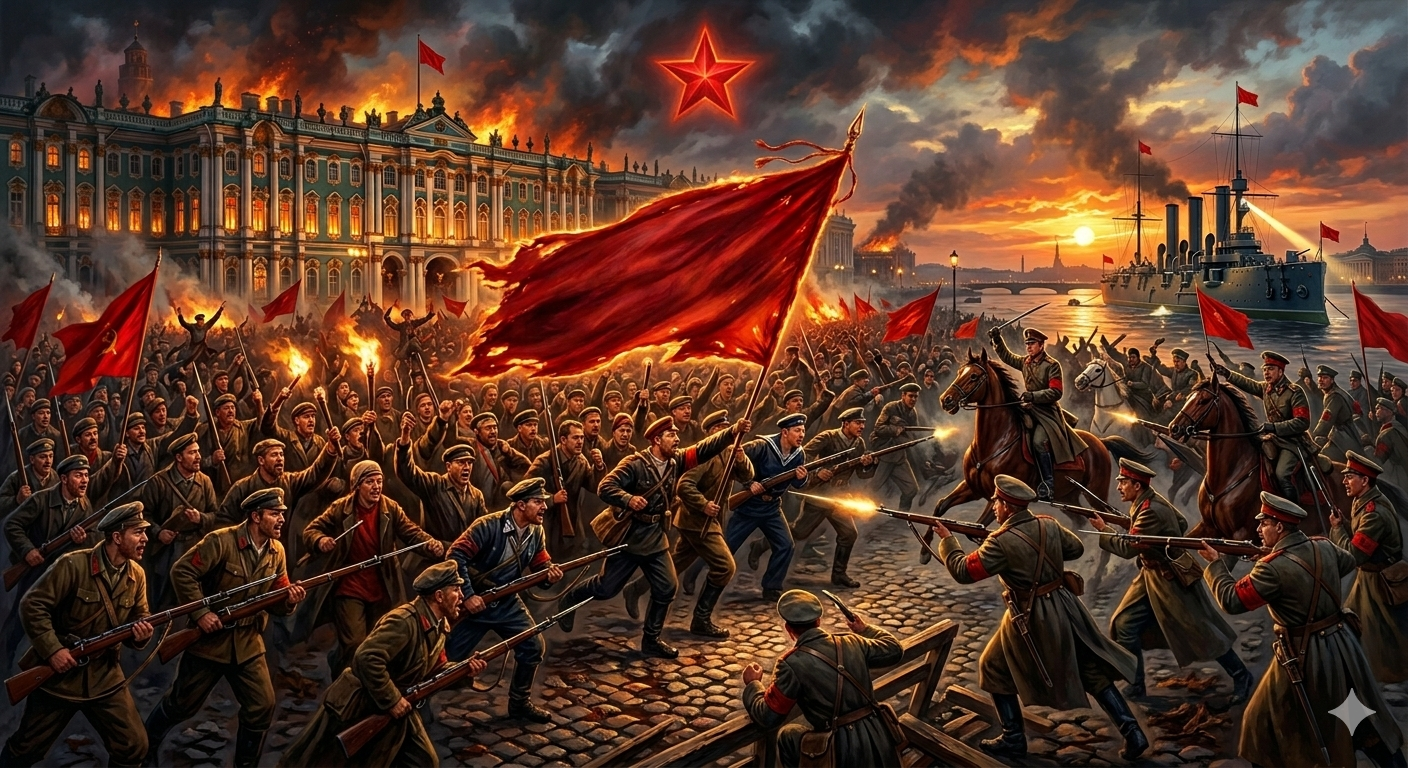
The war weakened Russia, leading to the Russian Revolution and the establishment of a communist state.
Long-term effects:
- Creation of the Soviet Union
- Spread of communist ideology globally
- Ideological polarization between capitalism and socialism
This eventually shaped Cold War dynamics.
3. Seeds of the Second World War
Many historians argue that World War I was an unfinished conflict.
Contributing Factors:
- Harsh peace treaties
- Economic instability
- Weak international cooperation
- Nationalist resentment
These unresolved issues erupted again in 1939.
4. Decline of European Dominance
Before 1914, Europe was the center of global power. After the war:
- The United States emerged as a major financial power.
- European economies weakened.
- Colonial independence movements gained momentum.
The global balance of power shifted.
5. Rise of the United States
Although initially neutral, the U.S. emerged economically stronger.
Long-term consequences:
- Creditor nation status
- Increased global influence
- Leadership role in shaping post-war order
The 20th century gradually became dominated by American political and economic power.
6. Nationalism and Anti-Colonial Movements
The war stimulated nationalist movements in:
- India
- Egypt
- China
- Southeast Asia
Colonial soldiers who fought in the war demanded political rights afterward.
This accelerated decolonization in the mid-20th century.
7. Technological and Military Changes
World War I introduced:
- Tanks
- Submarines
- Chemical weapons
- Air warfare
Long-term impacts included:
- Advancement of military technology
- Development of modern warfare strategies
These innovations influenced future conflicts.
8. Social and Cultural Transformation
(a) Change in Social Hierarchies
Aristocratic elites declined in influence, while middle classes gained prominence.
(b) Cultural Modernism
The trauma of war influenced art and literature:
- Disillusionment
- Existential themes
- Critique of nationalism
The interwar period saw a shift toward modernist thinking.
III. Comparative Analysis: Immediate vs Long-Term Effects
| Immediate Consequences | Long-Term Consequences |
|---|---|
| Collapse of empires | Rise of fascism and Nazism |
| Treaty of Versailles | World War II |
| Economic disruption | Great Depression impact |
| League of Nations | Failure of collective security |
| New nation-states | Ethnic conflicts and instability |
The immediate consequences destabilized Europe, while the long-term effects reshaped global politics.
IV. Critical Evaluation
Positive Outcomes:
- End of autocratic empires
- Expansion of democratic governance
- Growth of women’s rights
- Foundation for international cooperation
Negative Outcomes:
- Harsh peace settlements
- Rise of extremist ideologies
- Economic collapse
- Prelude to another global war
The First World War created more problems than it solved.
V. Conclusion
The First World War marked a decisive turning point in global history. Its immediate consequences included the collapse of empires, the imposition of the Treaty of Versailles, economic devastation, and social upheaval. However, its long-term consequences were even more profound—giving rise to fascism, communism, nationalist movements, and ultimately the Second World War.
Rather than ensuring lasting peace, the post-war settlement created fragile political systems and unresolved tensions. The failure of collective security mechanisms and economic instability further intensified global rivalries.
Thus, the First World War was not merely a conflict between nations; it was a catalyst for the transformation of the modern world. Its legacy continues to influence global politics, international relations, and historical understanding even today.