Introduction
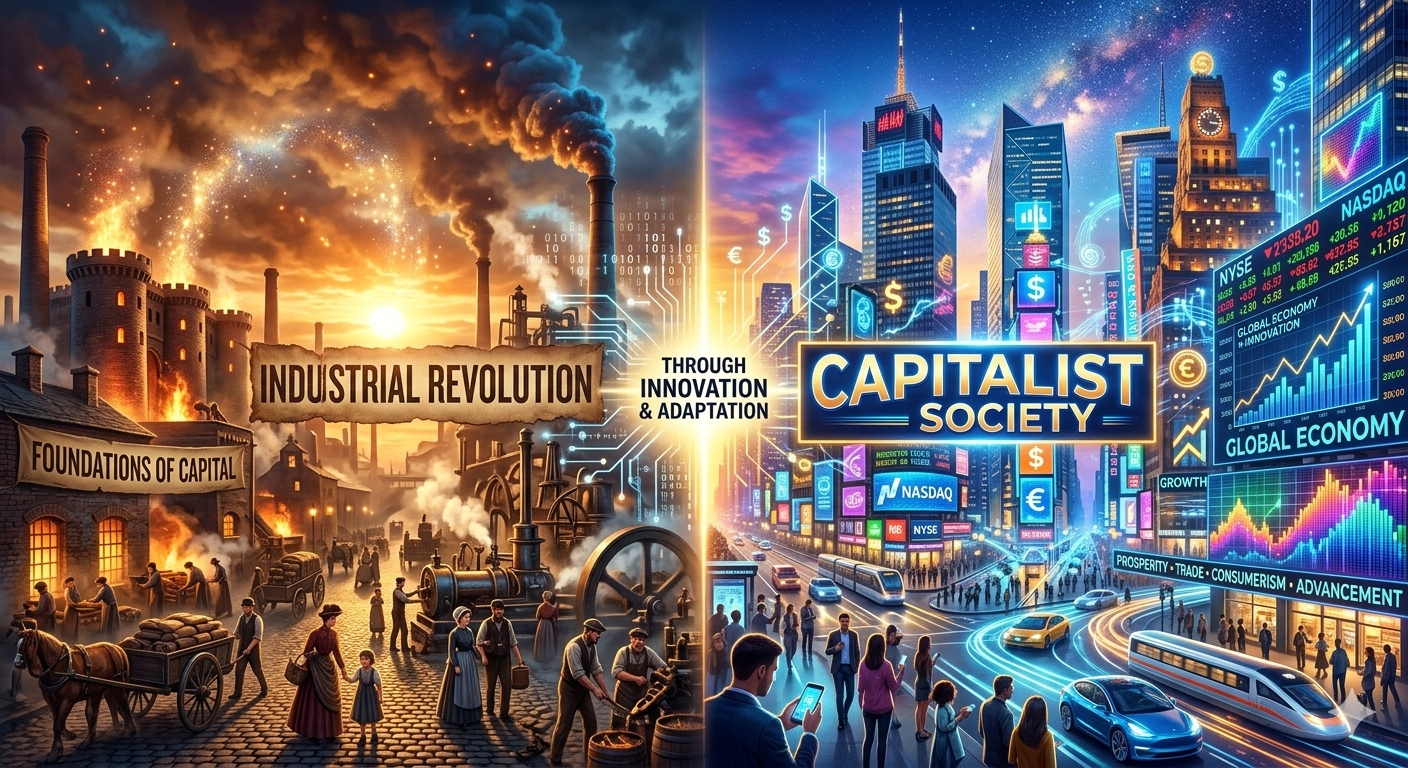
The Industrial Revolution was a turning point in global history. Beginning in late 18th-century Britain and gradually spreading across Europe, North America, and later the world, it transformed economies based on agriculture and handicrafts into industrial and machine-driven systems. It introduced mechanized production, factory organization, new energy sources such as coal and steam, and an unprecedented scale of economic output.
However, the Industrial Revolution was not merely a technological shift. It brought deep structural changes in society, economy, politics, and global relations. It altered patterns of production and consumption, redefined class structures, accelerated urbanization, strengthened capitalism, created a new labor class, and intensified imperialism.
For examination purposes, it is essential to analyze these transformations both economically and socially, understanding their interconnected nature.
I. Economic Transformations
1. Rise and Consolidation of Capitalism
(A) Shift from Feudal Economy to Industrial Capitalism
Before industrialization:
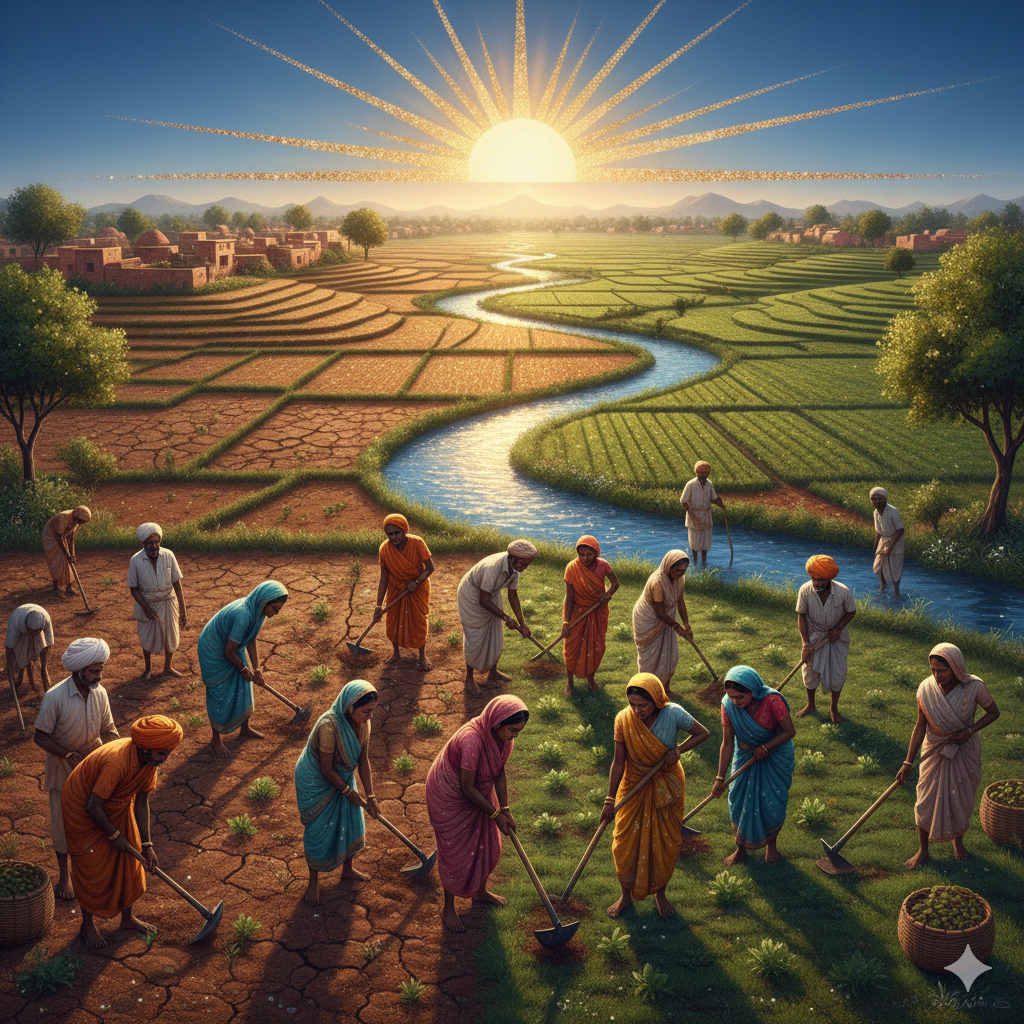
- Economic life was primarily agrarian.
- Production occurred in small workshops or homes (cottage industries).
- Wealth was based on land ownership.
With industrialization:
- Wealth increasingly came from industry, trade, and capital investment.
- Production moved to factories.
- Profit and accumulation became central economic motives.
This transformation strengthened industrial capitalism.
(B) Features of Industrial Capitalism
- Private Ownership of Means of Production
Factories, machines, mines, and railways were privately owned. - Profit Motive
Production aimed at maximizing profit rather than subsistence. - Wage Labor System
Workers sold their labor for wages rather than working on their own land. - Market Competition
Competition among industrialists increased efficiency but also created instability.
(C) Emergence of the Bourgeoisie
- A new industrial middle class emerged.
- Factory owners, merchants, bankers gained economic dominance.
- They demanded political power and representation.
This class challenged aristocratic dominance and gradually shaped modern democratic institutions.
2. Transformation in Production Systems
(A) Mechanization
- Inventions such as the spinning jenny, power loom, and steam engine revolutionized textile production.
- Machine-based production increased output exponentially.
- Standardization improved product quality and reduced cost.
(B) Factory System
Key characteristics:
- Centralized production in large buildings.
- Division of labor.
- Strict time discipline.
- Supervision and managerial hierarchy.
The factory system replaced artisan autonomy with regimented industrial labor.
3. Agricultural Transformation
Though industrialization focused on industry, agriculture also changed.
- Enclosure movements consolidated land.
- Scientific farming methods improved productivity.
- Surplus labor moved to cities.
Agricultural modernization ensured food supply for growing urban populations.
4. Expansion of Trade and Markets
Industrial production required:
- Raw materials (cotton, coal, iron).
- Large consumer markets.
As a result:
- Domestic markets expanded.
- International trade increased.
- Global economic interdependence grew.
5. Growth of Financial Institutions
Industrial expansion required capital investment.
- Banks provided loans for factories and railways.
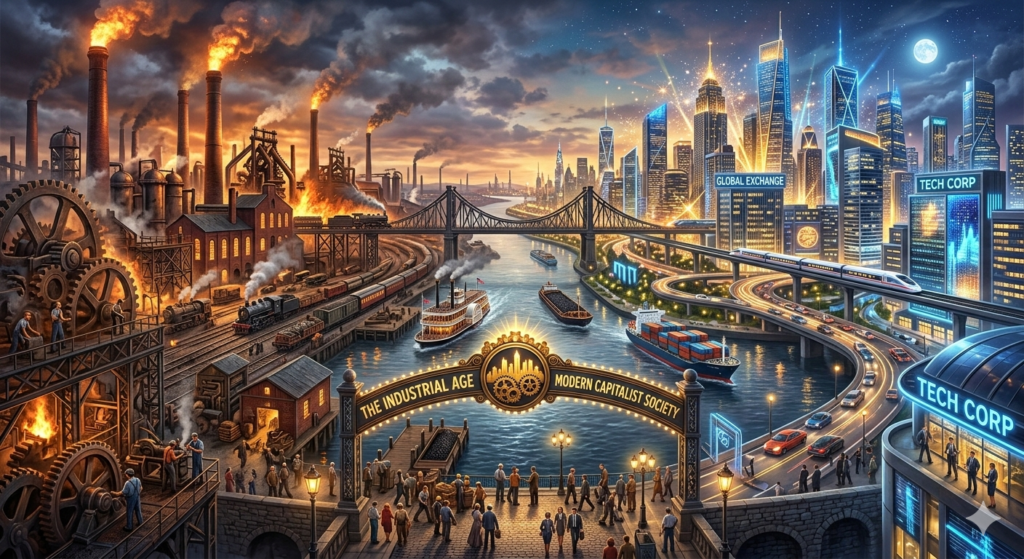
- Stock exchanges developed.
- Insurance systems expanded.
Modern financial capitalism took shape during this period.
6. Development of Transportation and Communication
- Railways connected industrial centers.
- Steamships revolutionized maritime trade.
- Telegraph improved communication.
Transportation reduced costs and integrated national economies.
II. Social Transformations
1. Urbanization
(A) Rapid Growth of Cities
Industrialization triggered mass migration from rural to urban areas.
- People moved in search of employment.
- Industrial towns expanded rapidly.
- Cities like Manchester and Birmingham became industrial hubs.
(B) Features of Industrial Urbanization
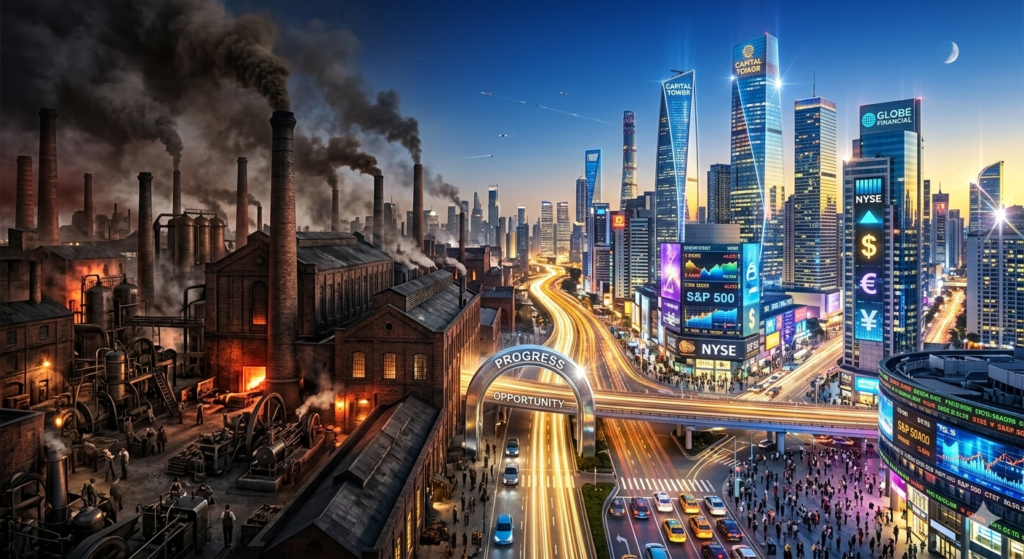
- Overcrowded housing.
- Poor sanitation.
- Pollution from factories.
- Slum development.
Urbanization transformed social life, family structure, and community bonds.
2. Emergence of the Labor Class (Proletariat)
(A) Creation of Wage-Dependent Workers
The Industrial Revolution created a new working class:
- Landless laborers.
- Factory workers.
- Miners.
- Railway workers.
They depended entirely on wages.
(B) Working Conditions
- Long working hours (12–16 hours daily).
- Low wages.
- Unsafe working environments.
- Employment of women and children.
Industrial labor was often harsh and exploitative in early phases.
3. Changing Family Structure
(A) Shift from Joint Production to Wage Work
- Families no longer worked collectively at home.
- Individual family members worked in factories.
(B) Women and Child Labor
- Women entered paid employment.
- Children were employed in mines and factories.
- Family roles transformed.
Over time, reform movements reduced child labor and improved conditions.
4. Rise of Labor Movements
(A) Early Resistance
- Workers protested wage cuts.
- Machine-breaking (Luddite movement).
(B) Trade Unions
Workers organized to demand:
- Better wages.
- Shorter hours.
- Improved safety.
Trade unions became powerful political actors.
(C) Labor Legislation
Governments gradually introduced:
- Factory Acts.
- Child labor laws.
- Minimum wage regulations.
These reforms improved working conditions over time.
5. Spread of Education and Literacy
Industrial societies required skilled workers.
- Expansion of public education.
- Technical training institutions.
- Literacy rates improved.
Education became linked to economic development.
III. Capitalism and Class Structure
1. Polarization of Society
Industrialization led to two major classes:
- Bourgeoisie (capitalist class)
- Proletariat (working class)
Class tensions intensified due to inequality.
2. Rise of Socialist Thought
Economic inequality inspired new ideologies.
Thinkers like Karl Marx analyzed capitalism critically.
Key ideas:
- Class struggle.
- Exploitation of labor.
- Need for worker revolution.
Socialism emerged as a response to industrial capitalism.
3. Middle Class Expansion
Not only industrialists, but also:
- Clerks
- Engineers
- Teachers
- Managers
A new educated middle class emerged.
This class supported reforms and liberal political systems.
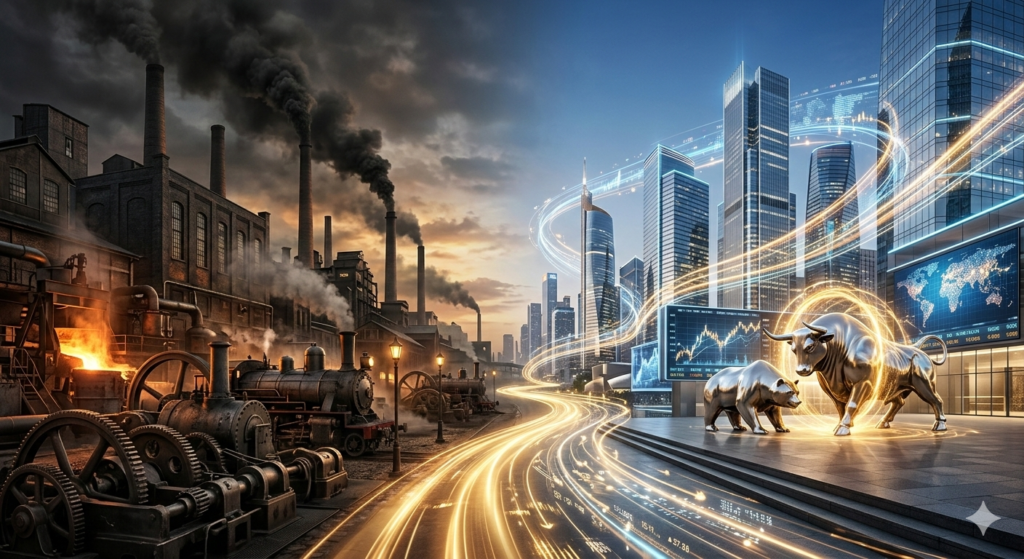
IV. Urbanization and Social Change
1. Transformation of Social Life
Urbanization altered:
- Community bonds.
- Social mobility.
- Cultural life.
Cities became centers of innovation and reform.
2. Public Health Reforms
Industrial cities initially suffered from disease outbreaks.
- Cholera epidemics.
- Poor sanitation.
Governments introduced:
- Sewage systems.
- Clean water supply.
- Urban planning.
Public health improved gradually.
3. Changing Gender Roles
Industrialization had mixed impacts:
Positive:
- Women gained wage income.
- Early feminist movements emerged.
Negative:
- Wage inequality persisted.
- Double burden of work and domestic duties.
V. Imperialism and Global Impact
1. Need for Raw Materials
Industrial economies required:
- Cotton
- Rubber
- Coal
- Minerals
This demand encouraged colonial expansion.
2. Search for Markets
Industrial powers sought:
- Overseas markets for manufactured goods.
- Investment opportunities.
Colonies became economic extensions of industrial nations.
3. Intensification of Imperialism
Industrialization strengthened European powers.
- Military technology improved.
- Naval dominance expanded.
- Colonial control intensified.
This contributed to 19th-century imperial expansion.
4. Unequal Economic Relations
Colonial economies were structured to:
- Export raw materials.
- Import finished goods.
This created long-term economic dependency.
VI. Positive and Negative Transformations
Positive Outcomes
- Massive increase in production.
- Technological innovation.
- Improved transportation.
- Rising living standards (long-term).
- Expansion of democracy (gradually).
- Development of modern banking and finance.
Negative Consequences
- Worker exploitation.
- Child labor.
- Urban poverty.
- Environmental degradation.
- Imperial domination.
- Income inequality.
VII. Long-Term Structural Impact
1. Creation of Modern Industrial Society
- Economic growth became continuous.
- Technological innovation accelerated.
- Global capitalism expanded.
2. Birth of Modern Political Ideologies
Industrial society generated:
- Liberalism.
- Socialism.
- Marxism.
- Trade unionism.
3. Foundation of Globalization
Industrial production and trade networks:
- Connected continents.
- Integrated global markets.
- Created interdependence.
4. Transformation of State Role
Governments gradually shifted from minimal intervention to welfare-oriented roles.
- Labor laws.
- Social security.
- Public infrastructure.
Modern welfare states trace roots to industrial reforms.
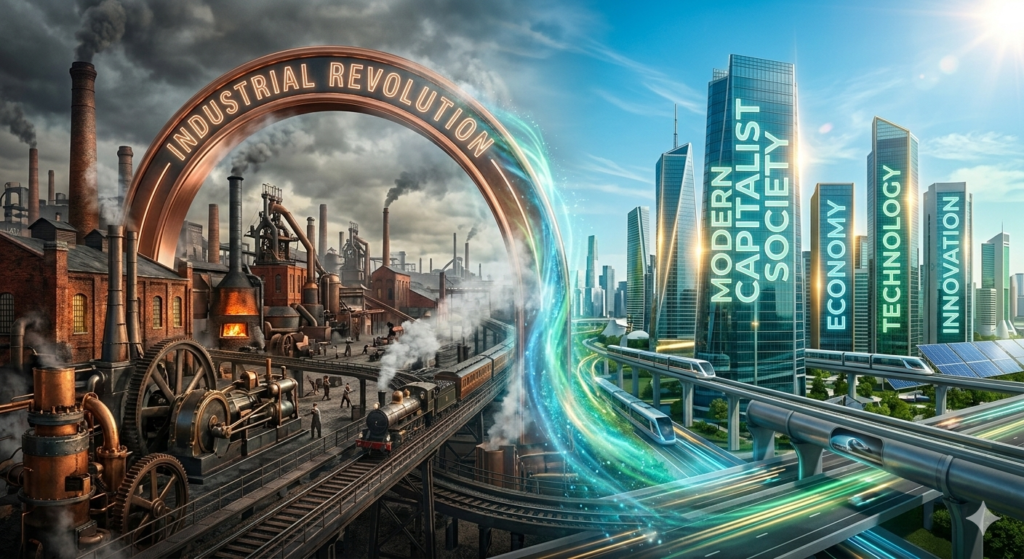
VIII. Critical Evaluation
The Industrial Revolution was neither purely beneficial nor purely harmful. It represented a structural transformation of human society.
Economic Evaluation
- It created unprecedented wealth.
- It widened income inequality.
- It strengthened capitalism and global trade.
Social Evaluation
- It improved long-term living standards.
- It initially created severe social dislocation.
- It empowered labor movements and democratic reforms.
Global Evaluation
- It strengthened Western dominance.
- It intensified imperialism.
- It laid the foundation for global economic systems.
Conclusion
The Industrial Revolution fundamentally transformed the economic and social fabric of the modern world. By establishing industrial capitalism, accelerating urbanization, creating a wage-dependent labor class, and intensifying imperialism, it reshaped global history.
Economically, it shifted societies from agrarian production to mechanized industry, strengthened financial institutions, and integrated global markets. Socially, it redefined class structures, altered family systems, promoted urban growth, and stimulated labor reforms.
While it generated exploitation and inequality in its early stages, it also laid the groundwork for modern democracy, welfare legislation, technological innovation, and economic growth.
In essence, the Industrial Revolution marks the beginning of the modern industrial age — an era characterized by continuous technological change, capitalist expansion, and global interconnection.