Introduction
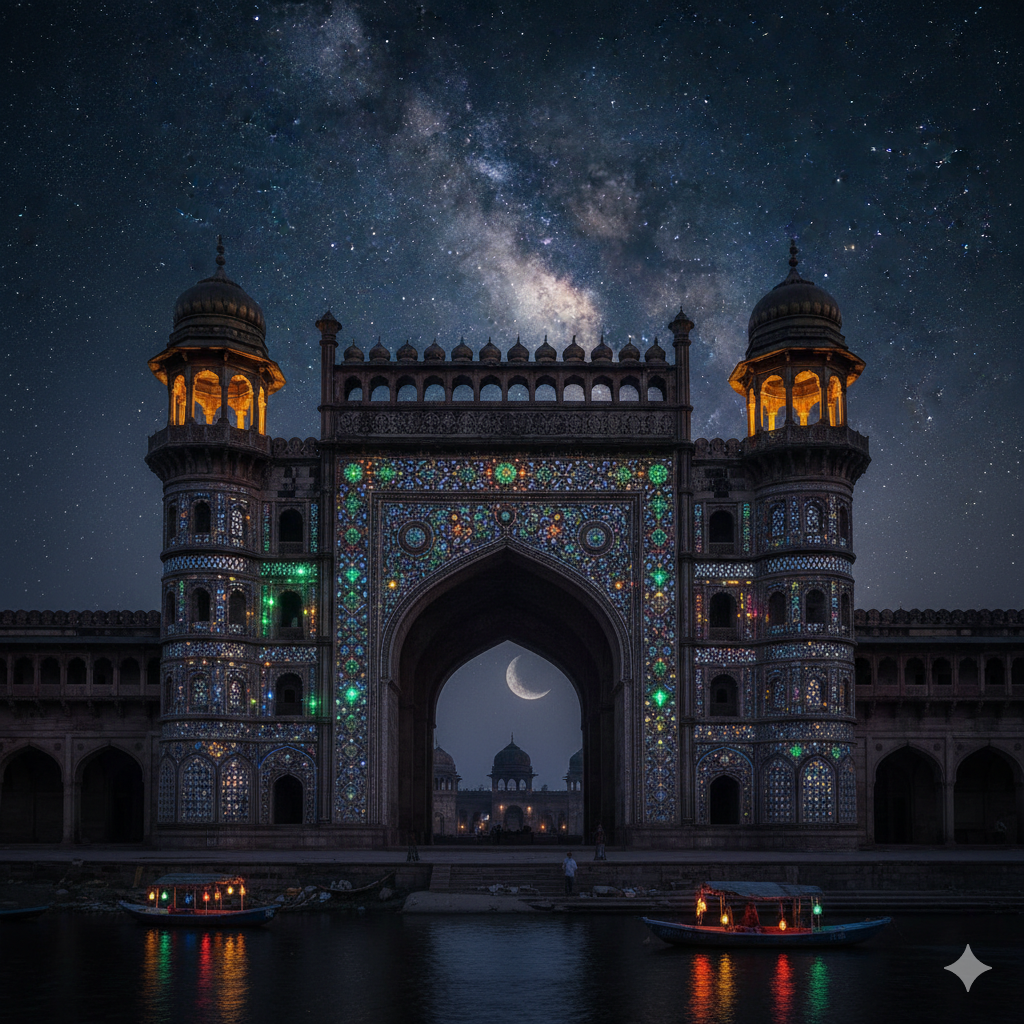
The architectural heritage of Uttar Pradesh stands as a living testimony to the state’s glorious past. Among its many periods of cultural and artistic evolution, the era of the Nawabs of Awadh (1722–1856) marks a distinct and magnificent chapter. Centered in Lucknow, this period witnessed a remarkable synthesis of Mughal, Persian, and Indian architectural traditions. The Nawabs of Awadh, particularly from the reign of Saadat Khan Burhan-ul-Mulk to Wajid Ali Shah, transformed the architectural and cultural landscape of North India. The architectural style that developed under their patronage was not only an expression of grandeur and luxury but also reflected the composite Ganga-Jamuni Tehzeeb — a harmonious blend of Hindu and Muslim cultural aesthetics.
Historical Background of Awadh and Its Rulers
The province of Awadh (also known as Oudh) emerged as a semi-independent state during the decline of the Mughal Empire. Founded by Saadat Khan Burhan-ul-Mulk in 1722, Awadh soon became one of the most prosperous and culturally rich regions of North India. Lucknow, which became the capital of Awadh, evolved into a center of refinement, poetry, music, cuisine, and above all, architecture.
The Nawabs of Awadh were not just political rulers but also great patrons of art, literature, and architecture. Their rule, particularly from the mid-18th to the mid-19th century, saw the construction of splendid palaces, mosques, imambaras, gardens, and public buildings that still adorn the landscape of Uttar Pradesh today.
Key Nawabs who contributed significantly to architectural development include:
- Saadat Khan Burhan-ul-Mulk (1722–1739) – The founder of Awadh’s autonomy.
- Shuja-ud-Daula (1754–1775) – Known for architectural patronage in Faizabad.
- Asaf-ud-Daula (1775–1797) – Shifted the capital to Lucknow and commissioned the most iconic monuments.
- Ghazi-ud-Din Haider (1814–1827) – The first King of Awadh who further expanded Lucknow’s grandeur.
- Nasir-ud-Din Haider (1827–1837) and Wajid Ali Shah (1847–1856) – The last Nawabs who combined art, music, and architecture in an atmosphere of declining political authority but increasing cultural brilliance.
Architectural Characteristics of the Nawabi Period
The architecture of the Nawabs of Awadh developed a distinctive identity. It represented an evolution from the Mughal architectural style, incorporating Persian, Turkish, and local Indian elements, and gave birth to what is often termed the Awadhi or Lucknow School of Architecture.
Key features of Awadhi architecture include:
- Blend of Mughal and Indo-European Styles:
- The Nawabs adopted Mughal motifs such as domes, arches, and minarets but infused them with local creativity and European influences like Gothic columns and classical designs.
- The Nawabs adopted Mughal motifs such as domes, arches, and minarets but infused them with local creativity and European influences like Gothic columns and classical designs.
- Emphasis on Ornamentation:
- Use of stucco decorations, intricate carvings, colored glass, and floral motifs.
- Use of stucco decorations, intricate carvings, colored glass, and floral motifs.
- Use of Lakhauri Bricks:
- Buildings were constructed using fine Lakhauri bricks, coated with lime plaster to achieve smooth and ornate surfaces.
- Buildings were constructed using fine Lakhauri bricks, coated with lime plaster to achieve smooth and ornate surfaces.
- Religious and Secular Balance:
- The architecture included grand religious buildings (Imambaras, mosques) as well as secular structures like palaces, gardens, and bridges.
- The architecture included grand religious buildings (Imambaras, mosques) as well as secular structures like palaces, gardens, and bridges.
- Integration of Persian Aesthetics:
- Arched gateways, calligraphy, and large courtyards reflect Persian influences.
- Arched gateways, calligraphy, and large courtyards reflect Persian influences.
- Symbolism of Power and Aesthetic Refinement:
- Architecture was used not just for functionality but to project authority, taste, and devotion.
Major Architectural Contributions during the Nawabi Era
1. The Imambaras: Architectural and Religious Grandeur
a. Bara Imambara (Asafi Imambara), Lucknow
- Constructed by Nawab Asaf-ud-Daula in 1784 during a devastating famine.
- Built as a relief measure to provide employment to the people.
- Designed by the architect Kifayat-ullah.
- The structure is a masterpiece of engineering and architecture — built without the use of iron or wood beams.
- The central hall (50 meters long and 15 meters high) is one of the largest vaulted halls in the world without supporting pillars.
- The Bhool Bhulaiya (labyrinth) above the central hall is an architectural marvel designed to lighten the load of the massive structure.
- The Asafi Mosque and the imposing Rumi Darwaza near the Imambara form a magnificent complex symbolizing the zenith of Awadhi architecture.
b. Chhota Imambara (Husainabad Imambara), Lucknow
- Built by Nawab Muhammad Ali Shah in 1838.
- Serves as his mausoleum and that of his mother.
- The structure is richly decorated with chandeliers, mirrors, and silver throne — hence often called the Palace of Lights.
- The building combines Islamic domes and minarets with European-inspired decorative motifs.
2. Palaces and Residences
a. Kaiserbagh Palace Complex
- Constructed by Nawab Wajid Ali Shah between 1848 and 1850.
- Represented the culmination of Awadhi architectural opulence.
- The palace complex was designed in a mixture of Indo-European and Mughal styles, with wide courtyards, fountains, and ornamental gateways.
- The central courtyard, Kaiserbagh Baradari, was used for grand ceremonies and cultural performances.
b. Dilkusha Kothi
- Built by Nawab Saadat Ali Khan in European style as a hunting lodge.
- Designed by Major Gore Ouseley, it resembled an English country mansion.
- Although partly destroyed during the Revolt of 1857, its ruins stand as a blend of European classical architecture and Nawabi taste.
c. Chattar Manzil (Umbrella Palace)
- Originally started by Nawab Ghazi-ud-Din Haider and completed by his successor.
- Distinctive for its umbrella-shaped domes.
- Located on the banks of the Gomti River, it served as a royal residence.
- The architecture combines Mughal domes and European decorative patterns.
3. Religious and Civic Architecture
a. Jama Masjid, Lucknow
- Constructed by Nawab Mohammad Ali Shah in 1839.
- Built using yellow sandstone, it features tall minarets and three large domes.
- Its intricate carvings and geometric designs reflect Indo-Islamic architectural excellence.
b. Sibtainabad Imambara
- Built by Wajid Ali Shah in Hazratganj, Lucknow.
- Houses the tomb of the Nawab himself.
- Known for its artistic stucco work and ornamental façades.
c. Rumi Darwaza
- Erected in 1784 under Nawab Asaf-ud-Daula.
- Serves as an imposing gateway to the city of Lucknow, standing 60 feet tall.
- Modeled after an ancient gateway in Istanbul (then Constantinople), it reflects the Persian-Turkish influence in Awadhi design.
4. Gardens and Public Works
The Nawabs also laid out magnificent gardens and public spaces that enhanced the city’s charm and reflected Persian garden traditions.
- Shah Najaf Imambara Gardens: Around the mausoleum of Ghazi-ud-Din Haider, with symmetrical pathways and fountains.
- Moti Mahal Gardens: Served as a recreation area overlooking the Gomti River.
- Sikandar Bagh: A fortified garden built by Wajid Ali Shah, later famous as a battlefield during the 1857 Revolt.
These gardens were inspired by the Mughal concept of Charbagh (four-part gardens symbolizing paradise), incorporating water channels, fountains, and shaded pavilions.
Artistic and Cultural Integration in Architecture
The Nawabi architecture of Awadh was not merely about buildings; it embodied the cultural and artistic spirit of the time. The Nawabs encouraged craftsmanship in stucco work, calligraphy, and mirror art (ainakari). Interiors of palaces and imambaras were richly decorated with chandeliers, Belgian mirrors, and ornamental arches.
European influence also began to permeate architectural design — partly due to British presence and the Nawabs’ fascination with Western aesthetics. Classical columns, Corinthian capitals, and Roman arches were integrated with domes, minarets, and Islamic calligraphy, giving birth to a hybrid Indo-European architectural style.
Role of Architecture in Society
Awadhi architecture had both symbolic and functional roles:
- Symbol of Power and Prosperity:
- Monumental buildings represented the political legitimacy of the Nawabs and their independence from the weakening Mughal authority.
- Monumental buildings represented the political legitimacy of the Nawabs and their independence from the weakening Mughal authority.
- Relief and Employment:
- Construction projects like the Bara Imambara provided employment to thousands, especially during famine.
- Construction projects like the Bara Imambara provided employment to thousands, especially during famine.
- Centers of Culture and Religion:
- Imambaras and palaces served as venues for majlis (religious gatherings), poetry, music, and dance, strengthening social cohesion and spiritual life.
- Imambaras and palaces served as venues for majlis (religious gatherings), poetry, music, and dance, strengthening social cohesion and spiritual life.
- Representation of Ganga-Jamuni Tehzeeb:
- The harmonious blend of Hindu and Muslim architectural motifs reflected the composite culture of Uttar Pradesh.
Comparison with Mughal Architecture
While the Mughals emphasized monumental symmetry and imperial austerity, Awadhi architecture leaned towards elegance, intimacy, and ornamentation.
- Mughal architecture was formal and grand, using marble and red sandstone.
- Awadhi buildings, on the other hand, favored brick and plaster with intricate stucco work.
- The focus shifted from imperial symbolism to artistic and cultural expression, making Awadhi architecture more personal and decorative.
Decline and Legacy
With the annexation of Awadh by the British in 1856 and the Revolt of 1857, the Nawabi architectural era came to an abrupt end. Many structures were destroyed or repurposed during colonial rule. However, the cultural and architectural legacy of the Nawabs continues to define the identity of Uttar Pradesh, especially Lucknow.
Today, the city is often referred to as the “City of Nawabs” and “City of Imambaras,” where these monuments stand as living museums of 18th and 19th-century Indo-Islamic art and architecture. The Bara Imambara, Rumi Darwaza, and Chhota Imambara remain prime attractions for scholars, tourists, and heritage enthusiasts alike.
Conclusion
The architectural evolution of Uttar Pradesh during the reign of the Nawabs of Awadh is a shining chapter in India’s cultural history. The Nawabs combined Mughal grandeur with Persian finesse and European creativity to produce a unique architectural vocabulary that reflected both aesthetic beauty and social purpose. Their monuments—imambaras, palaces, mosques, and gardens—not only transformed the urban landscape of Lucknow and surrounding areas but also symbolized the spirit of tolerance, artistic passion, and cultural synthesis that defined the Awadhi ethos.
In essence, the architecture of the Nawabs of Awadh remains an enduring legacy — a confluence of art, faith, and history that continues to inspire admiration and scholarly exploration even today.
Thanks for sharing such a well-written and informative article. I learned a lot and look forward to reading more posts like this in the future.