Introduction
India is often described as a civilization rather than merely a nation-state. Its cultural diversity is unmatched, with hundreds of languages, cuisines, rituals, art forms, and social traditions coexisting within one political framework. This diversity does not remain confined to geographical regions alone. With increasing internal migration, urbanization, and economic integration, cultural identities are constantly relocating and reshaping themselves across the country.
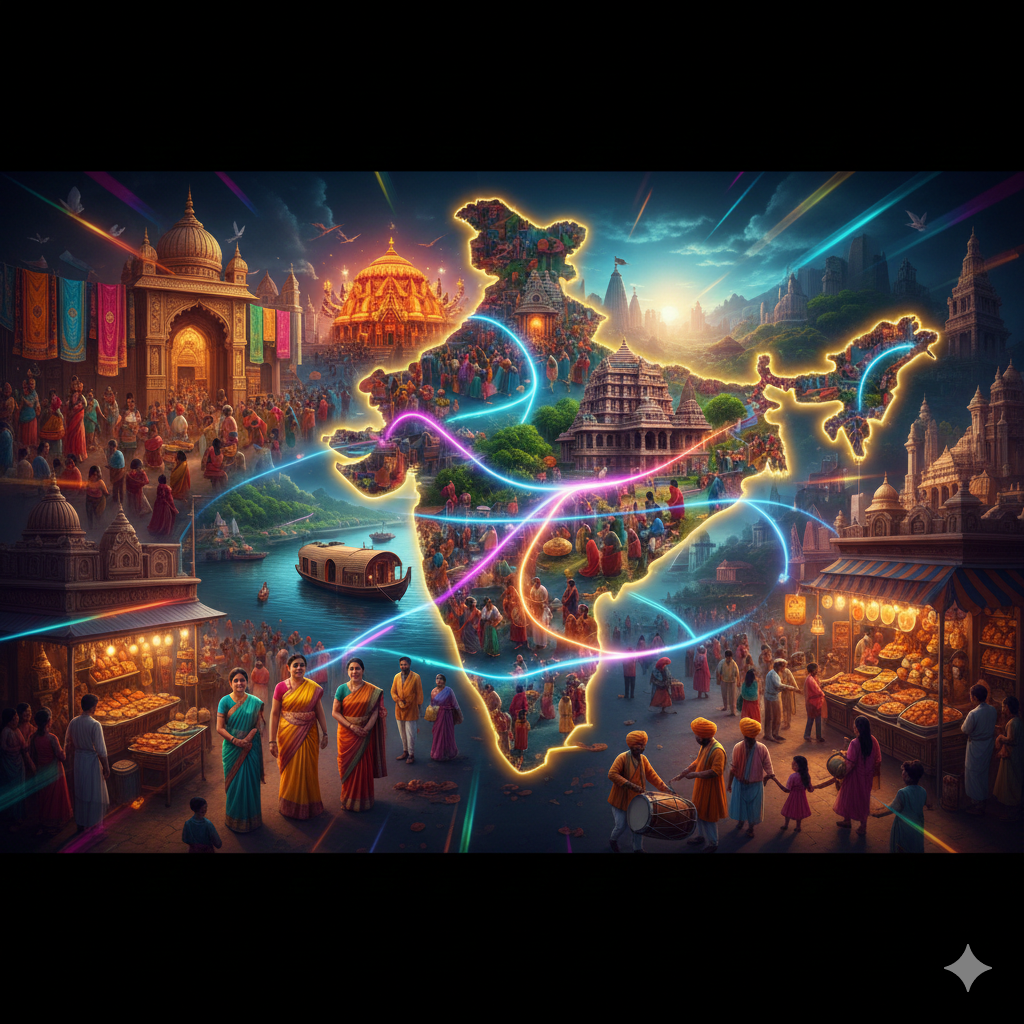
As a result, contemporary India increasingly exhibits what may be called “cultural pockets of Small India”—localized spaces within cities and towns where distinct regional cultures thrive away from their original homelands. These pockets function as miniature representations of various Indian regions, preserving traditions while adapting to new environments.
This phenomenon reflects both the unity and plurality of Indian society and highlights how migration transforms urban and social landscapes.
Understanding the Concept of “Small India”
“Small India” refers to clusters or communities outside their native regions where people recreate their cultural ecosystems. These include:
- Language-based neighborhoods
- Regional food hubs
- Religious and cultural associations
- Festival-centered communities
- Occupational clusters
Such spaces allow migrants to maintain cultural continuity while integrating economically into new regions.
These cultural pockets are not isolated enclaves; instead, they interact dynamically with host communities, contributing to India’s composite culture.
Historical Roots of Cultural Mobility
Cultural relocation in India is not new. Historically, traders, soldiers, artisans, and scholars moved across regions, carrying customs with them. Medieval trade routes facilitated cultural exchange, while colonial industrialization triggered large-scale labor migration.
Post-independence development projects, educational institutions, and urban employment accelerated this process. Mega cities emerged as melting pots where diverse communities settled permanently.
Thus, modern “Small India” pockets are extensions of a long tradition of internal mobility.
Major Examples of Cultural Pockets Across India
1. Punjabi Culture in Delhi and NCR
Delhi hosts one of the largest Punjabi populations outside Punjab.
Key Features:
- Punjabi cuisine dominates local food culture
- Gurudwaras serve as community centers
- Baisakhi and Lohri are celebrated publicly
- Punjabi language influences everyday speech
Partition-era migration initially created this pocket, which later expanded through commerce and real estate.
Delhi today reflects a vibrant Punjabi imprint on music, entrepreneurship, and lifestyle.
2. South Indian Communities in Northern Cities
Cities such as Delhi, Gurugram, Noida, and Mumbai host substantial Tamil, Telugu, Kannada, and Malayali populations.
Examples:
- Tamil temples in Delhi and Varanasi
- South Indian eateries across North India
- Regional associations organizing Onam, Pongal, and Ugadi
Educational institutions and public sector employment largely shaped these settlements, making them strong cultural bridges between North and South.
3. Bengali Culture in Delhi, Mumbai, and Bengaluru
Bengalis form prominent cultural pockets in many cities.
Distinct Elements:
- Durga Puja celebrations with full rituals and artistry
- Bengali literature clubs
- Fish-based cuisine markets
- Rabindra Sangeet gatherings
These communities maintain intellectual and artistic traditions while blending with metropolitan life.
4. Gujarati and Marwari Business Communities Nationwide
Gujarati and Marwari traders have historically migrated across India.
Their cultural pockets appear in:
- Kolkata
- Chennai
- Hyderabad
- Northeast towns
They establish:
- Jain temples
- Community halls
- Vegetarian food cultures
- Trade networks
These groups illustrate how economic mobility also facilitates cultural transplantation.
5. North-Eastern Communities in Metropolitan Cities
Students and professionals from North-Eastern states increasingly form visible pockets in cities like Delhi and Bengaluru.
They bring:
- Tribal cuisines
- Indigenous fashion
- Music traditions
- Community hostels
Despite facing integration challenges, these communities enrich urban diversity.
6. Bihari and Purvanchali Settlements in Mumbai and Delhi
Large-scale labor migration has created Bhojpuri-speaking neighborhoods.
Cultural expressions include:
- Chhath Puja on riverbanks
- Folk music gatherings
- Regional markets
These communities sustain rural traditions within urban environments.
7. Tibetan and Himalayan Cultural Enclaves
Settlements in Dharamshala, Dehradun, and Delhi showcase Tibetan culture through monasteries, handicrafts, and festivals.
They demonstrate how displaced populations recreate cultural landscapes far from their homeland.
Role of Festivals in Creating Small India
Public celebrations act as cultural anchors.
Examples include:
- Ganesh Chaturthi in Bengaluru
- Durga Puja in Pune
- Chhath Puja in Delhi
- Onam in Mumbai
Festivals convert urban spaces into temporary cultural homelands, allowing communities to reaffirm identity.
Food as a Cultural Connector
Cuisine plays a central role in preserving identity.
Street food clusters like:
- Dosa streets
- Momos markets
- Bengali fish stalls
- Punjabi dhabas
become meeting points for regional communities while introducing others to diverse traditions.
Educational and Occupational Catalysts
Universities, IT hubs, and industrial corridors act as magnets for migration.
Student hostels, professional networks, and workplace communities naturally evolve into cultural microcosms.
For example:
- IT parks host pan-Indian diversity
- Government colonies reflect linguistic pluralism
Sociological Significance of Cultural Pockets
These “Small India” zones demonstrate:
Cultural Resilience
Traditions survive displacement through collective memory and community institutions.
Social Integration
They facilitate intercultural dialogue while preserving distinct identities.
Urban Pluralism
Cities become laboratories of coexistence.
Economic Adaptation
Migrants use cultural networks for employment and entrepreneurship.
Challenges Associated with Cultural Pockets
Despite benefits, certain challenges exist:
- Risk of cultural isolation
- Stereotyping by host populations
- Competition over resources
- Generational identity conflicts
However, India’s long history of pluralism generally absorbs these tensions through social negotiation.
Small India as a Strength, Not a Fragmentation
Rather than fragmenting national unity, cultural pockets reinforce India’s civilizational ethos of coexistence.
They illustrate:
- Unity in diversity
- Adaptive traditions
- Democratic multiculturalism
The Indian identity expands rather than contracts through such cultural layering.
Conclusion
Yes, India undeniably possesses cultural pockets of “Small India” scattered across the nation. These spaces represent living laboratories of diversity where regional identities are preserved, reshaped, and shared.
From Punjabi neighborhoods in Delhi to Bengali colonies in Bengaluru, from South Indian temples in North India to Bhojpuri settlements in Mumbai, these cultural islands reveal how migration enriches social life.
Far from weakening national unity, these pockets strengthen India’s pluralistic character. They embody the idea that one can belong to multiple cultural worlds simultaneously. In this sense, “Small India” is not a sign of division but a testament to India’s remarkable capacity for inclusion and cultural continuity.