Introduction
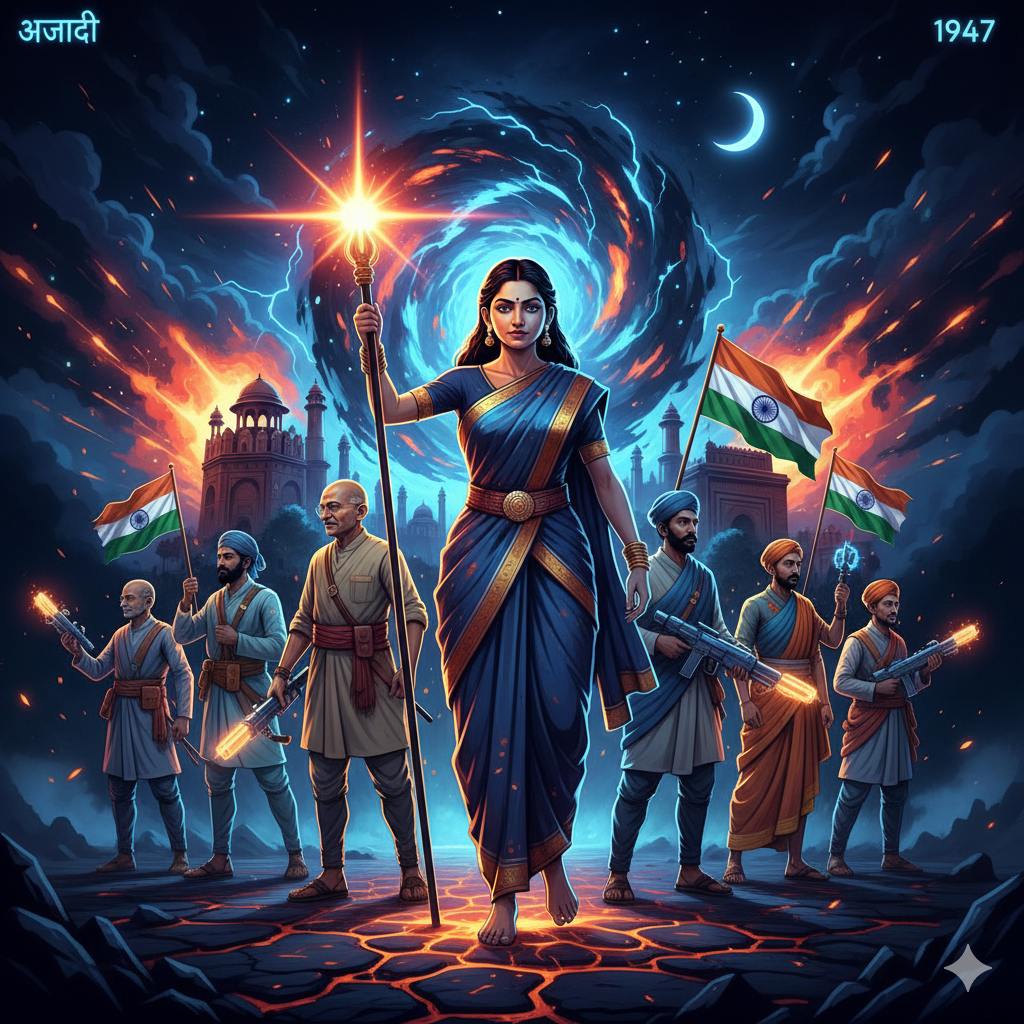
The Indian struggle for freedom was not only a movement led by Indians but also a universal fight against colonialism, imperialism, and injustice. While the leadership and mass participation were overwhelmingly Indian, several foreigners chose India as their homeland, emotionally, intellectually, and politically. They identified themselves with India’s aspirations and actively participated in its freedom movement.
These individuals were motivated by humanism, anti-imperialism, spiritual attraction to India, and moral opposition to colonial exploitation. Their contributions ranged from journalism, education, political activism, and social reform to international advocacy, which helped shape both the internal dynamics and global perception of India’s freedom struggle.
Why Foreigners Joined the Indian Freedom Struggle
Several factors explain why foreigners allied themselves with India’s cause:
- Moral Opposition to Imperialism – Many saw British rule as unjust and exploitative.
- Spiritual and Cultural Attraction – India’s philosophy, religion, and civilizational depth drew intellectuals and reformers.
- Humanitarian Commitment – Advocacy for civil rights, equality, and freedom.
- Internationalism – Belief that India’s freedom was essential to global justice and peace.
Their involvement gave the freedom movement a global and ethical dimension, beyond nationalist boundaries.
Annie Besant: A Pioneer of Home Rule and National Awakening
Background
Annie Besant, originally from Ireland, came to India in the late 19th century. She was deeply influenced by Theosophy and India’s spiritual traditions, eventually settling in India permanently.
Contribution to Freedom Struggle
- Founded the Home Rule League (1916), demanding self-government within the British Empire.
- Edited nationalist newspapers like New India and Commonweal.
- Became the first woman President of the Indian National Congress (1917).
- Promoted national education and political awareness among Indians.
Significance
- Helped popularize the idea of self-rule before Gandhian mass movements.
- Acted as a bridge between moderate and extremist nationalists.
- Internationalized India’s demand for freedom.
A.O. Hume: The Initiator of Organized Nationalism
Background
Allan Octavian Hume was a retired British civil servant who sympathized with Indian grievances and feared violent uprisings if reforms were delayed.
Role in Freedom Movement
- Played a crucial role in the formation of the Indian National Congress (1885).
- Advocated constitutional methods and dialogue between Indians and the British administration.
Assessment
- Though moderate in approach, Hume provided the organizational platform that later evolved into the backbone of the freedom movement.
- His efforts demonstrated that even within the British establishment, there were voices against imperial arrogance.
Charles Freer Andrews: The “Friend of India”
Background
C.F. Andrews was a British priest, educationist, and close associate of Mahatma Gandhi.
Key Contributions
- Supported Indian laborers abroad, especially indentured workers in South Africa and Fiji.
- Actively opposed racial discrimination and colonial injustice.
- Advocated reconciliation between Indians and the British on ethical grounds.
Importance
- Strengthened India’s moral position internationally.
- Helped Gandhi articulate the ethical foundation of non-violent resistance.
Sister Nivedita (Margaret Noble): Nationalism through Education
Background
Born in Ireland, Margaret Noble was a disciple of Swami Vivekananda, who renamed her Sister Nivedita.
Contribution
- Promoted education of Indian women, especially in Bengal.
- Supported Swadeshi Movement (1905) after the partition of Bengal.
- Encouraged national pride, art, science, and indigenous culture.
Impact
- Linked cultural nationalism with political freedom.
- Inspired youth and women to participate in the freedom struggle.
Mirabehn (Madeleine Slade): Gandhian Constructive Work
Background
Daughter of a British admiral, Madeleine Slade was inspired by Gandhi’s philosophy and became his devoted follower.
Role in Freedom Struggle
- Participated in Civil Disobedience Movement.
- Worked in village upliftment, Khadi promotion, and environmental conservation.
- Advocated Gandhian ideals globally after independence.
Significance
- Embodied voluntary renunciation and identification with Indian masses.
- Symbolized the universal appeal of Gandhian philosophy.
Philip Spratt and Ben Bradley: Revolutionary Socialism
Background
British communists who arrived in India during the 1920s.
Contributions
- Involved in the Communist Movement in India.
- Played a role in the Meerut Conspiracy Case (1929).
- Helped spread socialist ideas among Indian workers and intellectuals.
Assessment
- Introduced Marxist analysis to Indian nationalism.
- Influenced labor movements and trade unions.
Madame Bhikaji Cama (Foreign-Based Supporter)
Though Indian by birth, her work abroad involved collaboration with foreign sympathizers.
- Popularized Indian freedom internationally.
- Associated with European revolutionaries and anti-imperialist thinkers.
This highlights how foreign support networks strengthened India’s struggle.
Role of Foreign Journalists and Intellectuals
- Exposed British atrocities through international media.
- Created global awareness about events like the Jallianwala Bagh massacre.
- Helped mobilize international opinion against British colonialism.
Impact of Foreign Participation on the Freedom Struggle
1. Internationalization of the Movement
Foreign participants gave India’s struggle a global voice, attracting international sympathy and pressure on Britain.
2. Moral Legitimacy
Their involvement reinforced the idea that India’s freedom struggle was ethical and just, not merely nationalist rebellion.
3. Institutional and Ideological Contributions
- Formation of Congress
- Spread of socialism, nationalism, and Gandhian philosophy
- Educational and journalistic contributions
Limitations and Criticisms
- Some foreigners operated within constitutional frameworks, delaying radical change.
- Their influence was limited to urban, educated circles.
- British authorities often dismissed them as misguided sympathizers.
However, these limitations do not diminish their overall contribution.
Comparative Perspective
| Indian Leaders | Foreign Supporters |
|---|---|
| Mass mobilization | International advocacy |
| Grassroots leadership | Ideological and moral reinforcement |
| Direct political action | Indirect but influential support |
Conclusion
The Indian freedom struggle was primarily driven by Indians, but the contribution of foreigners who adopted India as their homeland added a distinct moral, intellectual, and international dimension. Figures like Annie Besant, C.F. Andrews, Sister Nivedita, Mirabehn, and Philip Spratt demonstrated that the fight against colonialism transcended national boundaries.
Their participation reflected the universal values of justice, freedom, and human dignity, reinforcing India’s claim to independence as not only a national necessity but also a global moral imperative. The legacy of these foreigners remains a testament to the inclusive and humanitarian character of India’s freedom movement.