Introduction
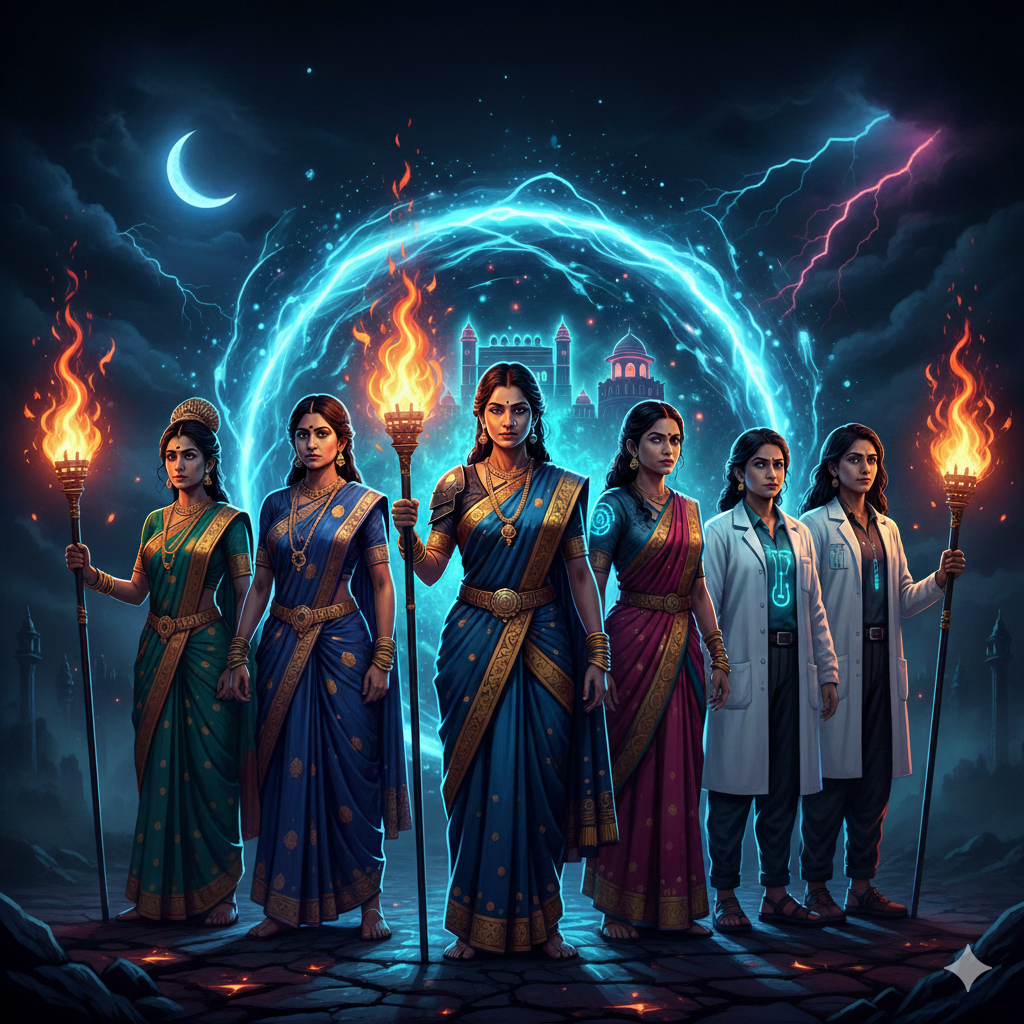
The Indian struggle for freedom was not merely a political movement against colonial rule; it was a social revolution that challenged deeply entrenched hierarchies of gender, age, class, caste, and religion. In this transformative process, Indian women emerged as powerful torchbearers, defying centuries of patriarchal restrictions and social conservatism. From royal palaces to village streets, from classrooms to battlefields, women participated actively and courageously in every phase of the national movement.
Indian women—young and old, Hindu, Muslim, Sikh, Christian, and Parsi—did not remain passive spectators. Instead, they reshaped the freedom struggle, giving it moral strength, mass character, and emotional depth. Their contribution proved that the quest for political freedom was inseparable from the struggle for social justice and women’s emancipation.
Historical Background: Women before the Freedom Struggle
Before the 19th century, women’s participation in public life was largely restricted due to:
- Patriarchal norms
- Limited access to education
- Social practices like purdah, child marriage, and denial of property rights
However, social reform movements of the 19th century—led by reformers and supported by early women leaders—created the conditions for women’s political awakening. Education, print media, and nationalist ideology gradually enabled women to step into public and political spaces.
Breaking the Barrier of Gender
1. Women as Political Leaders
Indian women rose to leadership positions in the freedom struggle, challenging the belief that politics was a male domain.
- Sarojini Naidu
- President of the Indian National Congress
- Active participant in Civil Disobedience and Quit India Movements
- Symbolized articulate, fearless women leadership
- Annie Besant and later Indian women leaders inspired women to view politics as a moral responsibility.
- Aruna Asaf Ali
- Hoisted the Congress flag during the Quit India Movement (1942)
- Became a symbol of revolutionary courage
These leaders demonstrated that women could lead mass movements, negotiate with authorities, and face imprisonment with resilience.
Defying Age Barriers: From Young Girls to Elderly Women
1. Young Women and Students
Young women actively participated in protests, picketing, and underground activities.
- Usha Mehta
- Played a key role in running the underground radio during the Quit India Movement
- Demonstrated that youth, especially young women, were capable of strategic resistance
- Student groups and women volunteers spread nationalist ideas in colleges and schools.
2. Elderly Women in the Movement
- Kasturba Gandhi, despite age and ill health, participated in satyagraha and endured imprisonment.
- Many elderly women led local protests, boycott campaigns, and spinning activities.
The participation of women across age groups made the freedom struggle truly inclusive and intergenerational.
Transcending Religious Barriers
The freedom struggle witnessed unprecedented unity among women across religious communities, reinforcing the secular nature of Indian nationalism.
1. Muslim Women
- Begum Rokeya
- Advocated women’s education and social reform
- Used writing and activism to link freedom with women’s empowerment
- Begum Hazrat Mahal
- Played a crucial role in the Revolt of 1857
- Led resistance against British forces in Awadh
- Bi Amma (Abadi Bano Begum)
- Actively supported the Khilafat and Non-Cooperation Movements
- Inspired Muslim women to join nationalist politics
2. Sikh, Christian, and Parsi Women
- Sikh women participated in Gurdwara Reform Movement and nationalist campaigns.
- Christian women contributed through education, nursing, and social work.
- Parsi women supported nationalist causes through philanthropy and public advocacy.
Women’s participation across religious lines reinforced the idea that freedom was a shared national goal, not a sectarian demand.
Women in Mass Movements
1. Non-Cooperation Movement (1920–22)
Women boycotted foreign goods, promoted khadi, and participated in protests.
They entered public spaces in large numbers for the first time.
2. Civil Disobedience Movement (1930–34)
- Women broke salt laws, courted arrest, and led picketing campaigns.
- Salt Satyagraha became a turning point in women’s mass participation.
3. Quit India Movement (1942)
- Women emerged as organizers, messengers, and underground activists.
- Many took over leadership roles when male leaders were imprisoned.
Women in Revolutionary and Armed Resistance
Some women chose the path of revolutionary nationalism, challenging the stereotype of women as passive or non-violent.
- Rani Lakshmibai of Jhansi
- A symbol of armed resistance during the Revolt of 1857
- Inspired generations of women nationalists
- Kalpana Dutt and Pritilata Waddedar
- Involved in revolutionary activities in Bengal
- Demonstrated fearless commitment to liberation
- Captain Lakshmi Sahgal
- Led the Rani of Jhansi Regiment of the Indian National Army
- Represented disciplined, militarized women’s participation
Women as Builders of National Consciousness
1. Education and Social Reform
Women used education as a tool for national awakening:
- Established schools for girls
- Promoted literacy and political awareness
- Challenged social evils that weakened national unity
2. Journalism, Literature and Cultural Nationalism
- Women writers and poets used literature to inspire patriotism.
- Songs, speeches, and essays helped spread nationalist ideas among women.
Women’s Contribution to the Moral Strength of the Movement
Women’s participation lent the freedom struggle:
- Moral legitimacy
- Non-violent discipline
- Mass character
Their willingness to face lathi charges, imprisonment, and social boycott highlighted the ethical foundation of Indian nationalism.
Limitations and Challenges
Despite their contributions, women faced several challenges:
- Patriarchal resistance within society and political organizations
- Limited representation in formal decision-making bodies
- Post-independence marginalization of women’s political voices
However, their involvement laid the foundation for future struggles for gender equality and political rights.
Impact and Legacy
The participation of women in the freedom struggle:
- Redefined women’s role in public life
- Challenged traditional gender norms
- Strengthened India’s democratic and secular ethos
- Inspired constitutional guarantees of equality and rights
Women emerged not merely as supporters but as agents of change and leaders of transformation.
Conclusion
Defying barriers of age, gender, and religion, Indian women became true torchbearers of the freedom struggle. Their participation transformed the national movement from a political campaign into a people’s revolution, rooted in moral courage, unity, and sacrifice. Whether as leaders, revolutionaries, educators, or grassroots activists, women reshaped the trajectory of India’s fight for independence.
Their legacy extends beyond 1947, reminding us that freedom is incomplete without gender justice, social equality, and inclusive participation. The Indian freedom struggle stands as a powerful testament to how women, when empowered, can illuminate the path of national destiny.