Introduction
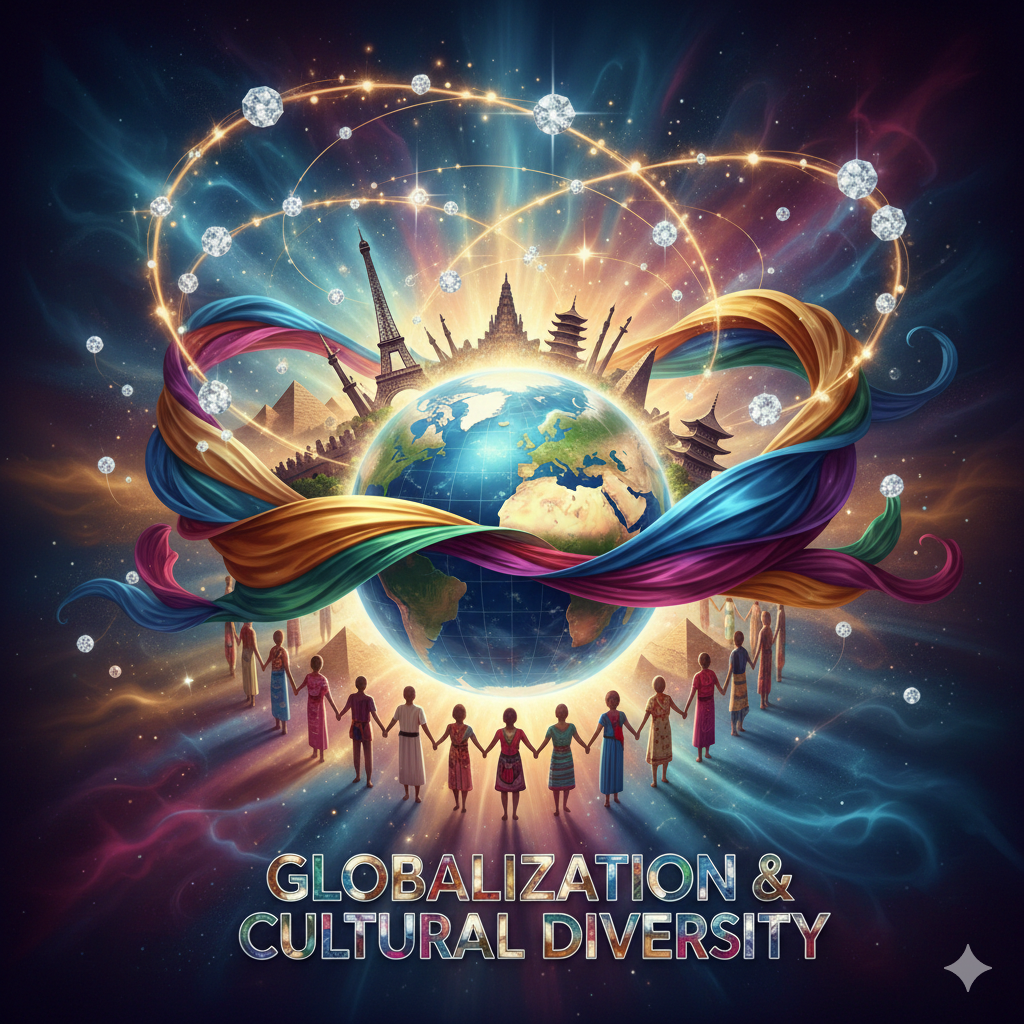
India has always been recognized as one of the world’s most culturally diverse societies. Its civilization has evolved through centuries of interaction among different religions, languages, ethnic groups, and traditions. From tribal customs in central India to classical dance forms in the south, from Himalayan spiritual practices to coastal maritime cultures, India represents a living mosaic of plural identities.
With the advent of globalization—especially after the economic liberalization of 1991—India became increasingly integrated into global networks of trade, communication, technology, and culture. This process intensified cross-border flows of goods, ideas, lifestyles, and values. As a result, globalization has deeply influenced Indian society, raising an important sociological question: Has globalization weakened India’s cultural diversity, or has it reshaped and strengthened it in new ways?
This essay examines the extent to which globalization has influenced the core of India’s cultural diversity, highlighting both transformative pressures and adaptive resilience.
Understanding Globalization in the Indian Context
Globalization refers to the growing interconnectedness of societies through economic integration, technological advancement, cultural exchange, and political cooperation. In India, globalization gained momentum after economic reforms opened markets to foreign investment and global competition.
However, globalization is not merely an economic phenomenon. It also involves:
- Cultural flows through media and entertainment
- Migration and urbanization
- Digital connectivity
- Consumer culture
- Transnational education and employment
Together, these forces have altered social relationships, cultural expressions, and identity formation.
India’s Cultural Diversity: A Brief Overview
Before analyzing globalization’s impact, it is important to understand the nature of India’s cultural diversity:
- Over 1,600 languages and dialects
- Multiple religions including Hinduism, Islam, Christianity, Sikhism, Buddhism, and Jainism
- Regional cuisines, dress styles, festivals, and art forms
- Strong community institutions such as caste, kinship, and village networks
Indian diversity is not just coexistence; it is interdependence, where traditions have historically blended and evolved through contact with outsiders—from Persians and Arabs to Europeans.
Positive Influences of Globalization on Cultural Diversity
1. Global Visibility of Indian Culture
Globalization has allowed Indian cultural expressions to reach international audiences:
- Yoga has become a global wellness practice
- Bollywood enjoys worldwide popularity
- Indian cuisine is now common in major cities across continents
- Classical arts like Bharatanatyam and Kathak are performed globally
This international recognition has strengthened cultural pride and encouraged preservation efforts at home.
2. Revival and Commercialization of Traditional Arts
Global markets have created demand for handicrafts, textiles, folk music, and indigenous designs. Artisans producing Madhubani paintings, Banarasi silk, or tribal jewelry now access online platforms and international buyers.
While commercialization brings risks, it has also provided livelihoods and revived dying traditions.
3. Cultural Pluralism and Hybrid Identities
Globalization has encouraged cultural blending rather than complete replacement. Indian youth often combine traditional values with global lifestyles—celebrating Diwali while enjoying international music, wearing ethnic clothing with western accessories.
Such hybridity reflects cultural adaptation rather than erosion.
4. Strengthening Marginal Voices Through Digital Platforms
Social media and digital tools have empowered regional artists, tribal storytellers, and local historians to share narratives globally. Earlier marginalized communities now participate in cultural discourse through blogs, podcasts, and online exhibitions.
5. Exposure to Global Ideas of Equality and Rights
Global human rights frameworks have influenced movements for gender equality, LGBTQ+ recognition, and caste justice. These ideas interact with indigenous reform traditions, enriching social debates.
Challenges Posed by Globalization to Cultural Diversity
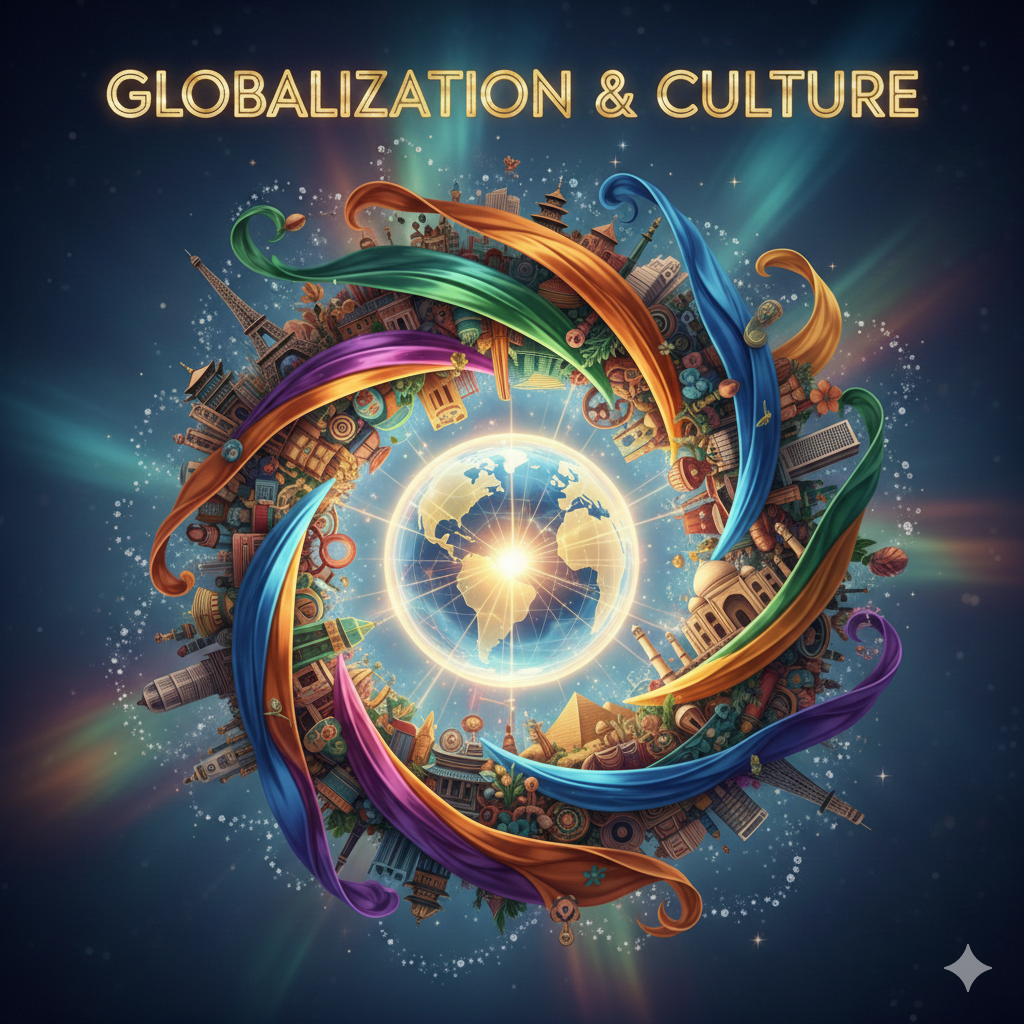
Despite these benefits, globalization also exerts homogenizing pressures.
1. Cultural Homogenization
Global consumer culture promotes similar brands, fashion, entertainment, and food habits across cities. Shopping malls, fast-food chains, and streaming platforms create standardized lifestyles, particularly among urban middle classes.
Traditional practices risk being sidelined in favor of globally marketed trends.
2. Language Decline
English has emerged as the dominant language of higher education, corporate work, and digital communication. Many regional and tribal languages face reduced usage among younger generations, threatening linguistic diversity.
Language loss also implies loss of folklore, oral history, and indigenous knowledge.
3. Commercialization of Festivals and Rituals
Many festivals have shifted from community-centered celebrations to market-driven spectacles. Religious events increasingly involve corporate sponsorships, branding, and mass tourism, reducing their original cultural meanings.
4. Urbanization and Cultural Displacement
IT hubs such as Bengaluru, Hyderabad, and Gurugram attract migrants from across India. While this creates multicultural spaces, it also weakens village-based traditions and kinship networks.
Rapid urban growth often disconnects individuals from ancestral customs.
5. Consumerism and Identity
Global advertising promotes material success as a marker of status. This has altered value systems, prioritizing consumption over community and tradition.
Cultural identity increasingly becomes something to be “displayed” rather than lived.
IT Cities as Cultural Laboratories
Cities like Bengaluru, Pune, Chennai, and Noida illustrate globalization’s cultural impact:
- Multilingual workplaces
- International cuisines
- Corporate work culture replacing traditional rhythms of life
- Rise of nuclear families
- Weekend mall culture
These cities represent spaces where global and local cultures coexist, negotiate, and sometimes clash.
Does Globalization Destroy Cultural Diversity?
Contrary to popular belief, globalization does not simply erase cultures. Instead, it reconfigures them.
Indian society demonstrates remarkable resilience:
- Regional festivals remain vibrant
- Religious diversity continues
- Local cuisines adapt without disappearing
- Traditional weddings coexist with destination ceremonies
Sociologists call this process “glocalization”—global influences being localized.
For example:
- McDonald’s serves vegetarian burgers in India
- Global fashion brands adopt Indian motifs
- International yoga styles retain Indian spiritual roots
Thus, cultural diversity survives by adapting.
Cultural Resistance and Revival Movements
Globalization has also triggered conscious efforts to protect heritage:
- Promotion of indigenous languages in schools
- Government initiatives like “Ek Bharat Shreshtha Bharat”
- Revival of folk traditions through NGOs
- Increased interest in Ayurveda and organic farming
Such movements reaffirm cultural identity in a global age.
Impact on Youth and Identity Formation
Young Indians navigate multiple cultural worlds:
- Traditional family expectations
- Global career ambitions
- Digital social spaces
This produces layered identities rather than cultural loss. Many youth actively reconnect with roots through travel, genealogy, and local art.
Sociological Perspectives
- Anthony Giddens views globalization as intensifying social relations across distances.
- Arjun Appadurai highlights cultural flows through media and migration.
- Ulrich Beck emphasizes risk society and identity negotiation.
These theories explain how Indian culture is being reshaped rather than erased.
Conclusion
Globalization has profoundly influenced India’s cultural diversity—but it has not destroyed its core. Instead, it has introduced new patterns of interaction, expression, and identity. While challenges like homogenization, consumerism, and language decline are real, Indian society continues to adapt creatively.
Cultural diversity in India today is not static; it is dynamic. Traditions coexist with modernity, local identities interact with global values, and heritage finds new platforms.
Thus, globalization has transformed Indian cultural diversity, but its foundational pluralism remains resilient. The future lies in balancing openness to global influences with conscious preservation of indigenous traditions.
India’s cultural journey in the age of globalization reflects not cultural collapse, but cultural evolution.