Introduction
In the modern interconnected world, no nation can exist in isolation. The complexities of international relations—ranging from trade and security to health, environment, and human rights—necessitate cooperation among states. This cooperation is formalized through international organizations, which serve as platforms for dialogue, policy formulation, coordination, and dispute resolution among countries. International organizations have become integral to maintaining global peace, promoting economic development, and addressing transnational issues like climate change, terrorism, and pandemics.
The 20th and 21st centuries have seen the emergence of numerous international organizations—some global in scope and others regional or specialized. Institutions like the United Nations (UN), World Trade Organization (WTO), World Health Organization (WHO), and International Monetary Fund (IMF) have redefined the landscape of global governance. Understanding their structure, function, and influence is crucial for analyzing world politics and economics.
Definition and Meaning of International Organizations
International organizations can be defined as institutional structures established by agreements between two or more sovereign states to pursue common objectives and manage collective interests on a global or regional scale.
According to Archer (2001), an international organization is “a formal, continuous structure established by agreement between members from two or more sovereign states with the aim of pursuing the common interest of the membership.”
Key features include:
- Multilateral Composition: They consist of multiple member states.
- Formal Agreement: They are established through treaties, conventions, or charters.
- Permanent Structure: They have ongoing administrative and decision-making organs.
- Legal Personality: Many possess an international legal identity, separate from their member states.
- Common Objectives: They aim to achieve collective goals like peace, security, or economic cooperation.
Historical Evolution of International Organizations
The concept of international cooperation dates back centuries, but formal international organizations began emerging in the 19th century.
1. Early Beginnings (19th Century)
- The Concert of Europe (1815) was one of the earliest forms of international cooperation, established after the Napoleonic Wars to maintain peace in Europe.
- Specialized agencies such as the International Telegraph Union (1865) and Universal Postal Union (1874) were formed to coordinate cross-border communication.
2. League of Nations (1919)
- The first major international organization with a universal mandate was the League of Nations, established after World War I under the Treaty of Versailles (1919).
- It aimed to promote collective security and prevent future wars but failed to stop aggression in the 1930s due to lack of authority and participation from key powers.
3. The United Nations and the Post-War Era (1945–Present)
- The United Nations (UN) was established in 1945 to prevent another world war and promote international peace and cooperation.
- The post-war period also saw the creation of Bretton Woods Institutions like the IMF and World Bank (1944), and later the General Agreement on Tariffs and Trade (GATT) which evolved into the WTO in 1995.
4. Cold War and Regionalism (1945–1990)
- The ideological division of the world led to the formation of blocs such as NATO (1949) and the Warsaw Pact (1955).
- Regional organizations like the European Economic Community (EEC) and Organization of African Unity (OAU) also emerged.
5. Globalization and New Issues (1990–Present)
- With globalization, new organizations and forums emerged to deal with global issues like climate change, trade liberalization, and terrorism. Examples include G20, WTO, and UNFCCC.
Types of International Organizations
International organizations can be classified based on their membership, functions, and purpose.
1. Based on Membership
- Universal Organizations: Open to all states globally. Example: United Nations, World Health Organization (WHO).
- Regional Organizations: Limited to states within a particular region. Example: European Union (EU), African Union (AU), Association of Southeast Asian Nations (ASEAN), South Asian Association for Regional Cooperation (SAARC).
2. Based on Functions
- Political and Security Organizations: Concerned with peace, security, and diplomacy. Example: UN Security Council, NATO.
- Economic Organizations: Focus on trade, finance, and economic development. Example: IMF, World Bank, WTO, OECD.
- Social and Humanitarian Organizations: Deal with health, education, and human rights. Example: WHO, UNICEF, UNESCO.
- Technical Organizations: Focused on specialized technical fields. Example: International Civil Aviation Organization (ICAO), International Maritime Organization (IMO).
3. Based on Legal Status
- Intergovernmental Organizations (IGOs): Formed by states through treaties (e.g., UN, IMF, World Bank).
- Non-Governmental Organizations (NGOs): Formed by individuals or private groups to influence international policy (e.g., Amnesty International, Greenpeace).
Major International Organizations and Their Roles
1. United Nations (UN)
- Founded: 1945
- Headquarters: New York, USA
- Members: 193 countries
The UN is the most comprehensive international organization, established to maintain international peace and security, promote human rights, and foster economic and social development.
Principal Organs:
- General Assembly
- Security Council
- Economic and Social Council (ECOSOC)
- International Court of Justice (ICJ)
- Secretariat
- Trusteeship Council (inactive)
Specialized Agencies: WHO, UNESCO, FAO, IMF, ILO, UNDP, and others.
Significance: The UN plays a vital role in conflict resolution, humanitarian assistance, and sustainable development through its programs like Agenda 2030 and Sustainable Development Goals (SDGs).
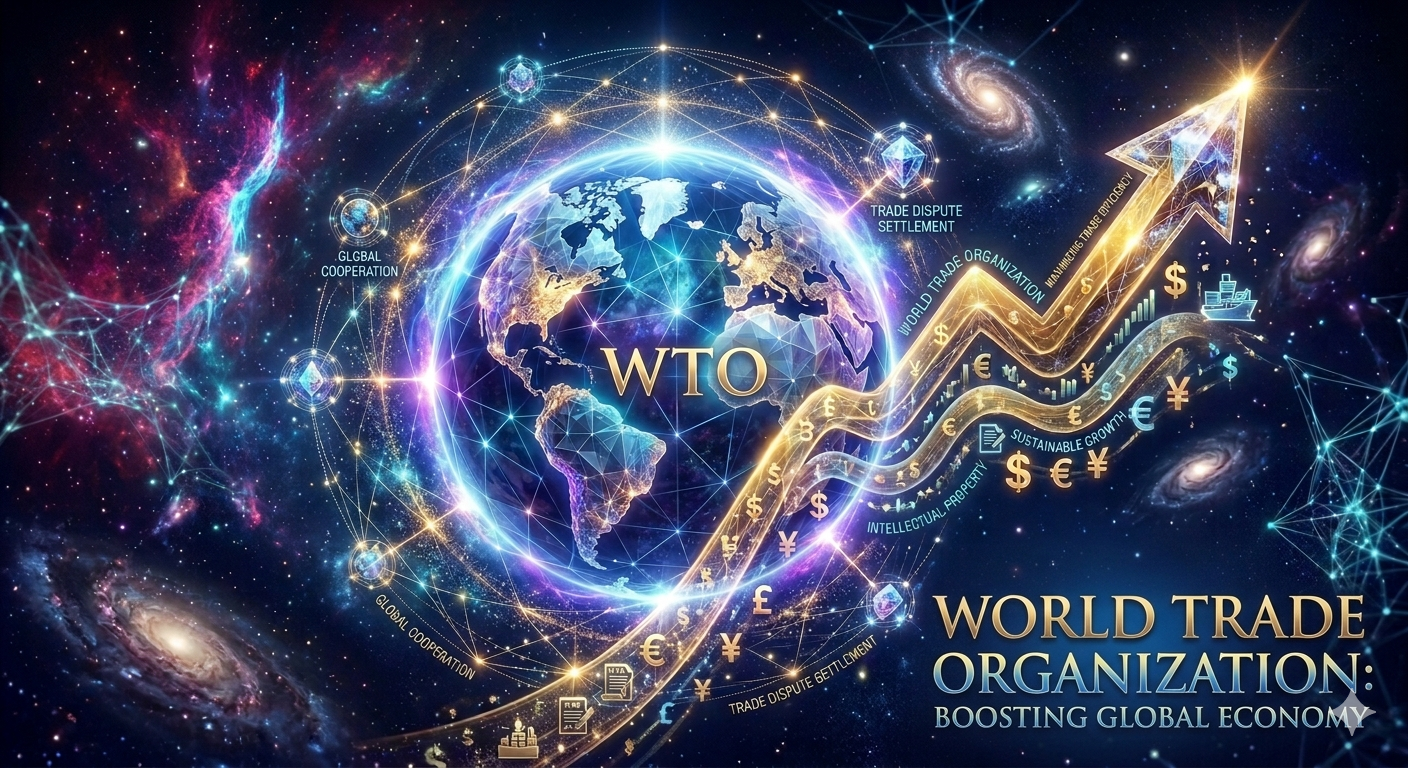
2. World Trade Organization (WTO)
- Established: 1995 (replacing GATT, 1947)
- Headquarters: Geneva, Switzerland
- Objective: To promote free and fair international trade by reducing trade barriers.
Functions: - Administers global trade agreements.
- Provides a platform for trade negotiations.
- Resolves trade disputes among members.
- Monitors national trade policies.
Significance: The WTO ensures a rule-based trading system and contributes to globalization, though it faces criticism for favoring developed countries.
3. International Monetary Fund (IMF)
- Established: 1944 (Bretton Woods Conference)
- Headquarters: Washington D.C., USA
Functions: - Provides short-term financial assistance to countries facing balance of payments crises.
- Monitors global financial stability.
- Offers technical assistance and policy advice.
Significance: IMF’s stabilization programs help countries overcome economic crises, though its conditionalities are often criticized as harsh and neoliberal.
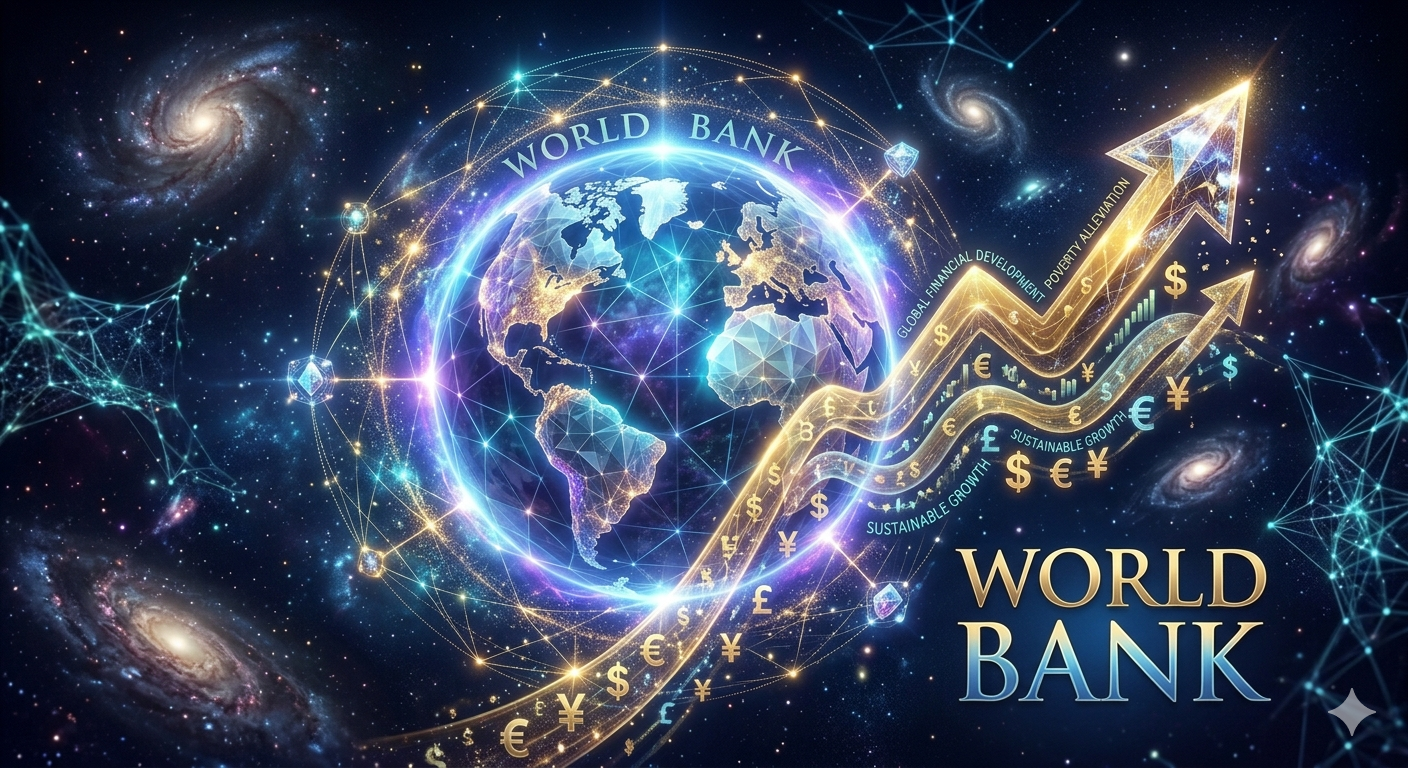
4. World Bank
- Established: 1944 (alongside IMF)
- Headquarters: Washington D.C., USA
Functions: - Provides long-term loans and grants for development projects.
- Supports infrastructure, education, and poverty reduction programs.
Institutions under the World Bank Group:
- IBRD (International Bank for Reconstruction and Development)
- IDA (International Development Association)
- IFC (International Finance Corporation)
- MIGA (Multilateral Investment Guarantee Agency)
Significance: Plays a central role in financing global development and promoting sustainable economic growth.
5. World Health Organization (WHO)
- Established: 1948
- Headquarters: Geneva, Switzerland
Functions: - Directs international health responses and disease control programs.
- Sets health standards and guidelines.
- Coordinates global responses to pandemics (e.g., COVID-19).
Significance: WHO’s efforts in eradicating smallpox and managing public health crises highlight its global importance.
6. United Nations Educational, Scientific and Cultural Organization (UNESCO)
- Established: 1945
- Headquarters: Paris, France
Objectives: - Promote education, culture, and scientific cooperation.
- Protect cultural heritage through the World Heritage Programme.
Significance: UNESCO fosters intercultural dialogue and sustainable education systems.
7. World Meteorological Organization (WMO)
- Established: 1950
- Headquarters: Geneva, Switzerland
Functions: - Facilitates cooperation in weather forecasting, climate monitoring, and disaster mitigation.
- Provides scientific data on climate change.
Significance: Plays a key role in understanding and combating global climate challenges.
8. International Labour Organization (ILO)
- Established: 1919
- Headquarters: Geneva, Switzerland
Objectives: - Promote labor rights, decent work conditions, and social justice.
- Develop international labor standards.
Significance: ILO’s conventions influence national labor laws and human rights standards globally.
9. Regional Organizations
(a) European Union (EU)
- Established: 1993 (Maastricht Treaty)
- Members: 27
- Headquarters: Brussels, Belgium
Objectives: - Economic and political integration of Europe.
- Common currency (Euro) and free movement of people, goods, and capital.
Significance: The EU represents one of the most advanced models of regional integration.
(b) African Union (AU)
- Established: 2001 (replaced OAU)
- Objectives: Promote unity, peace, and development across Africa.
Significance: The AU promotes African self-reliance and conflict resolution.
(c) Association of Southeast Asian Nations (ASEAN)
- Established: 1967
- Members: 10 Southeast Asian countries
- Headquarters: Jakarta, Indonesia
Objectives: Economic growth, regional stability, and cultural cooperation.
(d) South Asian Association for Regional Cooperation (SAARC)
- Established: 1985
- Members: 8 South Asian nations including India, Pakistan, Nepal, Bangladesh, Sri Lanka, Bhutan, Maldives, and Afghanistan.
- Headquarters: Kathmandu, Nepal
Significance: Promotes regional cooperation in South Asia despite political challenges.
Functions of International Organizations
- Maintaining Peace and Security:
- Organizations like the UN and NATO mediate conflicts and deploy peacekeeping forces to war-torn areas.
- Organizations like the UN and NATO mediate conflicts and deploy peacekeeping forces to war-torn areas.
- Promoting Economic Cooperation:
- IMF, World Bank, and WTO help stabilize global markets and promote international trade and development.
- IMF, World Bank, and WTO help stabilize global markets and promote international trade and development.
- Humanitarian Assistance:
- WHO, UNICEF, and UNHCR provide aid to disaster-affected populations and refugees.
- WHO, UNICEF, and UNHCR provide aid to disaster-affected populations and refugees.
- Environmental Protection:
- UNEP and UNFCCC address issues of climate change and sustainable development.
- UNEP and UNFCCC address issues of climate change and sustainable development.
- Promoting Human Rights:
- The UN Human Rights Council and NGOs like Amnesty International monitor global human rights violations.
- The UN Human Rights Council and NGOs like Amnesty International monitor global human rights violations.
- Global Health Governance:
- WHO leads the coordination of international efforts against pandemics and epidemics.
Importance of International Organizations in the Modern World
- Conflict Resolution: Provide diplomatic mechanisms for resolving disputes peacefully.
- Global Governance: Establish rules and norms that govern international relations.
- Economic Development: Facilitate global financial stability and developmental aid.
- Humanitarian Support: Offer aid during natural disasters, wars, and famines.
- Cultural Exchange: Promote global understanding and cooperation through education and culture.
- Environmental Sustainability: Implement collective action against climate change.
Challenges Faced by International Organizations
- Political Influence: Dominance of powerful nations in decision-making (e.g., veto power in UN Security Council).
- Lack of Enforcement Power: Many organizations can only make recommendations, not enforce them.
- Funding Constraints: Financial dependence on major contributors limits independence.
- Bureaucratic Inefficiency: Delays and corruption sometimes reduce effectiveness.
- Sovereignty Issues: Member states often resist external interference in domestic affairs.
- Unequal Representation: Developing countries often have limited voice in global decision-making.
- Changing Global Order: Rise of nationalism and protectionism threatens multilateralism.
Reforms and the Future of International Organizations
To remain effective, international organizations must evolve with changing global realities. Possible reforms include:
- UN Security Council Reform: Expanding permanent membership to reflect current geopolitical realities.
- Democratization of IMF and World Bank: Ensuring fair representation for developing countries.
- Transparency and Accountability: Increasing public trust through open governance.
- Digital Transformation: Using technology for better coordination and data-driven decision-making.
- Focus on Sustainable Development: Aligning global institutions with the UN SDGs for 2030.
Conclusion
International organizations are the backbone of contemporary global governance. They embody the collective will of nations to work together for peace, progress, and prosperity. From managing pandemics to promoting human rights and economic stability, their influence is profound and far-reaching. However, to remain relevant in an era of globalization, technological change, and geopolitical competition, they must adapt to new challenges through inclusive reforms and equitable decision-making.
The success of international organizations depends not only on their institutional strength but also on the commitment of their member states to uphold the principles of cooperation, justice, and shared responsibility. In an increasingly interdependent world, the spirit of multilateralism represented by international organizations remains the key to a peaceful and sustainable global future.