uppcs magazine

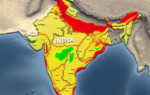
The Earthquake Belt in India: Understanding Seismic Zones, Causes, and Impact

India is one of the most seismically active regions in the world due to its geographical location. The country experiences frequent earthquakes, and some areas are particularly prone to seismic activity. Understanding the earthquake belt in India is crucial for disaster preparedness, urban planning, and developing policies to mitigate earthquake-related risks. Earthquakes not only cause…

Read More
uppcs magazine

Tropical Cyclones: Origin, Structure, and Weather Patterns

Tropical cyclones are one of the most powerful and destructive natural phenomena on Earth. These intense low-pressure systems are capable of causing widespread damage, with their impact often extending to large coastal areas and even affecting inland regions. Understanding their origin, structure, and associated weather is crucial for disaster preparedness and mitigation. This article will…

Read More
uppcs magazine

Caste Alliances in India: The Role of Secular and Political Factors Beyond Primordial Identities

Caste in India is a complex social construct that has evolved over millennia, influencing not just social hierarchies but also political, economic, and cultural dynamics. In contemporary India, caste continues to play a critical role in politics, social interactions, and community mobilization. Historically, caste identities were seen as “primordial” – innate, unchangeable, and rooted in…

Read More
uppcs magazine

Globalization and Privatization: Definitions, Objectives, and Their Interplay in Modern Economies

Globalization and privatization are two crucial concepts in modern economics and policy-making. They both have significant impacts on the economic, social, and political landscape, especially in the context of developing countries. Let’s explore their definitions, objectives, and implications in detail. Globalization: Definition and Objectives Globalization refers to the process through which businesses, technologies, information, cultures,…

Read More

Continuity and Change in Indian Society: A Dynamic Evolution

Introduction India, with its rich cultural heritage, diverse traditions, and complex social structure, has undergone a process of continuous evolution for thousands of years. Despite these changes, several aspects of Indian society have remained relatively consistent, reflecting a deep-rooted continuity. However, a variety of internal and external factors have contributed to its transformation, making the…

Read More
uppcs magazine

Ancient Indian Knowledge: The Foundation of India as ‘Vishwaguru’

Introduction India, known as “Vishwaguru” or the “Teacher of the World,” has been a center of knowledge, wisdom, and innovation for thousands of years. Ancient Indian scholars and sages contributed immensely to various fields such as mathematics, astronomy, medicine, philosophy, and spirituality. The depth of knowledge preserved in Indian scriptures, universities, and traditions made India…

Read More
uppcs magazine

Revolutionary Philosophy of Bhagat Singh: A Vision Beyond Freedom

Introduction Bhagat Singh (1907–1931) was not only a brave freedom fighter but also an intellectual revolutionary whose philosophy extended beyond mere political independence. Unlike many of his contemporaries, he did not believe in replacing British rule with another oppressive system. Instead, he envisioned a truly egalitarian and just society, free from exploitation, discrimination, and inequality….

Read More