The sex ratio — defined as the number of females per 1,000 males — is a key demographic indicator reflecting gender equity, social norms, health outcomes, and cultural practices within a population. In India, data from the Census of India and National Family Health Surveys (NFHS) consistently show that many tribal groups (often referred to as Scheduled Tribes or STs) have a more favorable sex ratio compared to Scheduled Castes (SCs) and the general population. This observation raises important questions for demographers, sociologists, policymakers, and students of development studies: Why does India’s tribal population exhibit a relatively healthier sex ratio? What socio-cultural, economic, and historical factors contribute to this phenomenon, especially when compared with the sex ratio among Scheduled Castes? This essay critically examines these questions, situating the argument within broader social structures, gender relations, traditions, health systems, and historical contexts.
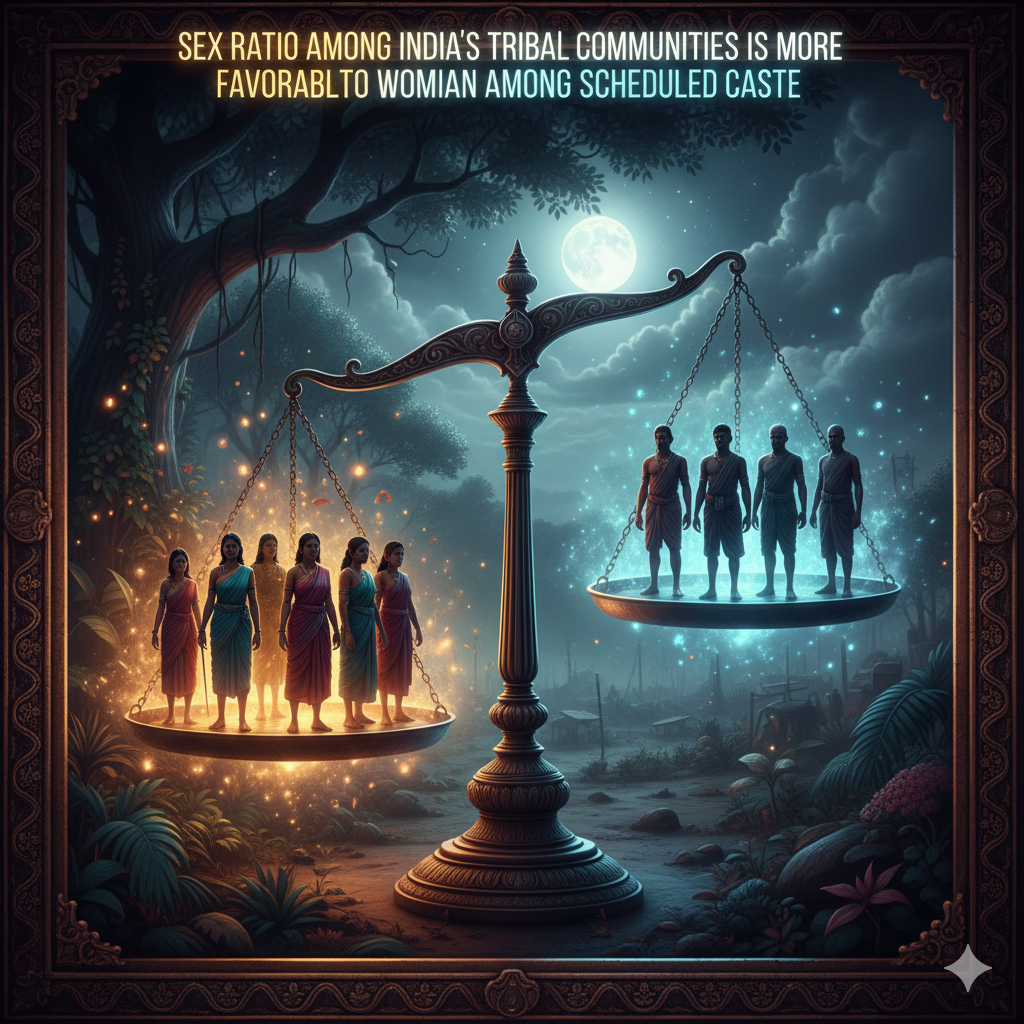
To begin, it is essential to grasp key demographic patterns. Census data from 2011 — the most recent detailed publicly available decadal census — shows that the sex ratio for Scheduled Tribes was approximately 990 females per 1,000 males, whereas the sex ratio for Scheduled Castes was around 954 females per 1,000 males. Both are distinct from India’s national average, which stood at 943 in 2011. While both SCs and STs have better ratios than the national average, Scheduled Tribes hold a clear advantage over Scheduled Castes in terms of gender balance. Understanding why this difference exists requires a multidimensional analysis rather than a simple economic or cultural explanation.
One of the most commonly cited reasons relates to cultural norms and gender perceptions within tribal communities. Many tribal societies are characterized by matrilineal or more gender-egalitarian social structures where women play significant roles in household decision-making, agriculture, ritual practices, and local governance. In certain regions, tribal communities such as the Khasi and Garo in Meghalaya follow matrilineal inheritance patterns, where lineage is traced through women and property is passed down to daughters. In such contexts, daughters are not only valued but also seen as economic and social assets rather than liabilities. Even in tribes that are not strictly matrilineal, there tends to be a relative absence of rigid patriarchal norms that devalue daughters. The relative valuing of girls in tribal cultures contributes to more balanced fertility and survival rates, and a reduction in sex-selective practices that are documented in other social groups.
In contrast, many Scheduled Caste communities — shaped by centuries of caste-based stratification — have historically experienced intense patriarchy compounded by social exclusion. Although caste hierarchies differ widely across regions, patriarchal norms that prioritize sons for lineage, economic support, and ritual functions are pervasive in many SC contexts. These norms, in combination with limited access to social services, economic hardships, and discriminatory practices, can contribute to lower female survival rates and a less favorable sex ratio. Scheduled Castes often face multiple layers of disadvantage — caste-based discrimination, economic deprivation, and entrenched gender bias — all of which can negatively impact female survival and well-being.
A second explanation relates to fertility behavior, family planning, and prenatal sex selection practices. In India, the advent of ultrasound technology and the misuse of antenatal sex determination for female foeticide have had a measurable impact on sex ratios, especially among socio-economic groups that can afford such technologies. Research has shown that communities with higher levels of education, income, and access to medical technology sometimes exhibit more skewed sex ratios due to selective abortion of female foetuses. Although tribal communities have historically had limited access to advanced medical infrastructure — an indicator of broader development challenges — this relative isolation has functioned paradoxically as a protective factor against prenatal sex selection practices. Because access to ultrasound and diagnostic technologies is less widespread in many tribal regions, there is lower incidence of sex-selective abortions, contributing to a more balanced sex ratio at birth.
In contrast, Scheduled Castes — who often inhabit more accessible plains, towns, and settlements — may have easier access to medical facilities and diagnostic technologies. Combined with social pressures favoring sons, this access can elevate the incidence of sex-selective practices, undermining the female birth rate in ways not observed as strongly among tribal populations. In regions with high caste-based social mobility, where families aspire for upward economic and social status, the desire for sons to support economic aspirations and ancestral rituals may further incentivize gender-biased practices.
Health outcomes, nutrition, and maternal care constitute a third analytical domain. Tribal populations often reside in remote or forested areas where traditional health practices coexist with modern medicine. Tribal belief systems frequently emphasize natural remedies, midwifery, and community support during childbirth. There is also evidence that, in many tribal cultures, infant care practices — such as breastfeeding, child feeding, and early childhood care — are more equitable between boys and girls relative to some caste-dominated villages where son-preference can influence resource allocation. While it is true that tribal communities often face poor access to formal healthcare services, immunization, and sanitation, this does not automatically translate into gender-biased outcomes. In many cases, the collective social support networks in tribal societies ensure relatively equitable survival opportunities for female infants, mitigating the neglect that sometimes contributes to higher female mortality in other contexts.
In Scheduled Caste communities, the picture is more complex. Although formal access to hospitals, clinics, and welfare services may be better than in remote tribal areas, structural discrimination and socio-economic marginalization can limit effective utilization. Studies have documented that SC women often experience higher rates of maternal anemia, low birthweight babies, and limited access to prenatal care. Discrimination within healthcare settings — whether overt or subtle — can undermine the quality of care SC women receive, contributing to higher female infant mortality and poorer overall health outcomes. This intersection of caste, gender, and healthcare access can contribute to a comparatively less favorable sex ratio.
Economic factors also play a crucial explanatory role. While both SC and ST populations are economically marginalized relative to general caste groups, the nature and meaning of economic activity differs. In many tribal societies, subsistence agriculture, community-controlled land, and collective resource ownership help sustain livelihoods. Women often contribute equally to agricultural labor and have rights over forest products, which translates into economic roles that are recognized and respected. This relative economic participation boosts the status of women and reduces son-preference. In contrast, Scheduled Caste communities — particularly those historically tied to landless agricultural labor or caste-based occupations deemed ‘impure’ by social hierarchy — may have less secure livelihoods and lesser economic autonomy for women. Economic insecurity can amplify son preference because families may perceive sons as more likely to contribute to income and provide old-age support.
Beyond cultural and economic explanations, it is important to consider regional variation, historical legacies, and policy impacts. Tribal populations are not monolithic; there is significant diversity among different tribal groups in terms of language, religion, socio-economic status, and integration with mainstream society. Similarly, Scheduled Caste communities vary widely across regions. However, patterns persist: tribal groups in states like Jharkhand, Chhattisgarh, and Odisha often report more balanced sex ratios compared to SC populations in Uttar Pradesh, Bihar, or Haryana, where son-preference remains deeply entrenched. Historical factors such as land alienation, displacement, and integration into market economies have affected tribal groups differently, with some transitioning rapidly away from traditional norms, while others retain more cohesive cultural identities that protect gender relations.
Policy frameworks also influence demographic patterns. India’s constitutional provisions recognize Scheduled Castes and Scheduled Tribes as historically disadvantaged groups entitled to affirmative action in education, jobs, and political representation. While these provisions aim to reduce inequality, the effectiveness of implementation varies. Tribal communities often have political representation in autonomous district councils (especially in the Northeast and Central India) that empower local decision-making, sometimes including gender-inclusive policies. The Scheduled Caste populations, engaged in mainstream political processes, may not enjoy comparable levels of cultural autonomy, and their social identity can be deeply shaped by external caste hierarchies that undervalue women.
Another factor to consider is migration and labour mobility. Scheduled Caste communities tend to participate more in seasonal migration for work, urban informal labour, and wage-based employment. This can create family separation, changes in family structure, and shifts in child-rearing practices that indirectly impact gender dynamics. In contrast, many tribal groups remain rooted in their ancestral homelands, preserving traditional norms that facilitate familial support structures and equitable gender roles. Migration also intersects with education: while migrant families may seek better schooling for sons in urban centres, daughters may be left behind or admitted to less favorable schooling arrangements, further contributing to unequal outcomes.
Education is a central determinant of sex ratios globally. High female literacy and educational attainment correlate strongly with later marriage, lower fertility, and more equitable gender attitudes. In many tribal areas, educational outreach programmes have focused not only on enrollment but also on retention of girls in schools. In comparison, Scheduled Caste communities, despite improvements, still face barriers such as poor school infrastructure, teacher bias, and early marriage pressure that affect girls’ educational trajectories. Education empowers women to make informed reproductive choices, resist discriminatory norms, and participate fully in economic life — all of which contribute to improved demographic outcomes, including healthier sex ratios.
It is also useful to situate this discussion within broader sociological frameworks. Some scholars argue that structural inequalities — whether caste-based or class-based — shape gender norms differently. In caste-stratified societies, gender inequality is often reinforced through multiple layers of discrimination — patriarchy, social exclusion, economic marginality, and ritual pollution. These forces can coalesce to privilege male children and suppress female agency. Tribal societies, while not immune to gender bias, often have complementary gender roles, where women’s economic contributions and social influence check extreme patriarchal practices. This is not to romanticize tribal cultures — they have their own challenges, including domestic violence, unequal inheritance in patriarchal tribes, and limited formal rights — but relative to caste-dominated settings, the gender dynamics tend to be more balanced in ways that favour female survival.
Finally, it is critical to emphasise that sex ratios are influenced by an interplay of factors, not a single cause. Cultural norms, economic structures, access to technology, healthcare utilisation, education, migration, policy frameworks, and historical legacies all shape demographic outcomes. The more favorable sex ratios among many tribal populations compared to Scheduled Caste groups reflect this complexity. They highlight how deeply embedded social institutions, cultural frameworks, and economic realities influence even basic demographic indicators.
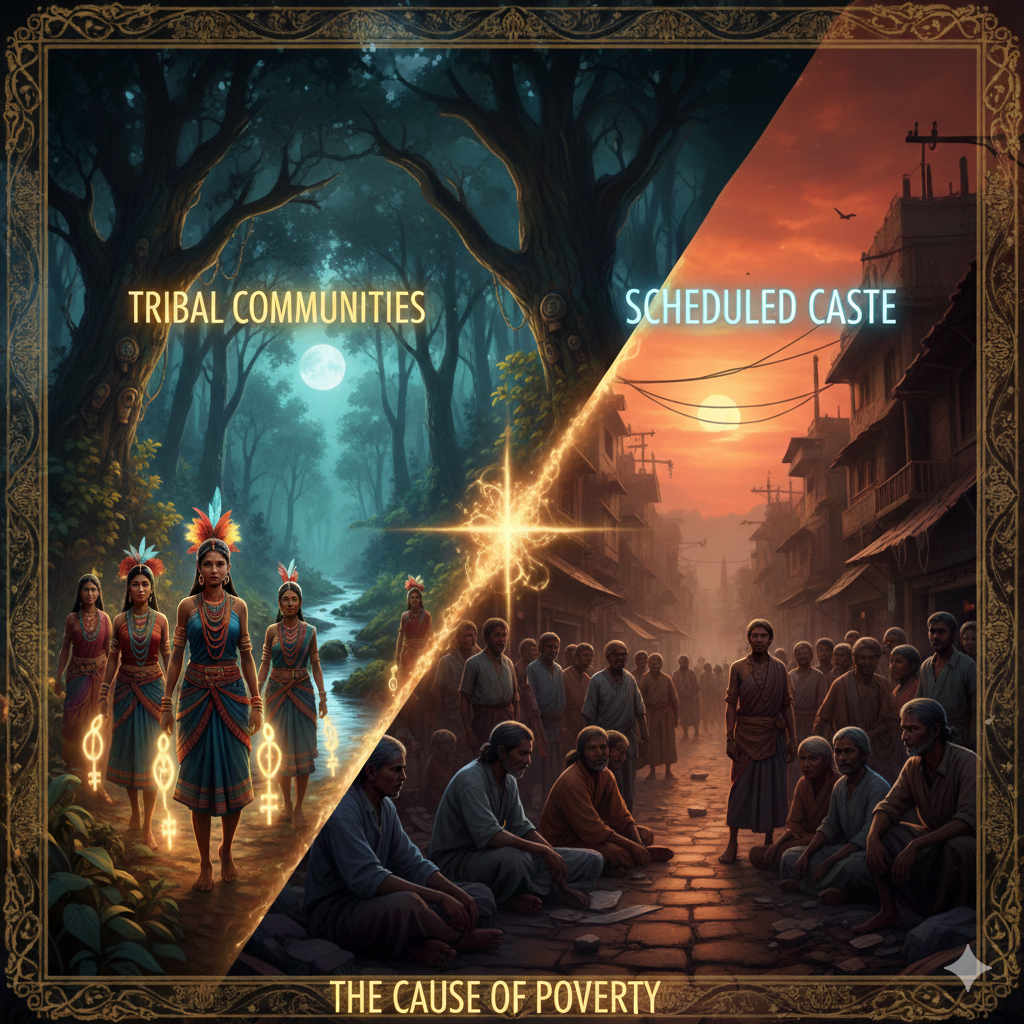
In conclusion, the more favorable sex ratio observed among many tribal communities in India compared to Scheduled Caste populations can be explained through a combination of factors: relatively more gender-egalitarian cultural norms, lower prevalence of prenatal sex selection, economic roles that confer value to women, communal support systems that treat female and male children more equally, regional and historical variations, and differential access to modern technologies that can be misused for sex-biased practices. Scheduled Caste communities, shaped by centuries of caste hierarchy and compounded disadvantage, often experience stronger son-preference norms, better access to sex-selection technologies, structural barriers in health and education, and socio-economic pressures that undervalue female life. Understanding these dynamics is essential for policymakers, scholars, and students of social development, as it underscores that gender equity in demographic outcomes is not merely a function of poverty or development alone, but of how societies construct and value gender roles within their cultural and historical contexts.