Introduction
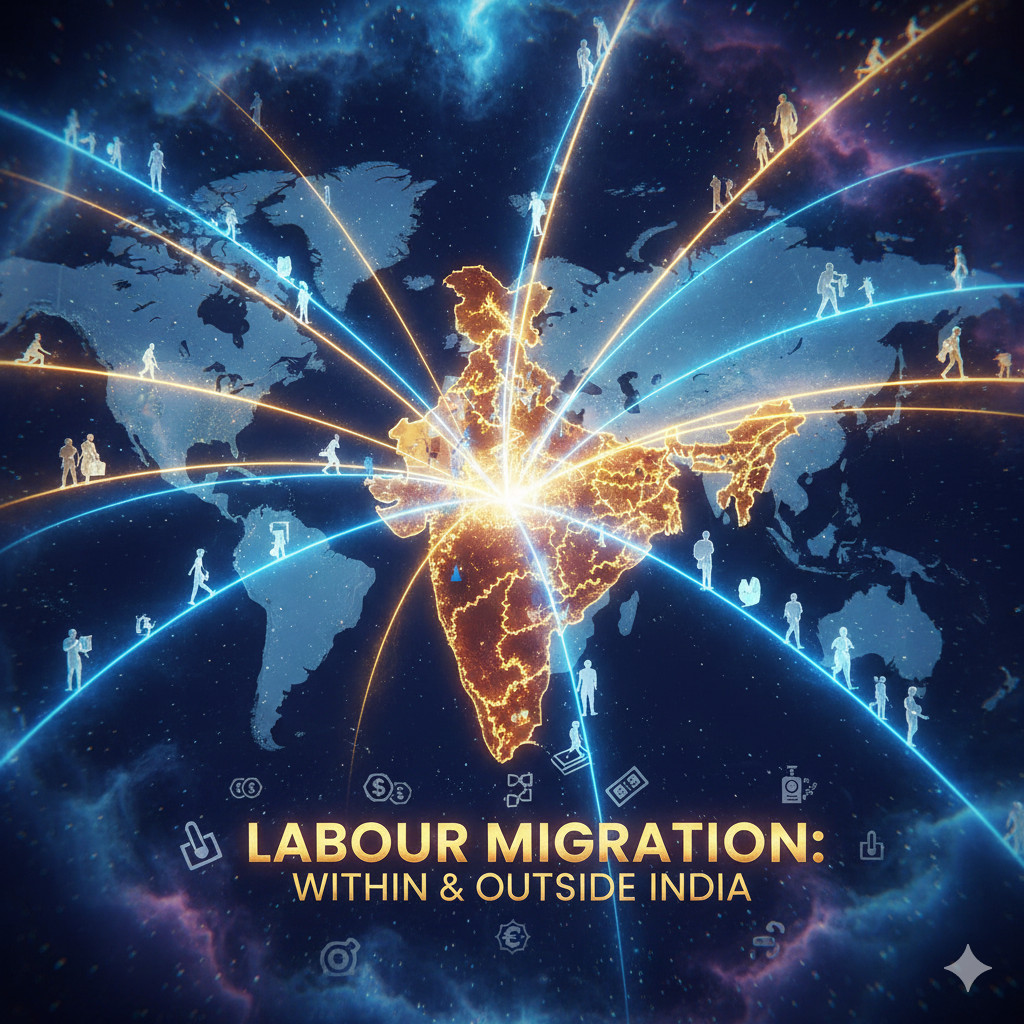
Labour migration has been one of the most important forces shaping India’s socio-economic transformation over the last four decades. From the mid-1980s onwards, changes in economic policies, globalization, technological advancement, and regional inequalities have significantly altered both internal and international migration patterns. Earlier migration was mainly seasonal and rural in nature, but over time it has become more diversified, long-term, and globalized. These shifts reflect broader changes in India’s development trajectory and labour market structures.
Early Phase: Pre-Liberalization Migration Patterns (1980s–Early 1990s)
During the 1980s, labour migration in India was largely characterized by rural-to-rural and short-distance movements. Agricultural labourers and marginal farmers migrated seasonally to nearby districts in search of work during lean agricultural periods. Industrial employment was limited and concentrated in a few urban centres. International migration was primarily directed toward Gulf countries, particularly from Kerala and parts of southern India, where workers were employed in construction, oil services, and domestic work. Migration during this period was mostly temporary and circular in nature.
Impact of Economic Liberalization on Migration (Post-1991)
The economic reforms introduced in 1991 marked a turning point in labour migration trends. Liberalization led to rapid urban expansion, growth of private industries, and rising demand for labour in construction, manufacturing, and services. As a result, rural-to-urban migration increased significantly. Large metropolitan regions such as Delhi NCR, Mumbai, Bengaluru, Chennai, and Hyderabad emerged as major migrant destinations. Migration became more long-term, with many workers settling permanently in urban peripheries. Informal employment expanded rapidly, absorbing millions of migrant workers into low-paid and insecure jobs.
Rise of Urban-Centric and Inter-State Migration
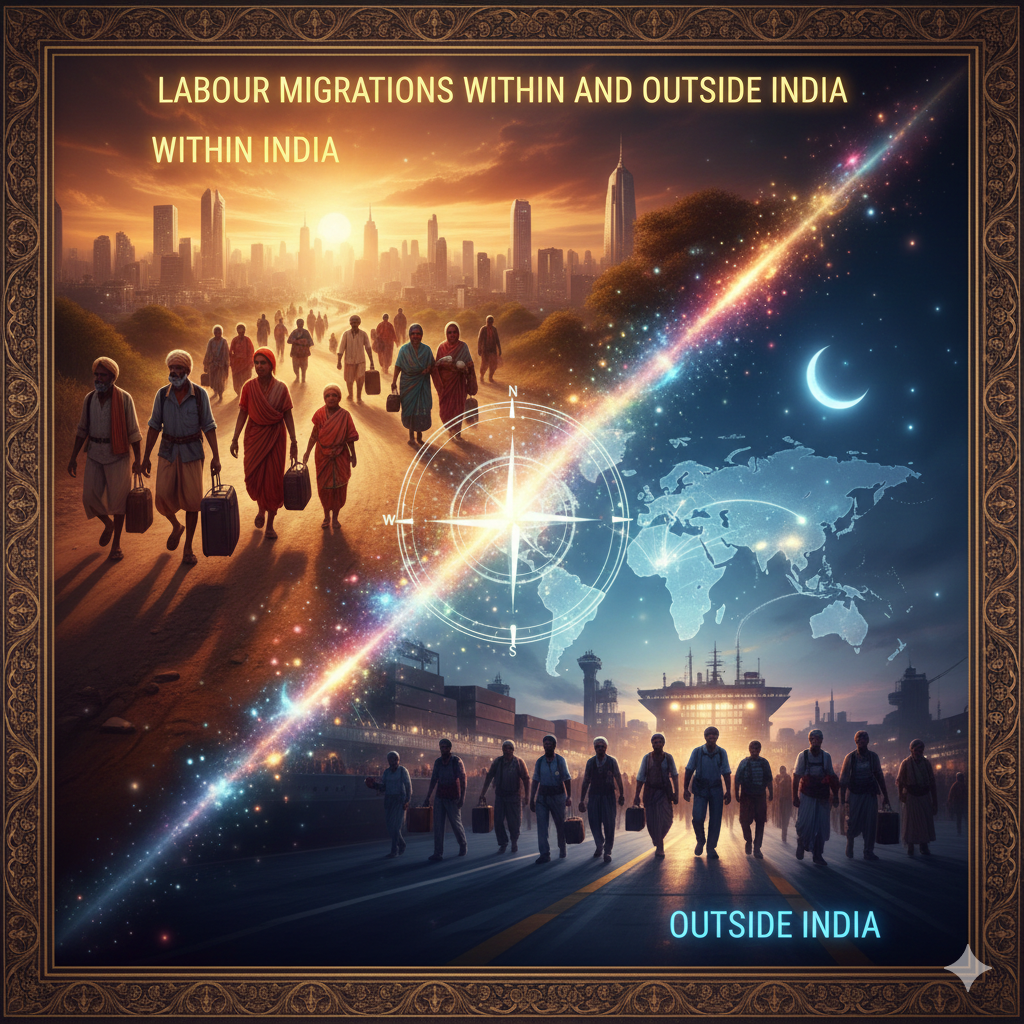
Over the last two decades, migration has increasingly taken an inter-state character. Workers from economically weaker states such as Bihar, Uttar Pradesh, Jharkhand, Odisha, and West Bengal migrated to relatively prosperous states like Maharashtra, Gujarat, Karnataka, Tamil Nadu, and Punjab. Urban-to-urban migration also increased as workers moved between cities seeking better wages. This period saw the emergence of megacities as labour magnets, accompanied by the growth of slums and informal settlements.
Changing Sectoral Composition of Migrant Labour
Earlier migrants were mainly engaged in agriculture and traditional industries. In recent decades, migrants have increasingly been absorbed into construction, transport, retail, hospitality, logistics, and gig economy platforms. The expansion of e-commerce and app-based services has created new employment opportunities for migrants, although these jobs often lack social security. The informal sector continues to dominate migrant employment, making workers vulnerable to exploitation and economic shocks.
Growth of Skilled Migration and IT-Driven Mobility
The early 2000s witnessed a surge in skilled migration, driven by the expansion of India’s IT and knowledge sectors. Educated professionals began migrating in large numbers to countries such as the United States, Canada, Australia, and the United Kingdom. This marked a shift from temporary labour migration to permanent or semi-permanent settlement abroad. India emerged as a major source of global skilled labour, creating extensive diaspora networks that contributed through remittances, investments, and knowledge transfer.
Transformation of International Labour Migration
India’s international migration has evolved from predominantly Gulf-oriented flows to diversified destinations. While Gulf countries remain important for semi-skilled workers, Western countries increasingly attract Indian professionals. Southeast Asia and Africa have also become emerging destinations. International remittances have grown steadily, strengthening household incomes and national foreign exchange reserves. However, changing immigration policies in destination countries have made migration more competitive and regulated.
Increasing Participation of Women in Labour Migration
Traditionally, migration was male-dominated, with women moving mainly for marriage or family reasons. Over the last four decades, female labour migration has increased significantly. Women now migrate independently for work in domestic services, healthcare, garment manufacturing, and hospitality sectors. Despite this progress, women migrants face greater insecurity, wage discrimination, and limited access to legal protection.
Role of Technology and Communication
Advances in communication technologies have transformed migration dynamics. Mobile phones, social media, and online job portals allow migrants to access information, maintain family connections, and find employment more easily. Digital platforms have reduced dependence on intermediaries and facilitated faster mobility. Remote work has also emerged as a new form of labour engagement, although it benefits mainly skilled workers.
Reverse Migration and the COVID-19 Shock
The COVID-19 pandemic exposed the vulnerability of migrant workers. Nationwide lockdowns in 2020 triggered mass reverse migration as millions returned to their villages due to job losses and lack of urban support systems. Although many migrants later returned to cities, the episode highlighted the absence of portable social security and the fragile nature of migrant livelihoods. Post-pandemic migration patterns show increased reliance on mixed livelihood strategies combining rural and urban employment.
Environmental and Climate-Induced Migration
In recent years, climate variability has emerged as an additional driver of migration. Droughts, floods, and declining agricultural productivity have forced rural households to seek alternative livelihoods through migration. Such environmentally induced migration is often seasonal but increasingly becoming permanent in vulnerable regions.
Policy Responses and Emerging Challenges
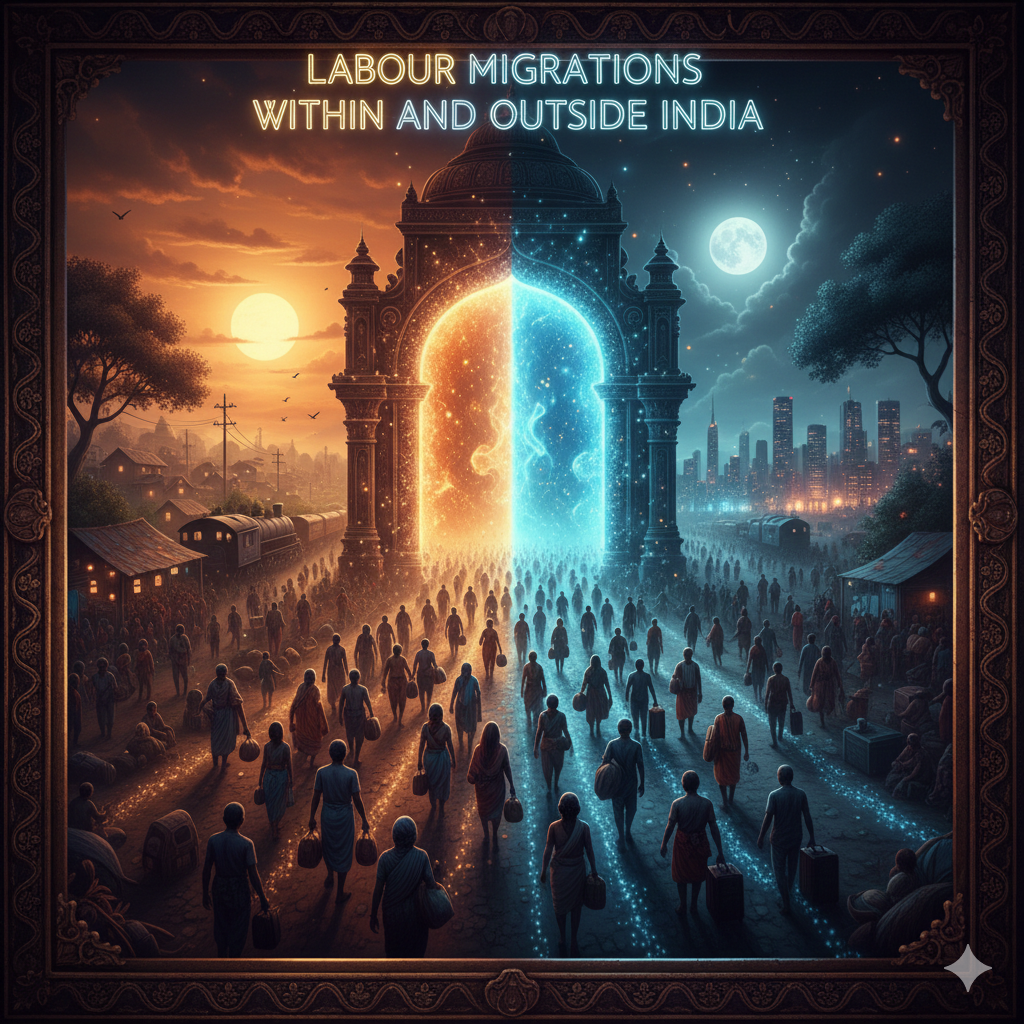
Despite the growing importance of labour migration, India lacks a comprehensive national migration policy. Migrant workers often face exclusion from public services, housing, healthcare, and education in destination areas. International migrants encounter challenges related to contract violations and unsafe working conditions. Recent policy discussions emphasize the need for portable welfare benefits, skill certification, and stronger bilateral agreements to protect migrant rights.
Conclusion
Over the last four decades, labour migration within and outside India has transformed from predominantly seasonal and rural movement to a complex system involving inter-state, urban, international, skilled, and gender-diverse flows. Economic liberalization, globalization, technological change, and regional inequalities have reshaped migration trajectories. While migration has contributed significantly to economic growth and poverty reduction through remittances and employment generation, it has also exposed deep structural vulnerabilities. Future development strategies must recognize migrants as key contributors to the economy and ensure inclusive policies that provide social protection, dignified work, and equal access to services. Only then can labour migration become a sustainable pathway for human development rather than a symptom of inequality.