Introduction
The office of the Prime Minister holds a central and decisive position in the political system of India. In the Indian parliamentary democracy, the Prime Minister is the head of government and the real executive authority, responsible for guiding the administration, formulating national policies, and coordinating the functioning of the entire governmental machinery.
Although the Constitution provides that the executive power of the Union is vested in the President of India, in practice these powers are exercised by the Council of Ministers led by the Prime Minister of India. This arrangement reflects the essence of the parliamentary system adopted by India.
The Prime Minister plays a crucial role in policy formulation, administration, governance, and coordination among various government departments. Due to these responsibilities, the Prime Minister is widely regarded as the most powerful political authority in the Indian parliamentary system.
Constitutional Position of the Prime Minister
Status under the Constitution
The position of the Prime Minister is defined under the Constitution of India, particularly in Articles 74 and 75. According to these provisions, there shall be a Council of Ministers headed by the Prime Minister to aid and advise the President in exercising executive powers.
Although the President is the formal head of the state, the real authority in governance lies with the Prime Minister and the Council of Ministers.
Key Features of the Prime Minister’s Position
The constitutional role of the Prime Minister includes several important features:
- The Prime Minister is the leader of the majority party or coalition in the Lok Sabha.
- The Prime Minister acts as the chief adviser to the President.
- The Prime Minister leads the Council of Ministers.
- The Prime Minister is responsible for the overall functioning of the government.
These features make the Prime Minister the central figure in the Indian political structure.
Appointment and Tenure of the Prime Minister
Appointment Process
The Prime Minister is appointed by the President of India. However, the President usually appoints the leader of the majority party or coalition in the Lok Sabha as Prime Minister.
In situations where no single party has a clear majority, the President may exercise discretion in appointing a leader who can command majority support in Parliament.
Tenure
The Prime Minister remains in office as long as they enjoy the confidence of the Lok Sabha. If the Prime Minister loses majority support, they must resign or seek a vote of confidence.
Thus, the tenure of the Prime Minister depends on the support of the elected representatives in Parliament.
Role of the Prime Minister in Policy-Making
Leadership in Policy Formulation
One of the most important responsibilities of the Prime Minister is formulating national policies. These policies guide the direction of economic development, foreign relations, social welfare, and national security.
The Prime Minister leads the government in setting priorities and determining the policies that address national challenges.
Major Policy-Making Functions
The Prime Minister contributes to policy-making in several ways:
- Providing leadership in the preparation of government policies
- Coordinating with ministers to develop comprehensive policy frameworks
- Representing the government’s policy agenda in Parliament
- Ensuring that policies align with national interests
Through these responsibilities, the Prime Minister shapes the strategic direction of governance in India.
Administrative Role of the Prime Minister
Head of the Executive Administration
The Prime Minister serves as the chief executive authority in the administration of the country. While different ministries handle specific responsibilities, the Prime Minister supervises the overall functioning of the administrative system.
Key Administrative Responsibilities
The administrative functions of the Prime Minister include:
- Supervising the work of various government ministries
- Ensuring effective implementation of government policies
- Resolving conflicts between ministries or departments
- Providing leadership in crisis management and decision-making
These responsibilities make the Prime Minister the central coordinator of the national administration.
Leadership of the Council of Ministers
Head of the Council of Ministers
The Prime Minister is the leader of the Council of Ministers, which collectively exercises executive authority in the government.
The Prime Minister plays a decisive role in forming the Council of Ministers and allocating responsibilities among them.
Powers over the Council of Ministers
The Prime Minister exercises several important powers related to the Council of Ministers:
- Selecting ministers and recommending their appointment
- Allocating portfolios among ministers
- Reshuffling or removing ministers when necessary
- Presiding over cabinet meetings
Through these powers, the Prime Minister ensures that the government functions efficiently and cohesively.
Role in Parliamentary Affairs
Leader of the Legislature
The Prime Minister also plays an important role in legislative activities. As the leader of the majority party in Parliament, the Prime Minister guides the legislative agenda.
Parliamentary Functions
Key parliamentary responsibilities include:
- Presenting government policies and programs in Parliament
- Leading debates on important national issues
- Ensuring the passage of important bills
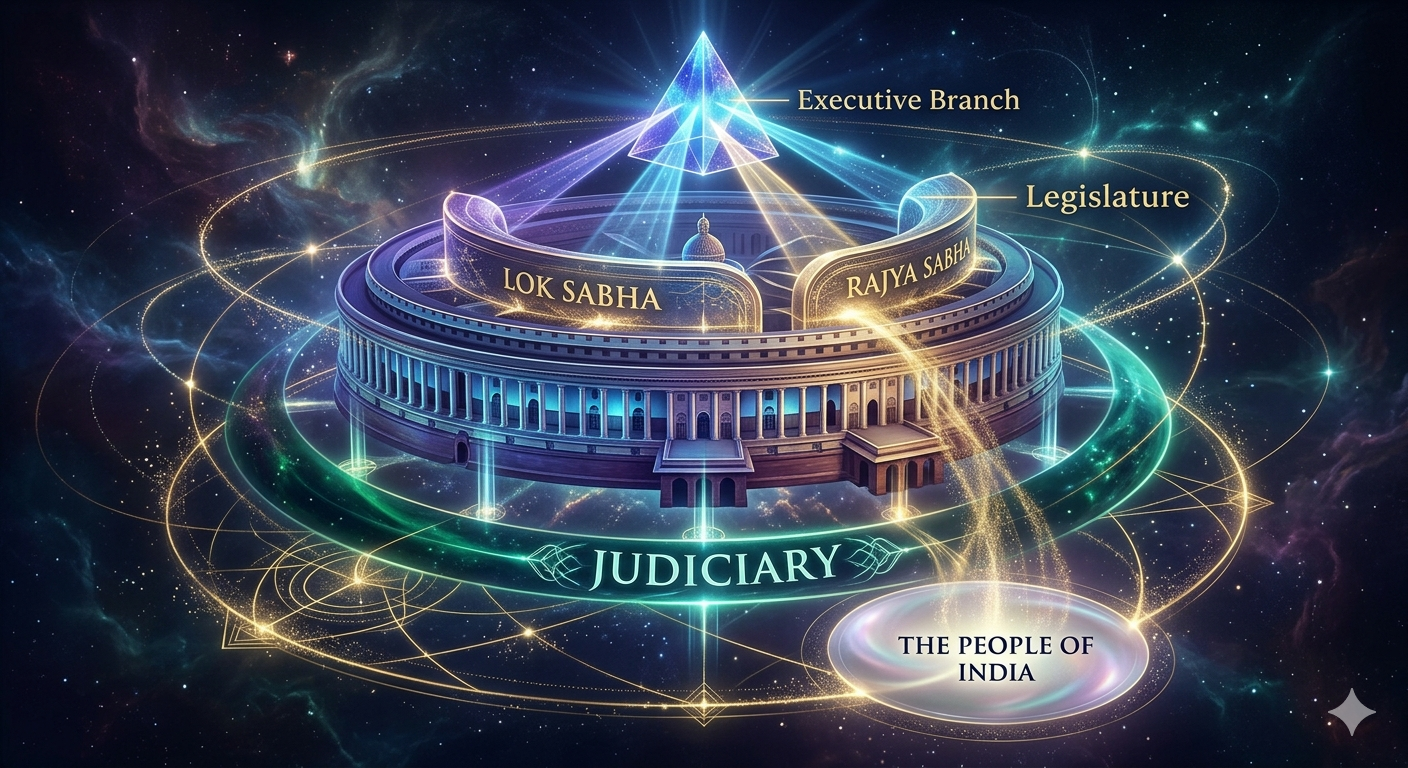
- Maintaining coordination between the executive and legislative branches
Through these roles, the Prime Minister helps maintain effective governance and democratic accountability.
Coordination of Government Departments
Need for Coordination
Modern governance involves numerous ministries and departments responsible for different sectors such as education, defense, finance, agriculture, and infrastructure. Effective governance requires proper coordination among these departments.
Role of the Prime Minister in Coordination
The Prime Minister ensures coordination in several ways:
- Facilitating communication among ministries
- Ensuring that policies of different departments are consistent
- Preventing duplication of efforts among government agencies
- Providing strategic direction to administrative institutions
This coordinating role helps maintain efficiency and unity in government functioning.
Role in Foreign Policy and International Relations
Representation of India Globally
The Prime Minister plays a crucial role in representing India on the international stage. The Prime Minister participates in global forums, diplomatic meetings, and international negotiations.
Major Foreign Policy Responsibilities
These responsibilities include:
- Formulating foreign policy strategies
- Conducting diplomatic negotiations
- Strengthening international cooperation
- Promoting national interests in global affairs
Through these activities, the Prime Minister contributes significantly to India’s global standing.
Crisis Management and National Leadership
Leadership During Emergencies
In times of national crises such as wars, economic difficulties, or natural disasters, the Prime Minister provides leadership and direction to the government.
The Prime Minister coordinates with security agencies, administrative institutions, and political leaders to ensure effective responses.
Importance in National Decision-Making
In critical situations, the Prime Minister often plays a decisive role in making timely decisions that affect national security and stability.
Why the Prime Minister is Considered the Most Powerful Figure
Central Position in the Political System
The Prime Minister occupies a unique position at the center of the Indian political system.
Several factors contribute to the Prime Minister’s influence:
- Leadership of the majority party in Parliament
- Control over the Council of Ministers
- Authority in policy-making and administration
- Influence over legislative processes
These factors collectively give the Prime Minister significant authority in governance.
Control over Government Machinery
The Prime Minister exercises substantial influence over various institutions and administrative structures.
This influence includes:
- Guiding national policies
- Supervising government departments
- Coordinating between different branches of government
As a result, the Prime Minister functions as the principal decision-maker in the government.
Limitations on the Power of the Prime Minister
Democratic Checks and Balances
Although the Prime Minister holds considerable authority, the power of the office is not unlimited.
Several democratic mechanisms act as checks on the Prime Minister’s authority.
Key Limitations
Some important limitations include:
- Accountability to Parliament
- Judicial review by the Supreme Court of India
- Collective responsibility of the Council of Ministers
- Public opinion and electoral accountability
These checks ensure that the Prime Minister exercises power responsibly within the democratic framework.
Importance of the Prime Minister in Indian Democracy
Leadership and Governance
The Prime Minister plays a vital role in ensuring effective governance, national development, and political stability.
Key contributions include:
- Providing leadership in policy-making
- Ensuring coordination among government institutions
- Representing the country internationally
- Maintaining democratic accountability
Symbol of Democratic Authority
The Prime Minister represents the authority of the elected government and reflects the will of the people expressed through democratic elections.
Thus, the office of the Prime Minister is essential for the functioning of India’s parliamentary democracy.
Conclusion
The position of the Prime Minister of India is the most powerful and influential office in the political system of India. As the leader of the government and head of the executive branch, the Prime Minister plays a decisive role in policy-making, administration, and coordination of government departments.
Through leadership of the Council of Ministers, participation in parliamentary processes, and supervision of the administrative system, the Prime Minister ensures the effective functioning of the government.
Despite being subject to democratic checks and constitutional limitations, the Prime Minister remains the central figure in Indian governance and a key pillar of the country’s parliamentary democratic system established by the Constitution of India.