Introduction
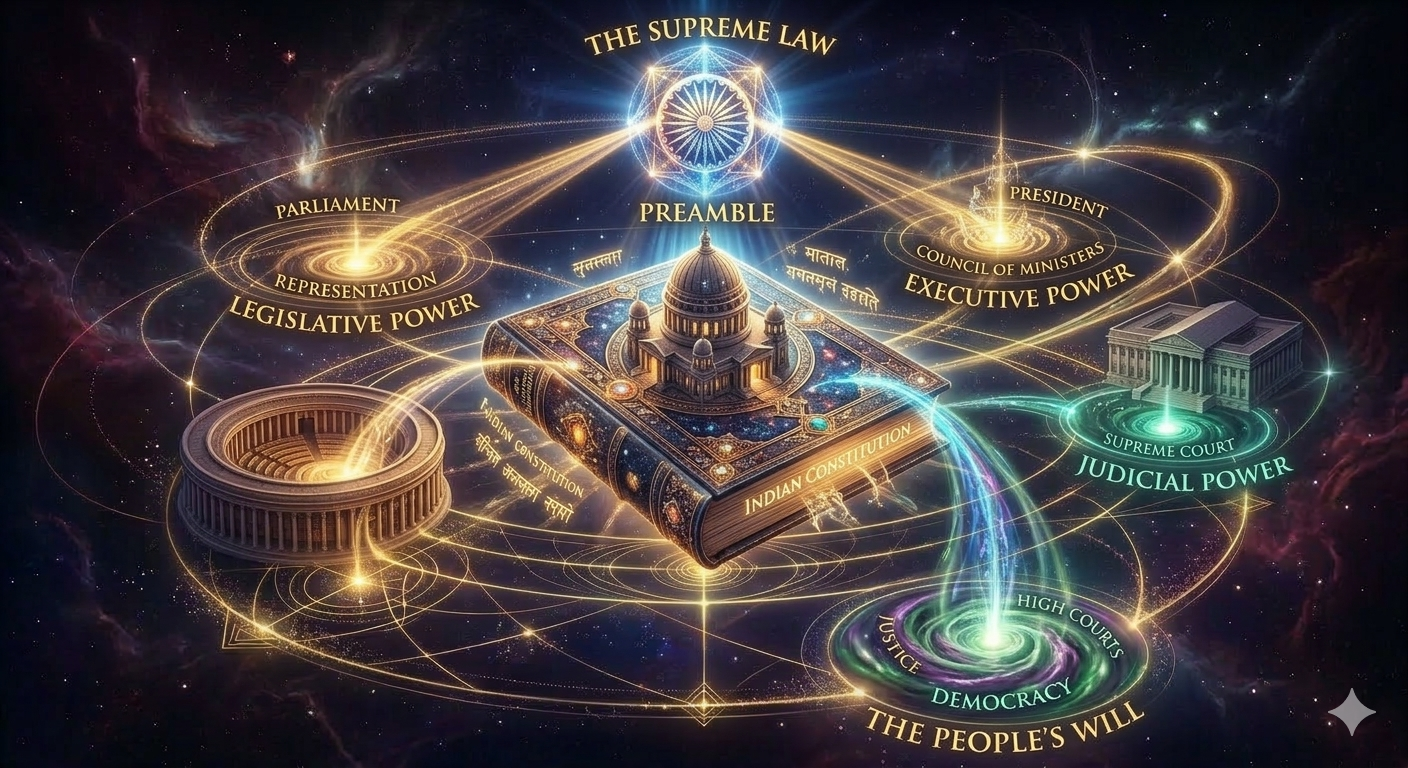
The system of governance in India is based on democratic principles and constitutional supremacy. The country follows a parliamentary form of government, where power is distributed among different institutions to ensure accountability, efficiency, and transparency in administration. The framework of governance is defined by the Constitution of India, which came into effect on 26 January 1950.
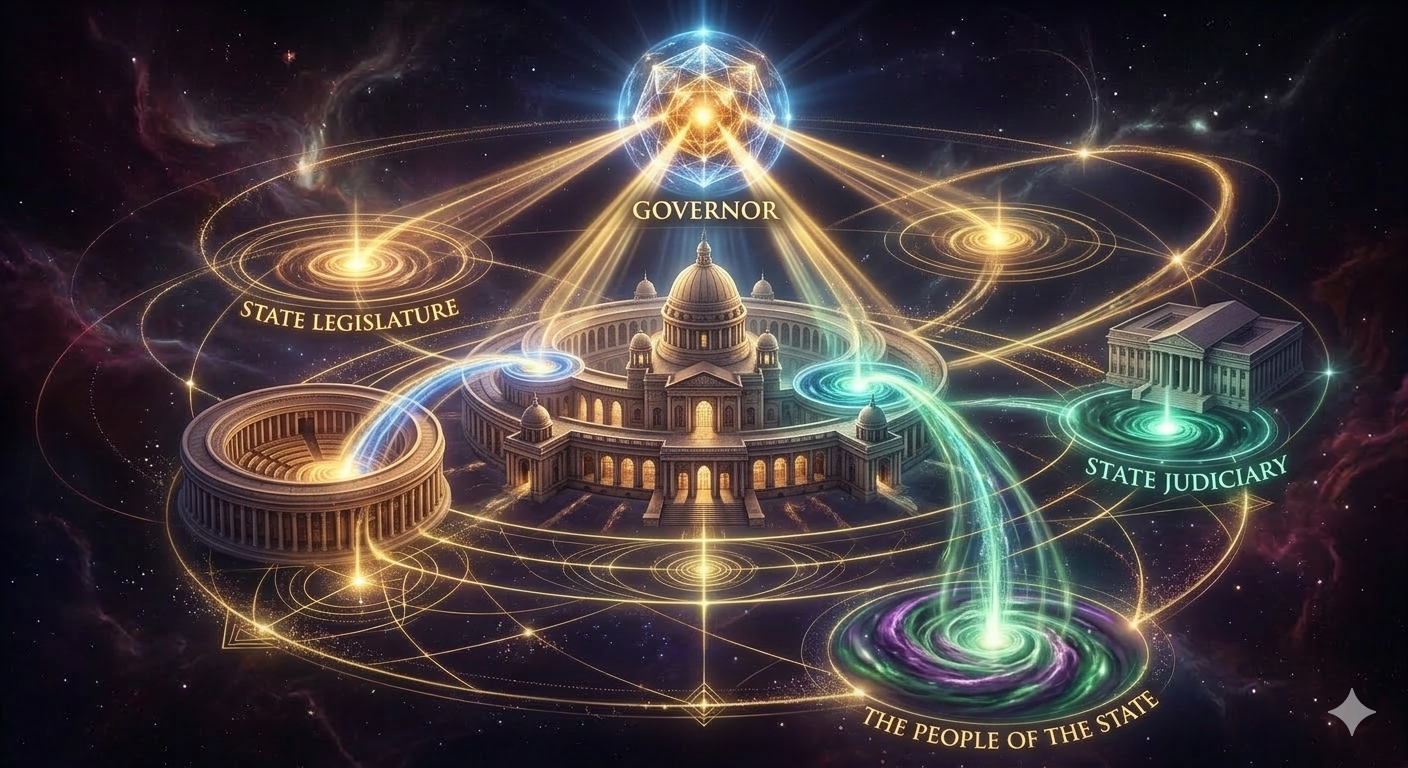
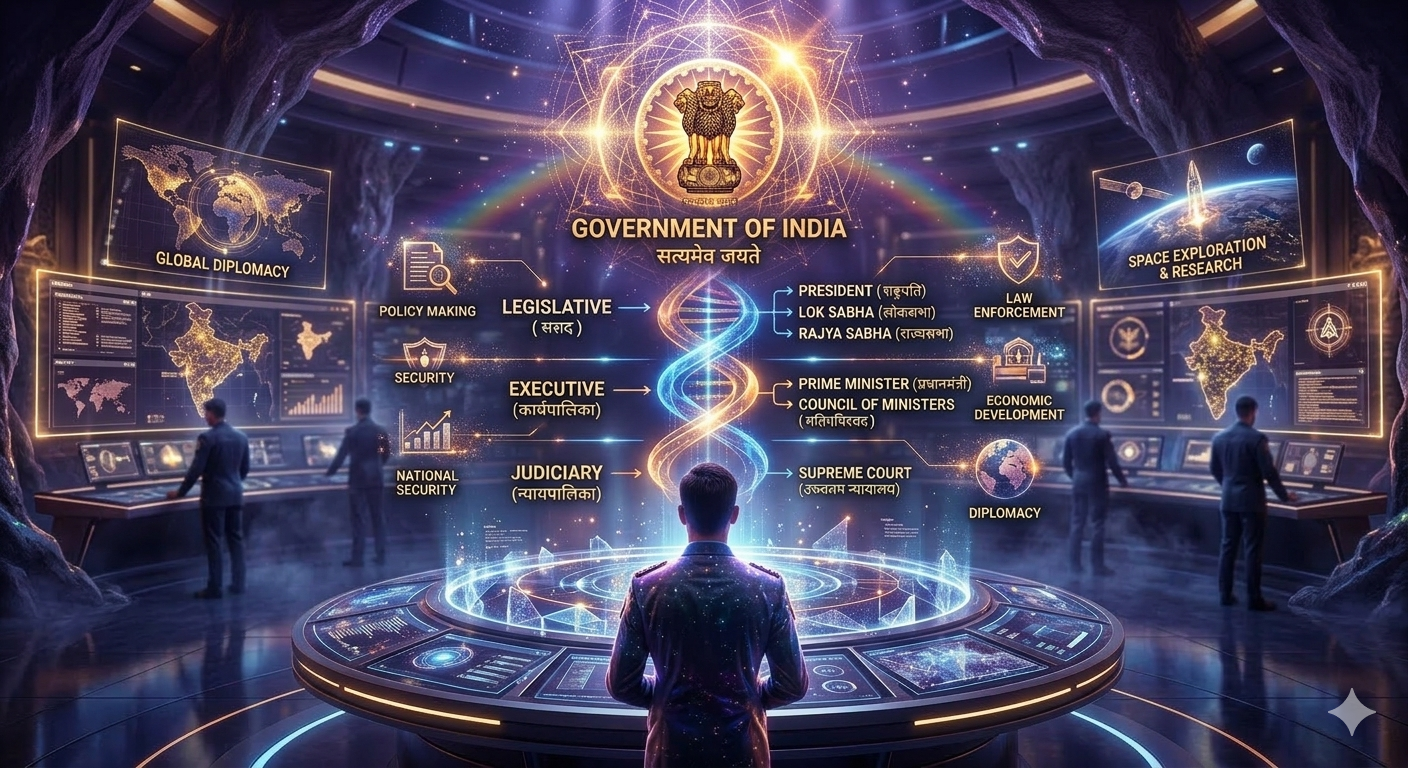
The Constitution establishes a well-organized governmental structure that divides authority among three important organs—the Legislature, the Executive, and the Judiciary. Each organ performs specific functions, but they also work together to maintain balance in the governance system. This distribution of power ensures that no single institution becomes too powerful and that democratic principles are preserved.
The system of checks and balances ensures cooperation and control among these organs, allowing the government to function efficiently while protecting the rights and freedoms of citizens.
Constitutional Framework of the Government of India
Basis of the Governmental Structure
The governmental structure of India is rooted in the constitutional framework established by the Constitution. It defines the roles, responsibilities, and limitations of each institution within the government.
The Constitution ensures that governance in India is conducted according to democratic values and legal principles.
Fundamental Principles of Governance
The governmental system is based on several key principles:
- Supremacy of the Constitution
All institutions must function within the limits defined by the Constitution. - Separation of Powers
Authority is divided among different organs to prevent concentration of power. - Federal Structure
Powers are shared between the central government and the states. - Rule of Law
All individuals and institutions are subject to the law.
These principles help maintain a balanced and effective democratic system.
The Three Organs of Government
The democratic governance of India is based on three major institutions that perform different functions.
Main Organs of Government
- Legislature – responsible for law-making
- Executive – responsible for implementing laws
- Judiciary – responsible for interpreting laws
These organs work together to ensure smooth functioning of governance while maintaining checks on each other.
Legislature of India
Meaning and Importance of the Legislature
The Legislature is the law-making body of the government. Its primary responsibility is to formulate laws and policies that regulate the functioning of the country.
At the national level, legislative authority is exercised by the Parliament of India.
The Legislature represents the will of the people and ensures that public interests are reflected in government policies.
Structure of the Legislature
The Parliament of India consists of three components:
- The President of India
- The Lok Sabha
- The Rajya Sabha
Together these institutions form the legislative framework of the country.
Lok Sabha
The Lok Sabha is the lower house of Parliament and is also known as the House of the People.
Key Features
- Members are directly elected by citizens.
- It represents the people of India.
- The term of the Lok Sabha is generally five years.
Functions of Lok Sabha
- Passing laws and legislation
- Controlling the executive through debates and questions
- Approving the national budget and financial bills
- Representing public opinion in governance
Because its members are directly elected, the Lok Sabha plays a central role in democratic decision-making.
Rajya Sabha
The Rajya Sabha is the upper house of Parliament and represents the interests of the states.
Key Features
- Members are elected by the state legislative assemblies.
- It is a permanent body and cannot be dissolved.
- One-third of its members retire every two years.
Functions of Rajya Sabha
- Reviewing and revising legislation passed by the Lok Sabha
- Representing the interests of states in national governance
- Participating in constitutional amendments
- Providing expert discussion on national policies
The Rajya Sabha ensures balanced representation between the Union and the states.
Legislative Functions
The Legislature performs several important functions in governance.
Major Responsibilities
- Law-Making
The Legislature creates laws that regulate society and government activities. - Financial Control
Parliament controls taxation and government expenditure. - Accountability of the Executive
Through discussions and questioning, Parliament ensures that the executive remains accountable. - Constitutional Amendments
Parliament has the authority to amend the Constitution when required.
Through these functions, the Legislature plays a vital role in democratic governance.
Executive of India
Meaning and Role of the Executive
The Executive is responsible for implementing the laws and policies made by the Legislature. It manages the day-to-day administration of the country and ensures the proper functioning of government departments.
The executive authority of the Union is formally vested in the President of India, but the real executive power is exercised by the Prime Minister of India and the Council of Ministers.
Structure of the Executive
The Executive consists of several components that work together to administer the country.
Major Components
- President
- Prime Minister
- Council of Ministers
- Civil Services and administrative officials
These components collectively ensure effective governance and policy implementation.
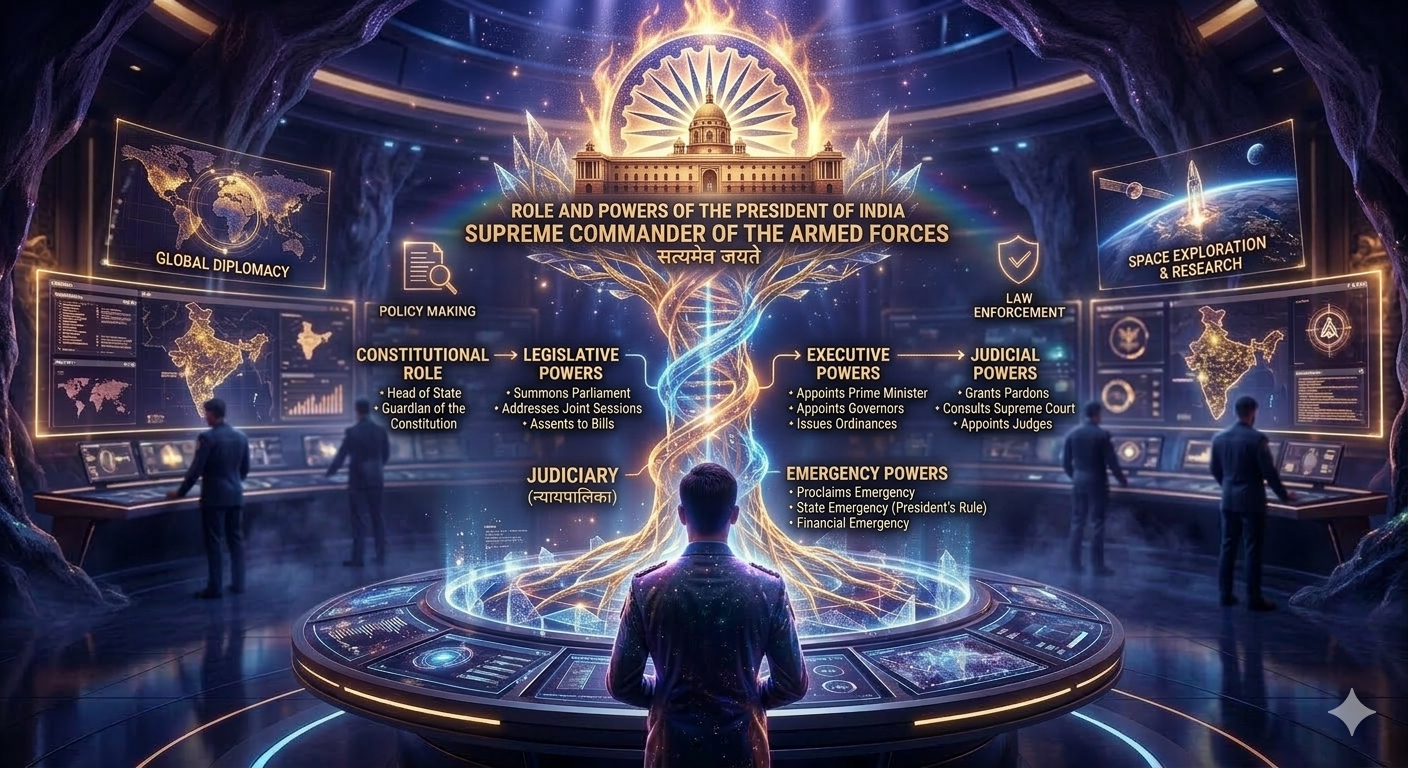
President of India
The President is the constitutional head of the Indian state.
Powers and Functions
- Executive Powers
Appoints the Prime Minister and other ministers. - Legislative Powers
Summons and prorogues Parliament sessions. - Judicial Powers
Grants pardons and reprieves. - Emergency Powers
Declares national emergencies when required.
Although the President holds formal authority, most decisions are taken based on the advice of the Council of Ministers.
Prime Minister and Council of Ministers
The Prime Minister is the real executive authority in India.
Functions of the Prime Minister
- Heads the Council of Ministers
- Coordinates the work of government departments
- Advises the President on administrative matters
- Represents the government in Parliament
The Council of Ministers assists the Prime Minister in formulating and implementing policies.
Administrative Machinery
The executive branch also includes civil servants and administrative officials who manage different ministries and departments.
These officials ensure the practical implementation of government policies and development programs.
Executive Functions
The executive performs several important tasks.
Major Responsibilities
- Implementation of laws
- Administration of government departments
- Formulation of policies and programs
- Maintenance of law and order
- Conduct of foreign relations
Through these functions, the executive ensures the effective functioning of governance.
Judiciary of India
Meaning and Importance of the Judiciary
The Judiciary is the organ responsible for interpreting laws and delivering justice. It ensures that laws are applied fairly and that constitutional provisions are upheld.
The judiciary in India is independent and impartial, which is essential for protecting democratic values.
Structure of the Judiciary
The judicial system in India is hierarchical and consists of several levels.
Major Institutions
- Supreme Court of India
- High Courts of India
- District and subordinate courts
This structure ensures that justice is accessible to citizens at different levels.
Supreme Court
The Supreme Court is the highest judicial authority in the country.
Functions of the Supreme Court
- Interpretation of the Constitution
- Protection of fundamental rights
- Settlement of disputes between states and the Union government
- Judicial review of laws
The Supreme Court acts as the guardian of the Constitution.
High Courts
Each state or group of states has a High Court.
Responsibilities
- Hearing appeals from subordinate courts
- Protecting fundamental rights of citizens
- Supervising lower courts
High Courts ensure justice at the state level.
Subordinate Courts
District and lower courts deal with civil and criminal cases at the local level.
These courts provide accessible justice to citizens in everyday legal matters.
System of Checks and Balances
Meaning of Checks and Balances
The system of checks and balances ensures that each organ of government limits the powers of the others. This prevents the concentration of power and promotes accountability.
Legislature Checking the Executive
The Legislature monitors the activities of the executive.
Examples include:
- Question Hour in Parliament
- Vote of no confidence
- Approval of government expenditure
These mechanisms ensure that the executive remains accountable to Parliament.
Executive Checking the Legislature
The executive also has certain powers that influence the legislative process.
Examples include:
- The President can return bills for reconsideration.
- Ministers participate in parliamentary debates.
- The government can recommend dissolution of the Lok Sabha.
Judiciary Checking the Legislature and Executive
The judiciary ensures that both the Legislature and the Executive act within constitutional limits.
Examples include:
- Judicial review of laws
- Protection of fundamental rights
- Declaring unconstitutional actions invalid
Through these powers, the judiciary safeguards constitutional governance.
Importance of Separation of Powers
The separation of powers among the three organs ensures efficient governance and protects democratic values.
Key Benefits
- Prevents misuse of power
- Promotes accountability in governance
- Protects citizens’ rights and freedoms
- Ensures balanced decision-making
- Strengthens democratic institutions
This system helps maintain stability and transparency in government operations.
Conclusion
The governmental structure of India is carefully designed to ensure effective and democratic governance. The three organs—Legislature, Executive, and Judiciary—perform distinct functions while working together to uphold the principles of the Constitution of India.
The Legislature creates laws, the Executive implements them, and the Judiciary interprets them. At the same time, the system of checks and balances ensures that each organ operates within constitutional limits and prevents misuse of power.
This balanced structure forms the foundation of India’s democratic system and ensures the protection of citizens’ rights, accountability of institutions, and stability of governance.