Introduction
In the modern world, economic growth and technological advancement have significantly improved human living standards. However, these developments have also created serious environmental challenges such as climate change, deforestation, biodiversity loss, water scarcity, and pollution. The excessive exploitation of natural resources has raised concerns about whether future generations will be able to meet their own needs.
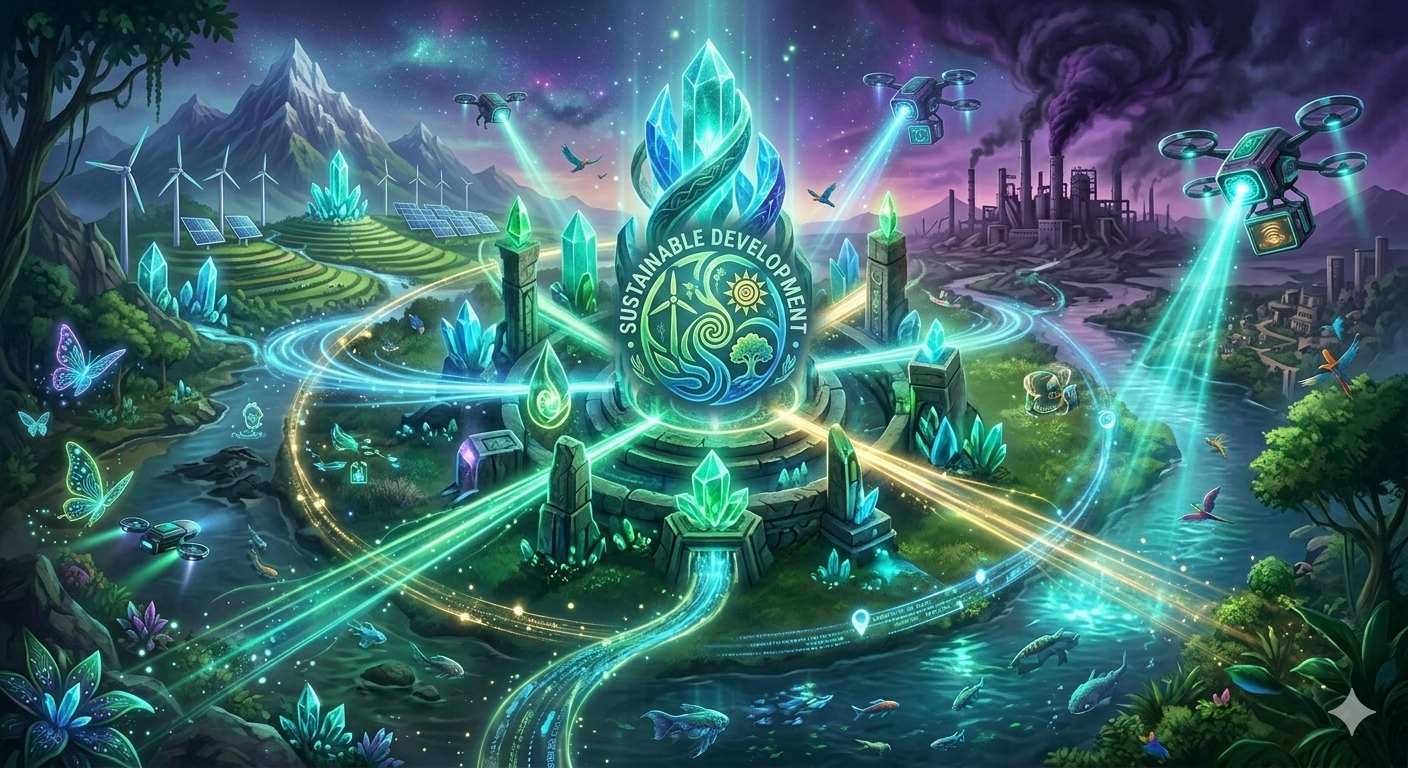
To address these concerns, the concept of sustainable development emerged as an important approach to balancing economic growth with environmental protection and social well-being. Sustainable development focuses on meeting present needs while ensuring that natural resources and ecological systems remain available for future generations.
This concept emphasizes responsible resource management, environmental conservation, and equitable development. It encourages governments, industries, and individuals to adopt practices that promote long-term environmental stability while maintaining economic progress.
Understanding sustainable development is essential for creating policies and practices that support both human development and environmental protection.
Meaning of Sustainable Development
Definition of Sustainable Development
Sustainable development refers to a pattern of development that meets the needs of the present generation without compromising the ability of future generations to meet their own needs. This definition highlights the importance of balancing economic growth, environmental protection, and social equity.
The concept gained global recognition after the Brundtland Commission Report of 1987, which emphasized the need for development that respects environmental limits while promoting human welfare.
Key Elements of Sustainable Development
Sustainable development is based on several fundamental ideas:
- Responsible use of natural resources
- Protection of ecosystems and biodiversity
- Promotion of economic growth without environmental damage
- Improvement of social welfare and quality of life
- Long-term planning for future generations
These elements together form the foundation of sustainable development.
Historical Background of Sustainable Development
Early Environmental Awareness
Before the twentieth century, environmental issues were not widely recognized as global problems. However, with increasing industrialization and urbanization, environmental degradation became more noticeable.
Issues such as pollution, deforestation, and resource depletion began to raise concerns among scientists, policymakers, and environmental activists.
Global Recognition
The concept of sustainable development gained international attention during several global conferences and environmental discussions.
One of the most important milestones was the United Nations Conference on the Human Environment held in Stockholm in 1972, which highlighted the need for environmental protection alongside economic development.
Later, the Brundtland Commission Report titled “Our Common Future” (1987) formally introduced the concept of sustainable development to the global community.
Principles of Sustainable Development
Conservation of Natural Resources
One of the key principles of sustainable development is the conservation of natural resources. Resources such as water, forests, minerals, and energy should be used carefully to prevent depletion.
Sustainable resource management ensures that these resources remain available for future generations.
Intergenerational Equity
Sustainable development emphasizes fairness between present and future generations. Current development activities should not reduce the ability of future generations to meet their needs.
This principle encourages long-term thinking in policy making and resource management.
Social Equity
Sustainable development also focuses on reducing inequalities and improving the quality of life for all individuals.
Access to education, healthcare, clean water, and employment opportunities should be ensured for all members of society.
Environmental Protection
Protecting ecosystems, wildlife, and natural habitats is a major principle of sustainable development. Environmental degradation can disrupt ecological balance and threaten human survival.
Therefore, sustainable development promotes conservation and restoration of the environment.
Pillars of Sustainable Development
Sustainable development is commonly based on three major pillars that must work together to achieve balanced progress.
Environmental Sustainability
Environmental sustainability focuses on protecting natural ecosystems and minimizing environmental damage.
Key aspects include:
- Conservation of biodiversity
- Reduction of pollution
- Responsible waste management
- Protection of forests and wildlife
- Efficient use of natural resources
Maintaining environmental sustainability ensures that ecosystems continue to support life on Earth.
Economic Sustainability
Economic sustainability refers to the ability of an economy to grow and provide opportunities without harming environmental resources.
It includes:
- Sustainable production methods
- Responsible business practices
- Efficient use of energy and resources
- Promotion of green technologies
A sustainable economy supports development while minimizing environmental impacts.
Social Sustainability
Social sustainability focuses on improving the well-being and quality of life of people.
Important components include:
- Reduction of poverty
- Access to education and healthcare
- Gender equality
- Social justice and human rights
- Community participation in development
Social sustainability ensures that development benefits all sections of society.
Importance of Sustainable Development
Protection of the Environment
Sustainable development helps protect ecosystems, forests, rivers, and wildlife from excessive exploitation.
By promoting environmentally friendly practices, it reduces pollution and environmental degradation.
Long-Term Resource Availability
Natural resources such as water, soil, minerals, and energy are limited. Sustainable development ensures that these resources are used responsibly so that they remain available in the future.
Improvement in Quality of Life
Sustainable development promotes healthier living conditions by reducing pollution, improving sanitation, and providing access to essential services.
This contributes to better physical and mental well-being for people.
Economic Stability
Sustainable economic practices support long-term economic growth while preventing environmental damage that could harm economic activities in the future.
Global Environmental Balance
Environmental problems such as climate change and biodiversity loss are global challenges. Sustainable development encourages international cooperation to address these issues.
Goals of Sustainable Development
The concept of sustainable development is closely connected to global development goals.
Sustainable Development Goals (SDGs)
The international community has adopted several goals aimed at achieving sustainable development worldwide.
These goals focus on areas such as:
- Ending poverty
- Ensuring quality education
- Promoting clean water and sanitation
- Encouraging responsible consumption and production
- Protecting life on land and in water
These goals guide countries in implementing policies that support sustainable development.
Strategies for Achieving Sustainable Development
Promotion of Renewable Energy
Renewable energy sources such as solar, wind, and hydropower provide energy without causing major environmental pollution.
Promoting renewable energy helps reduce dependence on fossil fuels and lowers greenhouse gas emissions.
Sustainable Agriculture
Agriculture plays a vital role in food production but can also cause environmental damage if not managed properly.
Sustainable agricultural practices include:
- Crop rotation
- Organic farming
- Efficient water use
- Soil conservation
These methods help maintain soil fertility and reduce environmental harm.
Waste Reduction and Recycling
Proper waste management is essential for sustainable development.
Strategies include:
- Reducing waste generation
- Recycling materials
- Reusing products
- Promoting biodegradable materials
These practices help conserve resources and reduce pollution.
Sustainable Urban Planning
Urban areas must be planned carefully to reduce environmental impacts.
Sustainable cities include features such as:
- Efficient public transportation
- Green spaces
- Energy-efficient buildings
- Proper waste management systems
These features improve urban living conditions and environmental sustainability.
Role of Governments in Sustainable Development
Policy Making
Governments play a crucial role in promoting sustainable development by creating policies and regulations that protect the environment and support sustainable economic growth.
Environmental Regulations
Laws related to pollution control, wildlife protection, and resource conservation help ensure that development activities do not harm the environment.
Investment in Green Technologies
Government investment in renewable energy, clean transportation, and environmental research helps accelerate sustainable development.
Public Awareness Programs
Governments also promote sustainable development through educational programs and awareness campaigns.
Role of Individuals in Sustainable Development
Sustainable development is not only the responsibility of governments and industries. Individuals also play an important role.
Responsible Consumption
People can reduce environmental impact by consuming resources responsibly and avoiding unnecessary waste.
Energy Conservation
Simple actions such as turning off unused lights, using energy-efficient appliances, and reducing fuel consumption contribute to sustainability.
Waste Management
Individuals can support sustainable development by separating waste, recycling materials, and reducing plastic use.
Environmental Protection Activities
Participating in tree planting, conservation efforts, and environmental awareness programs helps promote sustainability.
Challenges to Sustainable Development
Rapid Population Growth
Increasing population places greater pressure on natural resources such as water, land, and energy.
Industrial Pollution
Industrial activities can produce harmful pollutants that damage ecosystems and human health.
Climate Change
Global climate change poses a serious threat to sustainable development by affecting weather patterns, agriculture, and water resources.
Lack of Awareness
Many people are still unaware of the importance of sustainable development, which limits the adoption of sustainable practices.
Future Prospects of Sustainable Development
The future of sustainable development depends on collective efforts from governments, businesses, and individuals.
Advances in technology, environmental education, and international cooperation can help address environmental challenges and promote sustainable lifestyles.
If sustainable development principles are widely adopted, it will be possible to achieve economic progress while protecting the environment and ensuring social well-being.
Conclusion
Sustainable development is an essential approach for addressing the environmental and social challenges of the modern world. It seeks to balance economic growth, environmental protection, and social progress in a way that benefits both present and future generations.
By promoting responsible resource use, protecting ecosystems, and ensuring equitable development, sustainable development helps create a stable and prosperous future.
Achieving sustainable development requires cooperation among governments, industries, communities, and individuals. Through collective efforts and responsible decision-making, it is possible to build a sustainable world where economic development and environmental protection go hand in hand.