Home » UPPCS History Notes
Ancient India–Egypt Connections

Ancient India–Egypt Connections: New Evidence of Indian Presence in Egypt’s Royal Necropolis

Introduction History often tells us that civilizations developed independently and later came into contact through conquest or colonial expansion. However, archaeological discoveries increasingly reveal that ancient societies were deeply interconnected long before modern globalization. One such remarkable revelation is the identification of early Indian inscriptions inside Egypt’s royal burial complex known as the Valley of…

Read More
Land Reform Movements

Vinoba Bhave’s Land Reform Movements

Introduction India’s freedom struggle did not end with political independence in 1947. For Mahatma Gandhi and his followers, true freedom also required social justice, economic equality, and moral transformation. One of the most significant post-Independence efforts toward peaceful socio-economic reform was the Bhoodan and Gramdan movements, led by Acharya Vinoba Bhave. Initiated in the early…

Read More
Maulana Abul Kalam Azad: His Contribution to Pre- and Post-Independence India

Maulana Abul Kalam Azad: His Contribution to Pre- and Post-Independence India

Introduction Maulana Abul Kalam Azad stands among the foremost architects of modern India. A freedom fighter, scholar, journalist, and visionary educationist, Azad combined spiritual depth with political realism. His life represents a synthesis of nationalism, pluralism, and intellectual leadership. Unlike many contemporaries who specialized in either political activism or institutional governance, Azad contributed significantly to…

Read More
Linguistic States Strengthened the Cause of Indian Unity

Linguistic States Strengthened the Cause of Indian Unity?

Introduction India is one of the most linguistically diverse nations in the world, with hundreds of languages and dialects spoken across its vast territory. At the time of Independence in 1947, the newly formed Indian Union inherited administrative boundaries created by colonial rulers, which often ignored linguistic and cultural realities. This mismatch between political boundaries…

Read More
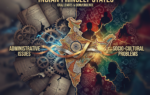
Administrative Issues and Socio-Cultural Problems in the Integration of Indian Princely States

Administrative Issues and Socio-Cultural Problems in the Integration of Indian Princely States

Introduction The integration of princely states into the Indian Union after Independence in 1947 stands as one of the most remarkable administrative achievements in modern world history. At the time of Independence, India was not a single political entity. Instead, it consisted of British provinces alongside nearly 565 princely states, varying enormously in size, population,…

Read More