Introduction
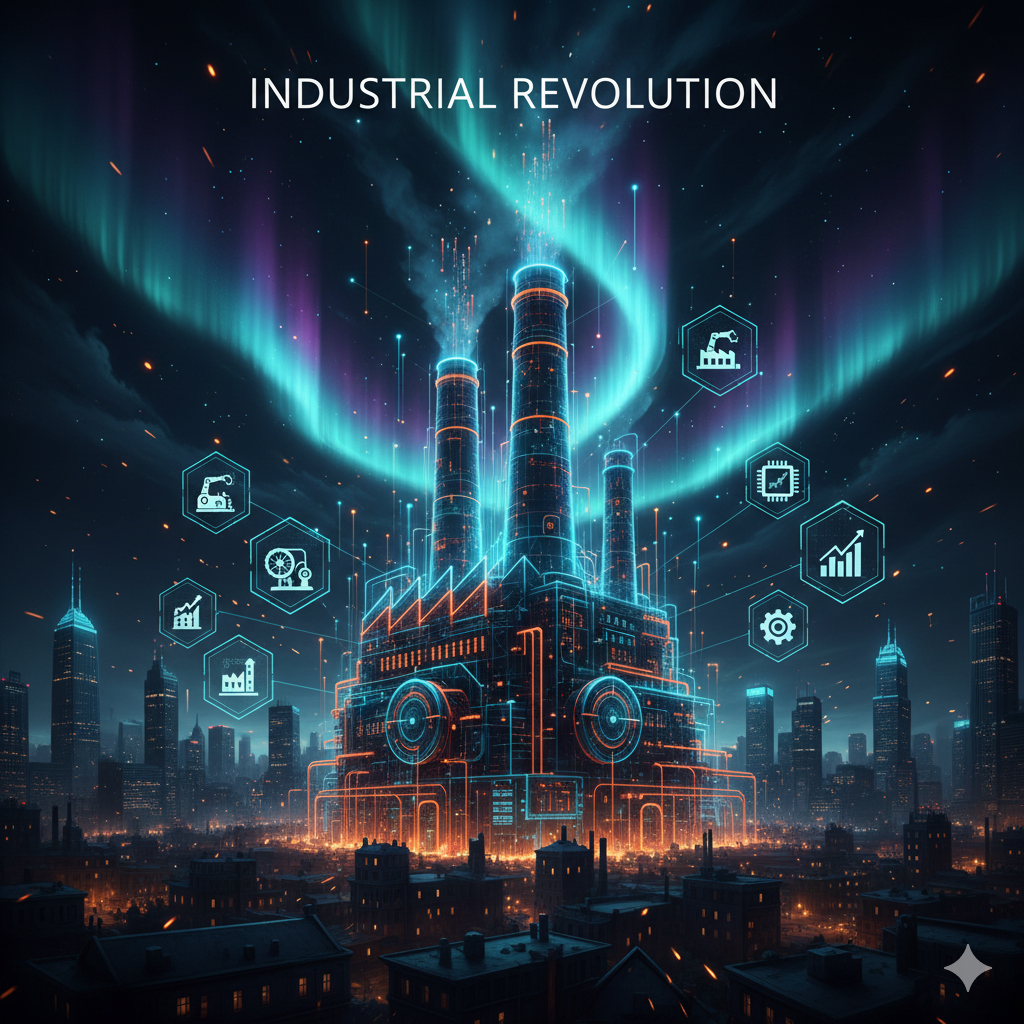
The world is undergoing the Fourth Industrial Revolution (4IR), characterized by the fusion of digital, physical, and biological systems. Unlike previous industrial revolutions that relied on mechanization, electricity, or computing, the 4IR is defined by digital technologies, artificial intelligence, big data, cloud computing, the Internet of Things (IoT), blockchain, and robotics. This revolution is not merely technological; it is reshaping social, economic, and governance structures globally.
In the context of governance, the 4IR has accelerated the adoption of e-governance, making it an integral part of how governments function. E-governance is the application of Information and Communication Technology (ICT) to deliver government services, ensure transparency, improve efficiency, and enable citizen participation. In essence, digital transformation is changing the relationship between the state and citizens, enhancing accountability and service delivery.
This essay explores the emergence of the 4IR, the evolution of e-governance, its significance, challenges, and future potential in strengthening democratic governance and administrative efficiency.
I. Understanding the Fourth Industrial Revolution (4IR)
A. Definition and Features
The 4IR, popularized by Klaus Schwab, Founder of the World Economic Forum, is characterized by:
- Digitalization: Integration of digital technologies across sectors
- Connectivity: IoT connecting devices, infrastructure, and individuals
- Automation and AI: Use of machine learning and robotics in processes
- Data-driven decision-making: Real-time analytics shaping policies
- Cyber-physical systems: Interaction between physical systems and computational intelligence
- Blockchain and secure digital identity: Enabling trust and transparency
B. Difference from Previous Industrial Revolutions
| Industrial Revolution | Key Driver | Governance Implication |
|---|---|---|
| First (18th c.) | Mechanization | Bureaucracy centered on record-keeping |
| Second (19th c.) | Electricity & mass production | Expansion of government services |
| Third (20th c.) | Computing & automation | Digital records, e-services initiated |
| Fourth (21st c.) | AI, IoT, blockchain | Integrated e-governance, citizen-centric administration |
Unlike past revolutions, the 4IR directly enables real-time, efficient, and transparent governance systems, integrating administration, policy, and service delivery.
II. E-Governance: Concept and Evolution
A. Definition of E-Governance
E-Governance is defined as the use of ICT by government to provide services, improve transparency, facilitate citizen engagement, and enable efficient administration. It encompasses:
- Government-to-Citizen (G2C)
- Government-to-Business (G2B)
- Government-to-Government (G2G)
- Government-to-Employee (G2E)
B. Evolution of E-Governance in India
India has witnessed a gradual adoption of e-governance since the 1990s:
- Computerization Era (1990s): Basic digitization of records in ministries.
- Mission Mode Projects (2006 onwards): Key services like passport, income tax, land records digitized under National e-Governance Plan (NeGP).
- Digital India Initiative (2015): Integrated approach for online services, digital infrastructure, and citizen participation.
- Fourth Industrial Revolution Era (Post-2015): Use of AI, blockchain, cloud computing, and big data for predictive governance, real-time monitoring, and enhanced public service delivery.
C. Significance of E-Governance
E-Governance has multiple dimensions:
- Efficiency and Transparency: Automation reduces manual intervention and corruption.
- Accessibility and Inclusion: Citizens in remote areas can access services online.
- Real-time Decision Making: Data analytics helps policymakers respond to emerging challenges.
- Cost-Effectiveness: Reduces administrative costs and duplication of work.
- Citizen Empowerment: Provides information and grievance redressal, promoting participatory governance.
III. Drivers Linking 4IR to E-Governance
The Fourth Industrial Revolution directly enables e-governance through several mechanisms:
A. Artificial Intelligence and Machine Learning
AI facilitates:
- Predictive governance (e.g., forecasting health crises)
- Automated grievance redressal (chatbots)
- Risk assessment in public projects
Example: AI-enabled platforms in India, like Umang App for citizen services, utilize AI for service integration.
B. Internet of Things (IoT)
IoT devices improve:
- Smart city management (traffic, waste management, energy efficiency)
- Remote monitoring of infrastructure (bridges, water pipelines)
- Environmental monitoring (air and water quality)
Example: Bengaluru Smart City IoT network monitors urban utilities to optimize resources.
C. Big Data and Cloud Computing
Government generates vast amounts of data. Big data analytics helps in:
- Targeting welfare programs accurately
- Policy evaluation
- Detecting anomalies and fraud
Example: Direct Benefit Transfer (DBT) uses Aadhaar-linked data to ensure targeted subsidies.
D. Blockchain Technology
Blockchain ensures:
- Transparency and immutability of records
- Secure land registration, public procurement, and digital identity
- Reduced corruption through verifiable transactions
Example: Pilot blockchain-based land records in Himachal Pradesh and Andhra Pradesh.
E. Digital Identity Systems
Systems like Aadhaar integrate citizens into e-governance frameworks:
- Single digital identity for multiple services
- Streamlined access to welfare schemes
- Facilitates financial inclusion
IV. Benefits of Integrating 4IR with E-Governance
A. Enhanced Service Delivery
- Faster processing of citizen requests
- Round-the-clock access through mobile applications
- Automated payments, certificates, and licenses
B. Transparency and Accountability
- Online tracking of applications reduces discretion
- Public dashboards increase visibility of government performance
C. Evidence-Based Policy Making
- Data-driven insights improve planning
- Policy interventions can be evaluated and adjusted in real-time
D. Empowerment of Citizens
- Access to information promotes informed participation
- Digital grievance redressal systems enhance trust
E. Cost Reduction and Efficiency
- Reduced paperwork, office space, and administrative delays
- Streamlined procurement and monitoring systems
V. Challenges in Implementing E-Governance in the Era of 4IR
Despite its potential, e-governance faces significant challenges:
A. Digital Divide
- Unequal access to internet and technology
- Rural, remote, and marginalized communities may be excluded
B. Cybersecurity Threats
- Increasing online transactions raise risks of hacking, data theft, and privacy breaches
- Requires robust cybersecurity infrastructure
C. Resistance to Change
- Bureaucratic inertia and lack of digital literacy among officials
- Fear of job loss due to automation
D. Privacy and Data Protection Concerns
- Large-scale data collection poses privacy risks
- Requires stringent legal frameworks like the Digital Personal Data Protection Act, 2023
E. Infrastructure and Resource Constraints
- High initial investment for AI, IoT, and blockchain integration
- Connectivity, power supply, and hardware limitations in remote areas
F. Policy and Regulatory Challenges
- Inter-departmental coordination is difficult
- Legal frameworks often lag behind technological innovation
VI. Case Studies of E-Governance in India
A. Digital India Initiative
- Launched in 2015 to promote e-governance and digital infrastructure
- Components: e-Kranti, Digital Locker, UMANG, e-Sign, MyGov
Impact: Increased citizen participation, easier access to services, enhanced transparency
B. Direct Benefit Transfer (DBT)
- Uses digital platforms and Aadhaar to transfer subsidies directly to beneficiaries
- Reduces corruption and leakage in welfare schemes
- Promotes efficiency and financial inclusion
C. Smart Cities Mission
- Integrates IoT, GIS, and digital platforms for urban governance
- Improves traffic management, energy efficiency, and public safety
- Citizen engagement through online platforms
D. Land Records Digitalization
- Blockchain pilot projects in Andhra Pradesh and Himachal Pradesh
- Provides secure, transparent, and tamper-proof land ownership records
VII. Recommendations for Strengthening E-Governance in the 4IR Era
1. Bridging the Digital Divide
- Expand broadband and 5G access
- Promote digital literacy programs in rural and marginalized communities
- Affordable devices and local-language interfaces
2. Cybersecurity Measures
- Strengthen national cybersecurity infrastructure
- Regular audits and encryption protocols
- Awareness campaigns for citizens and officials
3. Legal and Regulatory Reforms
- Strengthen data protection laws
- Clear guidelines for AI and IoT in governance
- Accountability frameworks for automated decision-making
4. Capacity Building of Civil Servants
- Training in digital tools, data analytics, AI, and cyber law
- Promote culture of innovation and technology adoption
5. Citizen-Centric Design
- Develop accessible and user-friendly platforms
- Include citizen feedback in service design and evaluation
6. Collaboration with Private Sector and Academia
- Public-Private Partnerships (PPPs) for technological infrastructure
- Research and innovation partnerships for AI, blockchain, and IoT applications
7. Monitoring and Evaluation
- Real-time dashboards for project monitoring
- Use of analytics to evaluate impact and improve services
- Encourage transparency through open data initiatives
VIII. The Future of E-Governance in the Fourth Industrial Revolution
- Predictive governance through AI for policy formulation
- Smart contracts in public procurement via blockchain
- Virtual governance platforms for citizen engagement
- Integration of augmented reality (AR) and IoT for urban planning and disaster management
- Global collaboration for sharing best practices in digital governance
The 4IR enables responsive, transparent, and inclusive governance, making e-governance an indispensable pillar of modern administration.
IX. Conclusion
The emergence of the Fourth Industrial Revolution has fundamentally transformed the way governments operate. E-governance, fueled by digital technologies such as AI, IoT, big data, cloud computing, and blockchain, has become an integral part of public administration, enhancing efficiency, transparency, and citizen participation.
While challenges such as the digital divide, cybersecurity risks, and resistance to change persist, India’s initiatives like Digital India, DBT, Smart Cities, and digital land records showcase the transformative potential of integrating 4IR technologies into governance.
To fully realize the benefits of e-governance, the government must focus on digital infrastructure, citizen-centric design, capacity building, robust legal frameworks, and innovation-driven administration. In this era, e-governance is not merely a tool for administrative efficiency; it is a cornerstone of democratic deepening, economic growth, and institutional quality in India.