Introduction
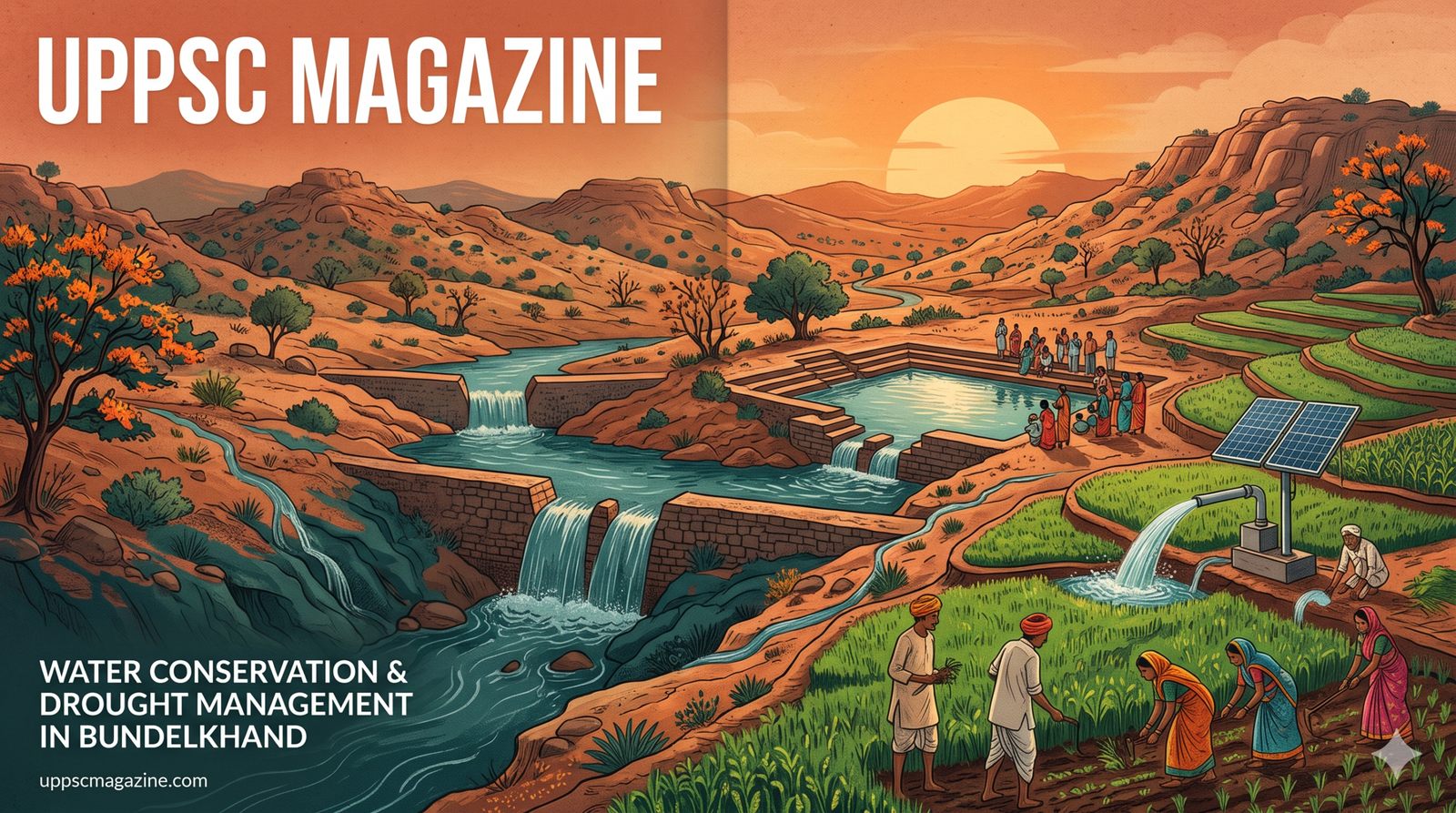
Bundelkhand—spanning seven districts of southern Uttar Pradesh (Jhansi, Lalitpur, Jalaun, Hamirpur, Mahoba, Banda, and Chitrakoot) alongside adjoining Madhya Pradesh districts—is one of India’s most drought-prone regions. Understanding its hydrogeology, traditional water-harvesting systems, and modern conservation strategies is essential for UPPSC Geography and UP Special papers.
Geographical Causes of Water Scarcity in Bundelkhand
- Hard-Rock Granite Geology: Unlike the porous alluvial Gangetic Plain, Bundelkhand sits on crystalline granite and gneiss bedrock with thin soil cover, limiting natural aquifer recharge and causing rapid surface runoff.
- Erratic Monsoon & High Evapotranspiration: Low, uneven rainfall combined with intense summer heat leads to recurring meteorological and agricultural droughts.
- Degraded Traditional Tanks: Siltation and encroachment of historic Chandela- and Bundela-era tanks and stepwells reduced local surface water storage.
Government Initiatives and Conservation Frameworks
- Ken-Betwa Link Project (KBLP): Inter-basin river transfer project designed to channel surplus Ken water into the Betwa basin for irrigation and drinking water across Bundelkhand.
- Jal Jeevan Mission (Har Ghar Jal) & Atal Bhujal Yojana: Expands piped drinking water coverage and community-led groundwater budgeting in water-stressed blocks.
- Khet Talab Yojana & Check Dams: State-supported farm ponds, contour bunding, and revival of traditional water bodies under Amrit Sarovar to capture monsoon runoff.
Challenges and Way Forward
- Crop Diversification & Micro-Irrigation: Shifting away from water-intensive paddy/sugarcane toward millets, pulses, oilseeds, and drip/sprinkler irrigation.
- Community Water Governance: Empowering Pani Samitis and Water User Associations to monitor aquifer levels and maintain check dams sustainably.
Conclusion
Combining traditional Chandela tank restoration and micro-irrigation with scientific watershed management offers the most durable path to drought resilience in Bundelkhand.
References
Central Ground Water Board (CGWB) & NITI Aayog; Ministry of Jal Shakti & Government of Uttar Pradesh Water Resources Updates.