
Home » Laramide Orogeny
Western North America

Tectonics, Earthquakes, and Volcanism: Shaping the Landscapes of Western North America

Introduction Western North America is one of the most geologically active regions on Earth. Its dramatic landscapes—including towering mountain ranges, deep valleys, volcanic peaks, plateaus, rift basins, fault scarps, and coastal cliffs—have been shaped primarily by tectonic activity, earthquakes, and volcanism over millions of years. These powerful endogenic (internal) forces continue to modify the region,…

Read More
Appalachian Mountains

Appalachian Mountains vs. Rocky Mountains: A Geomorphological Comparison

Introduction The Appalachian Mountains and the Rocky Mountains are two of the most important mountain systems in North America. Although both have played a major role in shaping the continent’s physical landscape, they differ significantly in their geological age, origin, structure, landforms, geomorphic processes, and environmental characteristics. These mountain ranges provide valuable evidence of Earth’s…

Read More
Rocky Mountains geomorphological significance

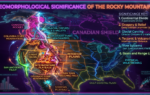
How Were the Rocky Mountains Formed? Discuss Their Geomorphological Significance

Introduction The Rocky Mountains are one of the most spectacular and geologically significant mountain systems in the world. Stretching for nearly 4,800 kilometers (about 3,000 miles) from northern British Columbia in Canada to New Mexico in the United States, the Rockies form the backbone of western North America. They pass through the Canadian provinces of…

Read More