Home » Plate Tectonics
Western North America

Tectonics, Earthquakes, and Volcanism: Shaping the Landscapes of Western North America

Introduction Western North America is one of the most geologically active regions on Earth. Its dramatic landscapes—including towering mountain ranges, deep valleys, volcanic peaks, plateaus, rift basins, fault scarps, and coastal cliffs—have been shaped primarily by tectonic activity, earthquakes, and volcanism over millions of years. These powerful endogenic (internal) forces continue to modify the region,…

Read More
Appalachian Mountains

Appalachian Mountains vs. Rocky Mountains: A Geomorphological Comparison

Introduction The Appalachian Mountains and the Rocky Mountains are two of the most important mountain systems in North America. Although both have played a major role in shaping the continent’s physical landscape, they differ significantly in their geological age, origin, structure, landforms, geomorphic processes, and environmental characteristics. These mountain ranges provide valuable evidence of Earth’s…

Read More
Rocky Mountains geomorphological significance

How Were the Rocky Mountains Formed? Discuss Their Geomorphological Significance

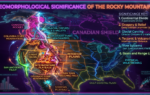
Introduction The Rocky Mountains are one of the most spectacular and geologically significant mountain systems in the world. Stretching for nearly 4,800 kilometers (about 3,000 miles) from northern British Columbia in Canada to New Mexico in the United States, the Rockies form the backbone of western North America. They pass through the Canadian provinces of…

Read More
World’s Fold Mountain Systems

Why Are the World’s Fold Mountain Systems Located Along the Margins of Continents?

Association Between Global Distribution of Fold Mountains, Earthquakes, and Volcanoes Introduction The surface of the Earth is shaped by a dynamic system of forces operating deep within its interior and acting upon its crust. Among the most striking landforms created by these forces are fold mountains, which rise dramatically along the margins of continents. These…

Read More
Islands in the Indonesian and Philippine Archipelagos

Formation of Thousands of Islands in the Indonesian and Philippine Archipelagos

Introduction The Indonesian and Philippine archipelagos are among the most remarkable island groups in the world. Indonesia, the world’s largest archipelagic state, consists of more than 17,000 islands, while the Philippines comprises over 7,600 islands. These islands are not only geographically significant but also hold immense ecological, cultural, and economic value. The origin of these…

Read More
Mantle Plume and Its Role in Plate Tectonics

Mantle Plume and Its Role in Plate Tectonics

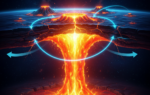
Introduction The Earth’s interior is a dynamic system where enormous forces operate beyond human perception. Among the processes that shape the planet’s geological features, mantle plumes hold a significant position. They are not only key to understanding the internal dynamics of the Earth but also crucial in explaining the mechanisms of volcanism, continental breakup, and…

Read More
circum-pacific zone

Geophysical Characteristics of the Circum-Pacific Zone

Introduction The Earth’s lithosphere is an intricate network of tectonic plates, which interact with one another through processes like subduction, collision, divergence, and transform movements. Among these regions, the Circum-Pacific Zone, often referred to as the “Pacific Ring of Fire”, is one of the most geologically active belts on Earth. Stretching for nearly 40,000 kilometers…

Read More
pcs magazine

The Role of Plate Tectonics in the Formation of Different Landforms

Introduction Plate tectonics is a fundamental geological theory that explains the movement of Earth’s lithospheric plates and their interactions. This dynamic process shapes Earth’s surface, creating various landforms through mechanisms such as divergence, convergence, and transform motion. The movement of these plates leads to the formation of mountains, valleys, volcanoes, oceanic trenches, rift valleys, and…

Read More
pcs magazine

Volcanic Eruptions: Causes, Impact, and Landforms Created by Lava Deposition

Introduction Volcanic eruptions are among the most powerful natural events on Earth. They result from complex geological processes occurring beneath the Earth’s surface. Volcanoes have played a crucial role in shaping the Earth’s landscape, contributing to the formation of new landforms and influencing climate and ecosystems. Understanding the causes of volcanic eruptions and the landforms…

Read More