Introduction
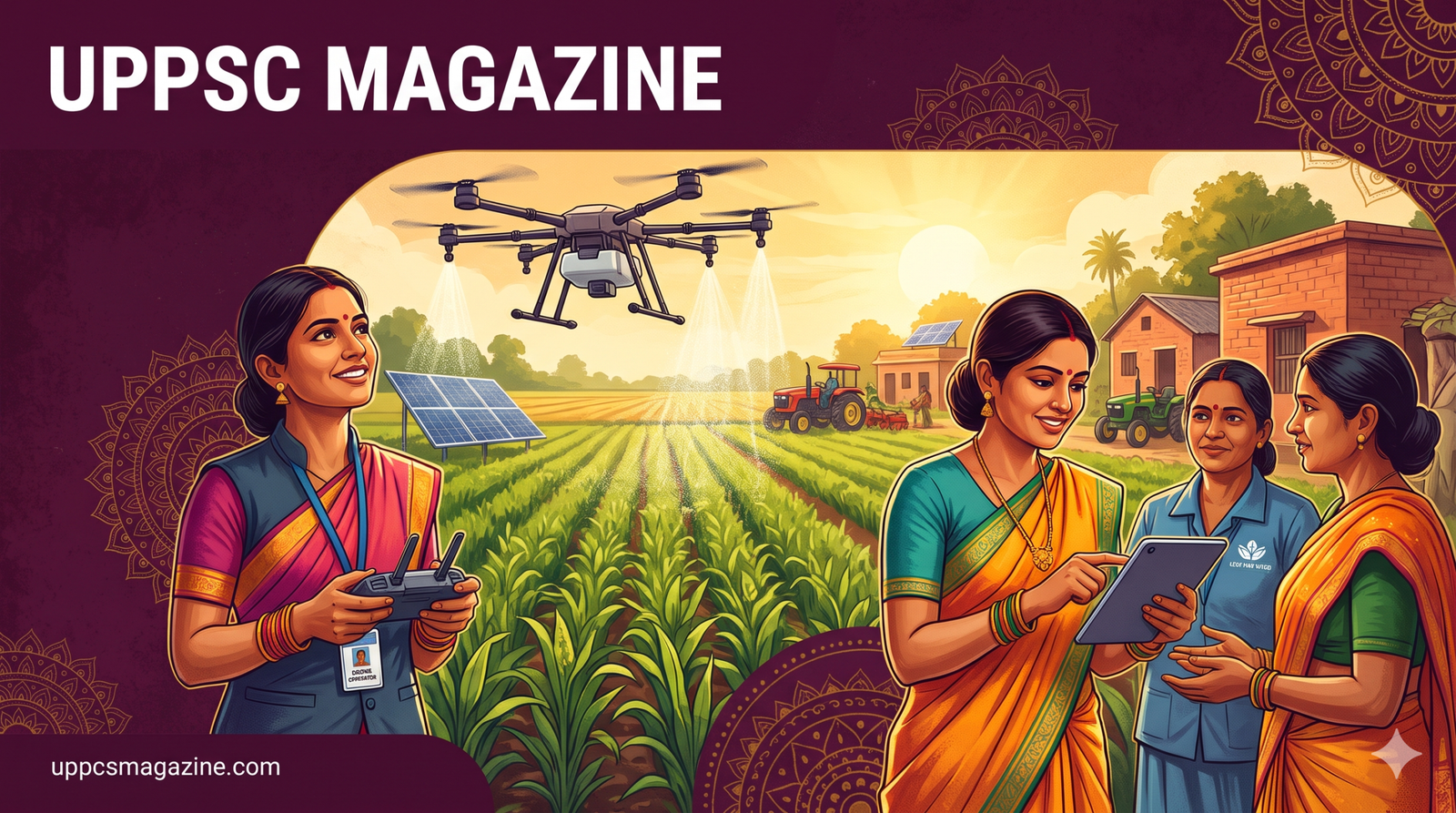
India’s development strategy has shifted from welfare-oriented assistance to women-led development. Through Self-Help Groups (SHGs), technology adoption, and political representation, programmes such as Lakhpati Didi, NaMo Drone Didi, and the Nari Shakti Vandan Adhiniyam are transforming rural livelihoods and institutional governance.
Institutional Framework and Key Initiatives 2025–2026
Under the Deendayal Antyodaya Yojana – National Rural Livelihoods Mission (DAY-NRLM), women have formed 93.85 lakh SHGs spanning 10.07 crore members across India (PIB June 2026).
| Initiative | Core Objective & Outlay | Verified Progress as of 2026 |
|---|---|---|
| Lakhpati Didi | Enable SHG women to earn at least ₹1 lakh sustainably per year | 3.07 crore Lakhpati Didis achieved by May 2026; target expanded to 6 crore; Union Budget 2026-27 allocated ₹17,280 crore to DAY-NRLM |
| NaMo Drone Didi | Equip women SHGs with agricultural drones for fertilizer/pesticide spraying | ₹1,261 crore outlay (2023–26); targets 15,000 drones with 80% subsidy up to ₹8 lakh; DGCA-certified pilot training |
| Nari Shakti Vandan Adhiniyam | 106th Constitutional Amendment Act reserving 33% seats for women | Applies to Lok Sabha and State Legislative Assemblies post-delimitation |
| Womaniya & SHE-Mart | Direct public procurement and retail market access for women entrepreneurs | Over 2.1 lakh women-led enterprises registered on GeM |
Uttar Pradesh Context
Uttar Pradesh has scaled women-led grassroots empowerment through the Uttar Pradesh State Rural Livelihood Mission (UPSRLM), deploying BC Sakhis (Banking Correspondent Sakhis) across Gram Panchayats, nutrition-enterprise units (Take Home Ration plants), and Lakhpati Didi clusters across all 75 districts.
Challenges Ahead
- Market Linkages & Credit Depth: Moving women enterprises from micro-subsistence to scalable formal MSMEs requires reliable working capital and branding support.
- Digital and Technical Literacy: Sustaining drone operations, battery maintenance, and digital bookkeeping via the LokOS app requires continuous handholding.
Conclusion
Converging SHG credit networks, agritech skilling, and constitutional representation positions rural women as central drivers of India’s inclusive economic growth.
References
Press Information Bureau (PIB) — Key Interventions for Women’s Economic Advancement & From Welfare to Women-Led Development (2026); Ministry of Rural Development.