Introduction
The climate of a region is shaped by a variety of factors, including latitude, altitude, prevailing winds, ocean currents, and geographical features. Among these influences, ocean currents play a particularly important role in regulating temperatures and weather patterns along coastal regions. One of the most significant ocean currents affecting North America is the Gulf Stream.
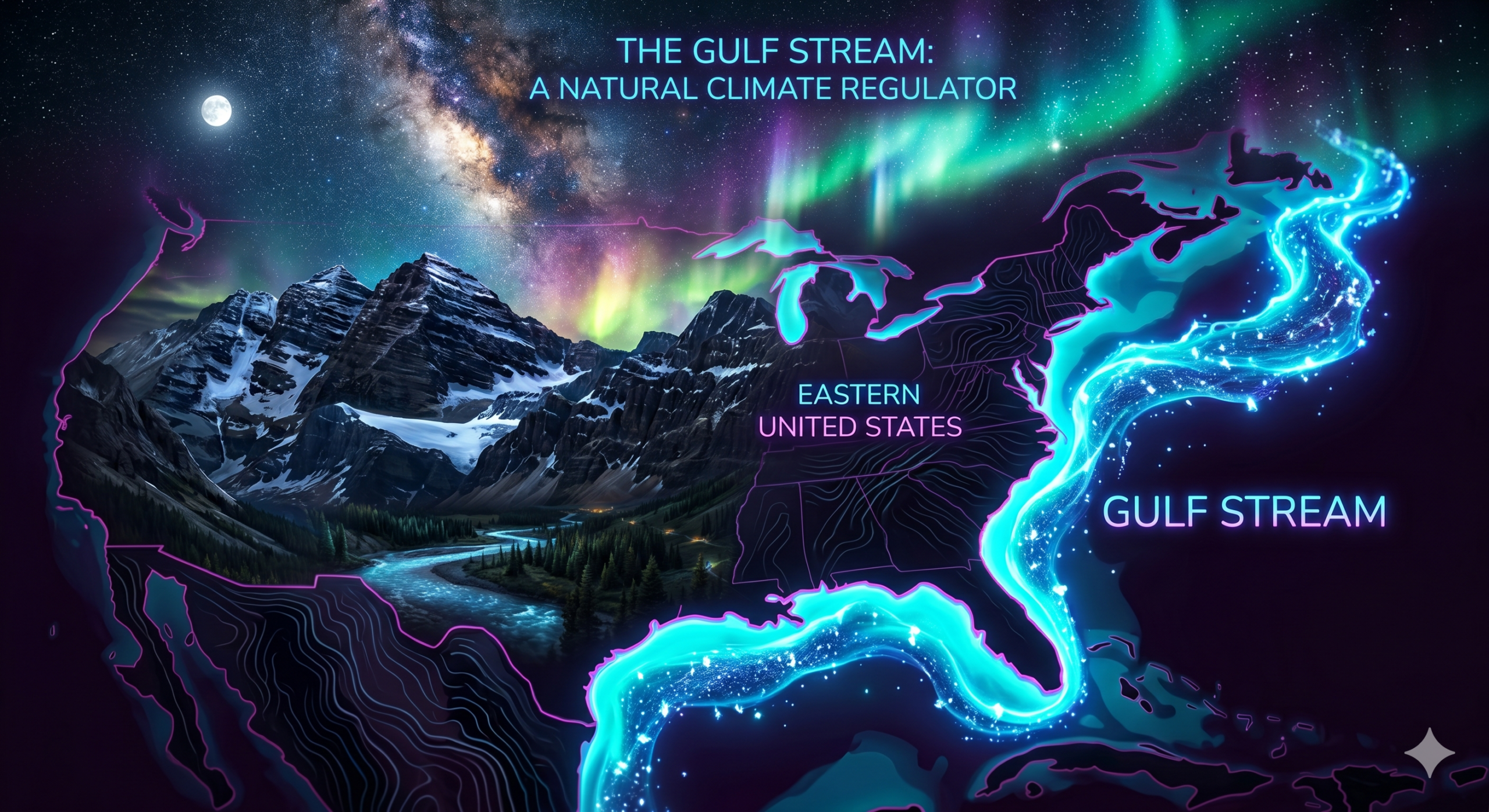
The Gulf Stream is a powerful, warm, and fast-moving ocean current that originates in the Gulf of Mexico and flows northward along the eastern coast of the United States before extending across the Atlantic Ocean toward Europe. Although it exists in the ocean, its effects extend far beyond the water itself. The Gulf Stream influences temperatures, humidity, rainfall, storm development, marine ecosystems, and seasonal weather patterns throughout the eastern United States.
Understanding the Gulf Stream is essential for understanding why the eastern United States experiences relatively mild winters, humid summers, and diverse weather conditions. This article explores the formation of the Gulf Stream, its characteristics, and its crucial role in shaping the climate of the eastern United States.
Understanding the Gulf Stream
The Gulf Stream is part of a larger system of ocean circulation known as the Atlantic Meridional Overturning Circulation (AMOC). It transports enormous quantities of warm tropical water from lower latitudes toward higher latitudes.
The current begins in the Gulf of Mexico, passes through the Florida Straits between Florida and Cuba, and travels northward along the Atlantic coastline. As it moves, it carries heat from tropical regions into cooler areas.
This transfer of heat makes the Gulf Stream one of the most influential climate-regulating systems in the Northern Hemisphere.
Formation of the Gulf Stream
The Gulf Stream forms through a combination of several natural processes.
Solar Heating
The tropical regions near the equator receive intense solar radiation throughout the year. This energy warms the ocean surface, creating large masses of warm water.
Earth’s Rotation
The rotation of the Earth influences ocean currents through the Coriolis Effect. In the Northern Hemisphere, moving water is deflected to the right, helping guide the Gulf Stream along the eastern coast of North America.
Wind Systems
Trade winds and prevailing westerlies contribute to the movement of ocean water, helping maintain the flow of the Gulf Stream.
Ocean Basin Shape
The shape of the Atlantic Ocean and the North American coastline channels the current into a well-defined path along the eastern United States.
Together, these factors create a powerful ocean current capable of transporting vast amounts of heat across long distances.
The Gulf Stream as a Heat Transport System
One of the Gulf Stream’s most important functions is the redistribution of heat.
The tropical Atlantic stores enormous quantities of solar energy. The Gulf Stream acts like a giant conveyor belt, carrying this heat northward.
Without this process, tropical regions would become hotter, while higher latitudes would become much colder. By transferring heat, the Gulf Stream helps moderate temperature differences across large geographic areas.
For the eastern United States, this heat transport significantly affects seasonal temperatures and overall climate conditions.
Influence on Winter Temperatures
Milder Coastal Winters
One of the most noticeable effects of the Gulf Stream is the moderation of winter temperatures along the eastern seaboard.
Cities located near the Atlantic coast generally experience warmer winter conditions than inland locations at similar latitudes.
As warm ocean waters release heat into the atmosphere, nearby coastal regions benefit from relatively moderate temperatures.
Reduced Temperature Extremes
The Gulf Stream helps prevent drastic temperature fluctuations near the coast. While inland areas may experience severe cold waves, coastal locations often remain comparatively warmer.
This moderating influence is particularly evident in states such as:
- Florida
- Georgia
- South Carolina
- North Carolina
- Virginia
Although cold weather still occurs, temperatures are generally less extreme than they might be without the presence of the warm current.
Influence on Frost and Snow
The warming effect of the Gulf Stream reduces the frequency and intensity of frost events in some coastal areas. Snowfall patterns may also be influenced, with coastal regions often receiving less persistent snow cover than inland locations.
Influence on Summer Climate
Increased Humidity
During summer, the warm waters of the Gulf Stream promote significant evaporation.
As water evaporates from the ocean surface, moisture enters the atmosphere. Winds transport this moisture toward the eastern United States.
This process contributes to the humid conditions commonly experienced throughout the southeastern and mid-Atlantic regions.
Warm Coastal Temperatures
The Gulf Stream helps maintain warm temperatures during summer months. Coastal areas benefit from the heat stored in ocean waters, which influences nearby air temperatures.
Thunderstorm Development
The abundant moisture supplied by the Gulf Stream creates favorable conditions for thunderstorm formation.
When warm, moist air rises and interacts with cooler air masses, thunderstorms can develop. Many summer weather events in the eastern United States are influenced by moisture originating from the Atlantic Ocean and the Gulf Stream.
Impact on Rainfall Patterns
Moisture Supply
The Gulf Stream serves as an important source of atmospheric moisture.
As warm water evaporates, large amounts of water vapor enter the atmosphere. This moisture contributes to cloud formation and precipitation.
Regional Rainfall
Many eastern states receive substantial rainfall throughout the year. The Gulf Stream helps support these precipitation patterns by continuously supplying moisture to weather systems.
Seasonal Variations
Rainfall influenced by the Gulf Stream can vary by season. During summer, convectional rainfall and thunderstorms are common. During winter, moisture from the Atlantic can contribute to coastal storms and precipitation events.
Role in Storm Formation
The Gulf Stream significantly influences the development and intensity of storms.
Energy Source for Storms
Warm ocean water provides energy for atmospheric disturbances. The Gulf Stream acts as a reservoir of heat and moisture that can strengthen weather systems.
Coastal Storms
Many coastal storms gain intensity as they move over warm Gulf Stream waters.
The contrast between warm ocean temperatures and cooler air masses can create favorable conditions for storm development.
Nor’easters
Nor’easters are powerful storms that frequently affect the eastern United States.
These storms often develop along the Atlantic coast and can produce:
- Heavy snow
- Strong winds
- Coastal flooding
- Significant rainfall
The Gulf Stream provides warmth and moisture that can contribute to the growth and intensity of these weather systems.
Influence on Hurricanes
Hurricane Formation
Tropical cyclones require warm ocean temperatures to develop and strengthen.
The Gulf Stream supplies warm water that can fuel hurricanes moving along the Atlantic coast.
Intensification of Storms
As hurricanes pass over Gulf Stream waters, they may gain strength because warm water increases evaporation and provides additional energy.
Coastal Impacts
Many major hurricanes affecting the eastern United States have interacted with the Gulf Stream during their development or movement.
This interaction can influence storm intensity, rainfall amounts, and wind strength.
Effects on Coastal Ecosystems
The Gulf Stream influences not only weather but also biological systems.
Marine Biodiversity
Warm waters support diverse marine ecosystems. Many fish species depend on environmental conditions created by the Gulf Stream.
Nutrient Distribution
Ocean currents help distribute nutrients throughout marine environments, supporting food chains and biological productivity.
Fisheries
Commercial and recreational fisheries along the Atlantic coast benefit from marine conditions influenced by the Gulf Stream.
Healthy marine ecosystems contribute significantly to local economies and food resources.
Influence on Agriculture
Climate conditions shaped by the Gulf Stream affect agricultural activities throughout the eastern United States.
Longer Growing Seasons
Moderate temperatures allow some regions to experience longer growing seasons.
Farmers can cultivate a wider variety of crops because extreme cold is less common near coastal areas.
Moisture Availability
Regular rainfall supported by Gulf Stream moisture benefits agriculture by helping maintain soil moisture levels.
Crop Diversity
The relatively favorable climate of the southeastern United States supports the production of fruits, vegetables, grains, and other agricultural products.
Regional Climate Differences
The influence of the Gulf Stream is not uniform across all regions.
Southeastern United States
The southeastern states experience strong Gulf Stream influence due to their proximity to warm ocean waters.
Characteristics include:
- Mild winters
- Hot summers
- High humidity
- Abundant rainfall
Mid-Atlantic States
The Mid-Atlantic region experiences a balance between continental and maritime influences.
The Gulf Stream helps moderate temperatures while also contributing moisture to weather systems.
Northeastern United States
Although farther from the tropics, northeastern states still benefit from the Gulf Stream’s warming influence.
The current affects storm tracks, winter weather patterns, and coastal climate conditions.
The Gulf Stream and Climate Change
Scientists closely monitor the Gulf Stream because of its importance to global climate systems.
Changes in Ocean Temperature
Global warming is affecting ocean temperatures and circulation patterns.
Changes in sea surface temperatures may influence how the Gulf Stream interacts with the atmosphere.
Potential Circulation Changes
Some research suggests that long-term changes in ocean circulation could alter the strength or behavior of the Gulf Stream system.
Climate Implications
Any significant change in the Gulf Stream could affect:
- Regional temperatures
- Rainfall patterns
- Storm intensity
- Marine ecosystems
- Agricultural productivity
Because of these potential impacts, the Gulf Stream remains a major focus of climate research.
Importance for Human Activities
Millions of people living along the eastern United States depend directly or indirectly on climate conditions influenced by the Gulf Stream.
Transportation
Ocean currents influence shipping routes and maritime operations.
Tourism
Many coastal destinations benefit from moderate temperatures and favorable weather conditions.
Water Resources
Rainfall patterns supported by Gulf Stream moisture contribute to freshwater availability.
Economic Development
Agriculture, fisheries, tourism, and coastal industries all benefit from climatic conditions influenced by the current.
Conclusion
The Gulf Stream is one of the most important natural systems affecting the climate of the eastern United States. By transporting warm tropical water northward, it moderates winter temperatures, increases atmospheric moisture, influences rainfall patterns, supports marine ecosystems, and contributes to the development of storms and hurricanes.
Its impact extends from Florida to New England, shaping the environmental and economic conditions of millions of people. The Gulf Stream helps create the relatively mild and humid climate that characterizes much of the eastern United States. Without this powerful ocean current, coastal regions would experience dramatically different weather patterns and ecological conditions.
As climate change continues to alter Earth’s systems, understanding the Gulf Stream’s role becomes increasingly important. Its influence on weather, ecosystems, and human societies demonstrates the critical connection between oceans and climate. In many ways, the Gulf Stream serves as a natural climate regulator, making it one of the most significant ocean currents in the world and a key factor in shaping the climate of the eastern United States.